
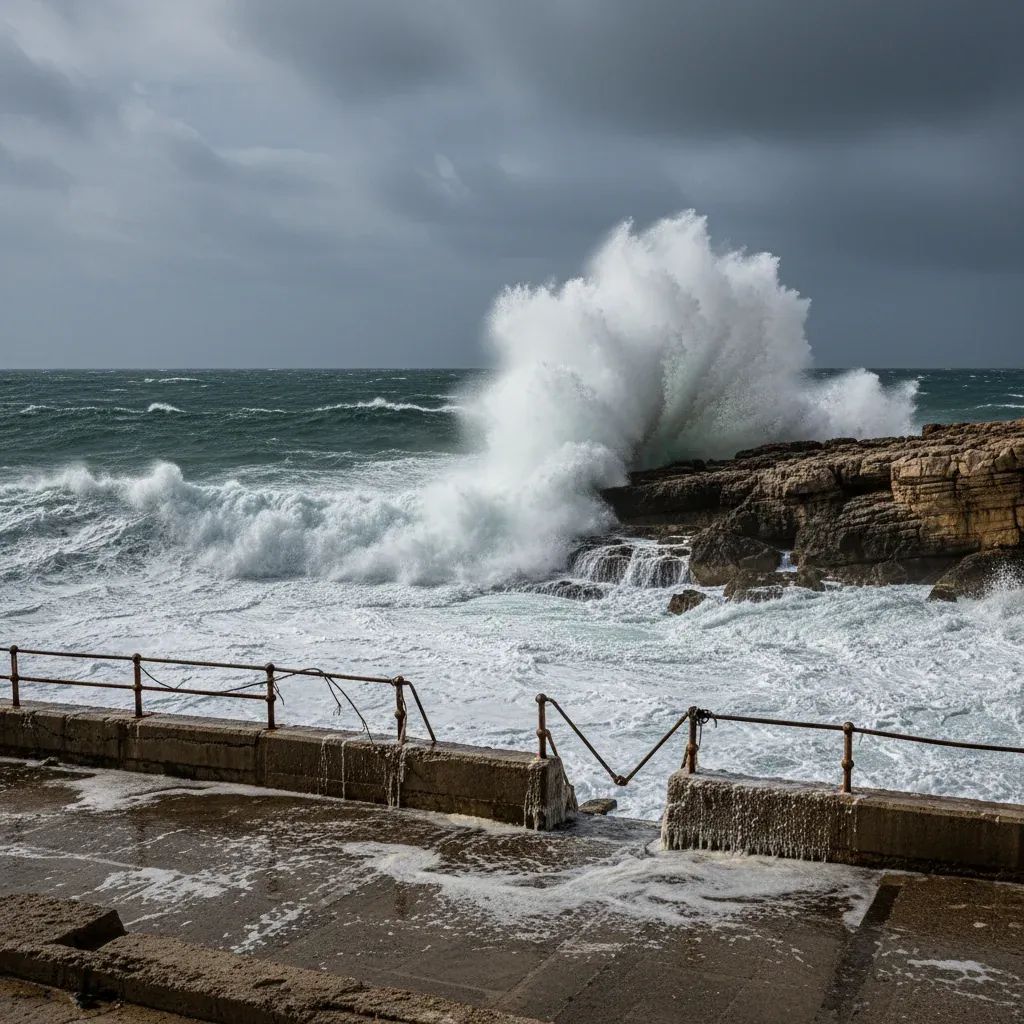
When a family stands behind barriers on a Maltese waterfront, watching the sea churn during winter storms, they assume they're safe. That assumption proved tragically wrong for the Wojnowska family when their 13-year-old daughter was swept away. Oliwia Wojnowska died on January 26, 2026, swept into rough seas at Ċirkewwa by a single, catastrophic wave—a reminder that Malta's coastal infrastructure and warning systems remain disconnected from the reality of its exposure to sudden, lethal marine events.
The News: Parents' Response and Investigation Status
In a letter to Prime Minister Robert Abela dated in March, Konrad and Barbara Wojnowscy expressed gratitude for what they called government compassion and decisive action. They wrote of receiving support through an unimaginably difficult time and praised the Prime Minister's team for ensuring their family didn't face the tragedy alone. The response reflects genuine operational professionalism during the search and rescue effort.
The investigation led by Magistrate Monica Borg Galea remains ongoing as of March 2026. According to the statement given by Oliwia's brother to investigators, the family was behind road barricades, not on exposed pavement near open water. That detail has raised questions among safety advocates about whether barriers were adequate for winter storm conditions and whether viewing points in exposed areas require additional protections during adverse weather forecasts.
The Sequence of Events
The Wojnowska family—parents Barbara and Konrad, their 13-year-old daughter, and a 17-year-old son—were spending a holiday at the Paradise Bay Hotel in Ċirkewwa. On that January morning, they walked to the South Quay viewing area, a popular vantage point where tourists and locals watch the sea. The pavement sits behind concrete barriers and railings, positioned safely back from the waterline.
A powerful surge, arriving without warning, breached the protective barriers. The water swept Oliwia down a ramp and into the ocean. Her father, attempting to grab her as she was pulled away, sustained injuries when the wave pinned him and his brother against a wall. Within seconds, she vanished into rough seas.
The Armed Forces of Malta (AFM), Civil Protection Department (CPD), and police initiated an immediate search. Two days of operations in severe weather—strong winds, high seas, rough conditions—followed. A drone operator spotted Oliwia's jacket caught on rocks near the Sunset Viewpoint. Divers recovered her body on January 28, not far from where the incident occurred.
Why This Matters: Malta's Drowning Pattern
The numbers tell a sobering story. Between 2013 and 2022, 106 fatal drownings were documented across the Maltese islands, according to available drowning data. In 2025, 17 water-related deaths occurred, 14 at sea. The 2024 toll was 13 deaths.
Rough seas triggered by northwesterly winds catch swimmers off guard. The sea around Malta can shift from calm to dangerous within hours. Most drownings occur not in designated swimming areas but at rocky shorelines, cliffs, and viewing points—places without lifeguard presence or real-time hazard indicators.
The Malta Red Cross, which operates lifeguarding services at designated beaches during summer months, managed 3.6 million beachgoers in 2023, performing 115 rescues and treating over 7,100 people, according to organization reports. During summer 2024, their teams conducted 178 rescues and treated more than 4,000 casualties. These figures demonstrate the scale of intervention needed—yet they represent only monitored, staffed beaches. Unguarded waterfront areas like Ċirkewwa remain entirely dependent on visitor judgment and infrastructure design.
What European Beaches Do Differently
Across Europe, the International Life Saving Federation of Europe (ILSE) has standardized a color-coded flag system deployed at public beaches. Green flags signal safe conditions. Yellow flag indicates caution due to moderate hazards. Red flags mean high danger and swimming restrictions. Purple flags warn of dangerous marine life. Double red flags close the water entirely.
This system is visual, language-independent, and instantly recognizable. A tourist from Poland, Germany, or France arriving at any European beach knows what a red flag means within seconds.
Malta does not deploy this uniform system. Ċirkewwa has no flags. Some beaches display warning signs; others don't. Media alerts and government warnings reach people with access to news and Wi-Fi—not families who've driven to a scenic overlook for a photograph.
The European Union's Marine Strategy Framework Directive and Floods Directive require member states to conduct hazard assessments and implement resilience planning. Malta participates in advanced systems like the iCoast tool and European Coastal Flood Awareness System (ECFAS), which forecast extreme wave events and storm surges. Yet translation of these forecasts into on-the-ground signage and real-time alerts remains inconsistent across the island.
Practical Reality for Residents and Visitors
For anyone living in or visiting Malta, the Wojnowska tragedy underscores a fundamental reality: coastal areas positioned behind protective barriers can still become dangerous during winter storms. Standing behind barriers, watching waves from a viewing platform, or photographing cliffs does not guarantee safety. The sea's power during rough conditions requires respect and caution.
Expats and property buyers should recognize that unmonitored waterfront viewing areas operate without standardized safety protocols. Tourists should understand that popular photo locations—Ċirkewwa quays, clifftop overlooks, rocky shorelines—may lack any warning system or safety infrastructure adapted to local sea conditions.
The absence of a published, pan-Malta coastal safety protocol creates ambiguity. Residents don't know whether current barriers and signage reflect best practices or historical approaches. Visitors have no standardized reference point for assessing risk.
What Standardized Systems Could Achieve
Implementation of the ILSE flag system across all accessible beaches and waterfront areas would address visitor education. Real-time sea-state indicators—digital displays updated hourly with wave forecasts and wind speed—could be installed at popular viewing points. Beach closure protocols during extreme weather could be formalized and publicized more widely.
These measures are standard practice across Europe and remain under discussion among Maltese safety authorities. As the investigation continues, how officials respond to the findings will determine whether infrastructure and warning systems are enhanced before another incident occurs.


