
The Criminal Court in Valletta has jailed Romanian national Octavian Viorel Piticariu for 17 years, a sentence that underscores how seriously Malta is now treating drug cargos hidden inside vehicles arriving from Sicily.
Why This Matters
• €2 million in street value of cocaine was kept off Maltese streets.
• Regular ferry commuters can expect longer inspections as Customs widens car searches.
• Plea-bargain transparency: the case shows how fast-track guilty pleas can still carry hefty prison terms.
• Property owners and landlords face new obligations to report suspicious cash payments, part of the same anti-trafficking sweep.
How Investigators Cracked the SUV
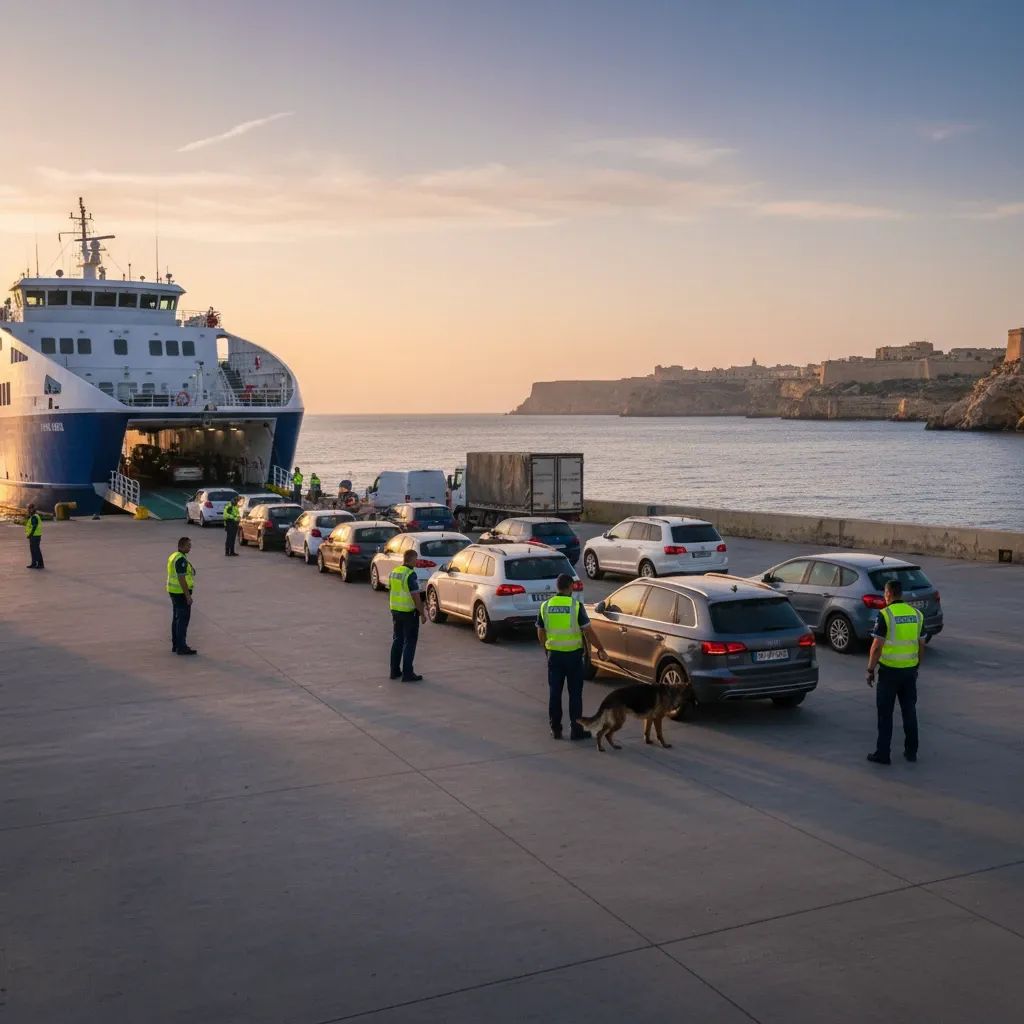
Customs officers and the Malta Police Drugs Squad intercepted Piticariu’s Volkswagen Touareg moments after it rolled off the Pozzallo fast ferry. Although the onboard K9 team initially failed to alert, officers grew suspicious of fresh welding marks under the running board. When the panel and a rear wheel were removed, a steel cavity appeared, packed with 15 kg of cocaine at 55.7 % purity. Piticariu immediately pointed to an additional stash, hoping for leniency, but no further drugs were found.
A Growing Pattern on the Sicily–Malta Route
Law-enforcement data show that traffickers have turned the 90-minute catamaran hop into a prime corridor for “white powder”:
• 2023: 493 kg of cocaine seized nationwide, including 3.3 kg on a single Pozzallo passenger.
• 2024: Malta Customs netted 2,148 kg of cocaine — the highest annual haul on record.
• 2025: Police valued seized narcotics at €87 M, fuelled by large vehicle-concealment jobs.
Smugglers have copied tactics popular in Spanish and Dutch ports, building false floors, tamper sensors and vacuum-sealed bricks aimed at defeating dogs and scanners. Yet even where K9s miss the first scent, secondary mechanical checks are catching more cargo, as happened with Piticariu’s SUV.
Plea Bargain Mechanics and Sentencing
Under Malta’s Criminal Code Articles 453A–453H, an accused may negotiate both charges and sentence with the Office of the Attorney General. Piticariu’s lawyers agreed to a “sentence bargain” capped at 17 years plus a €23,000 fine. Madam Justice Consuelo Scerri Herrera accepted the joint recommendation, adding €5,391.71 in court costs. The decision aligns with recent practice: while life imprisonment remains possible, judges often approve double-digit jail time when purity exceeds 54 % and the weight tops 10 kg.
What This Means for Residents
• Expect stricter ferry checks — extra 15-30 minutes is becoming the norm at Ċirkewwa and the Grand Harbour terminals.
• Car-hire firms are being advised by the Malta Tourism Authority to log vehicle modifications and alert police to suspicious under-carriage work.
• Landlords, garage owners and marina operators now fall under an updated Anti-Money Laundering rulebook that compels them to flag cash transactions above €10,000.
• Travellers with pets may see canine teams board ferries more frequently; officers insist the dogs’ presence does not breach public-health regulations.
Looking Ahead: Tighter Checks and Policy Tweaks
Government sources say new drive-through X-ray portals will be installed at both ferry terminals before summer, financed through an €8 M EU Internal Security Fund grant. Meanwhile, Parliament’s Justice Committee is drafting an amendment that would require judges to publish written reasons whenever they discount a sentence by more than one degree under a plea bargain.
For the average Maltese commuter, the message is straightforward: border scrutiny is rising, and the courts are ready to impose long sentences even when defendants cooperate. As cocaine supply chains diversify across the Mediterranean, Malta’s small size means every kilo seized — or missed — has an outsized impact on community safety and drug prices on the street.


