Malta-based Association of Maltese International Trailer Operators (ATTO) has cautioned that the European Commission’s full rollout of maritime emission charges combined with ambitious port redevelopment could squeeze the island’s supply chain, driving up costs and risking stock reliability.
Why This Matters
• 100% ETS coverage for intra-EU shipping hits local freight rates from Jan 1, 2026.
• Two strategic Ro-Ro berths in Grand Harbour are under threat as regeneration plans reallocate quay space.
• No overland alternative means even brief sea disruptions can empty supermarket shelves within days.
• Inflation pressure: ETS costs alone may lift consumer prices by up to 0.25% according to Central Bank analyses.
EU Regulations Overhaul
Malta’s haulage operators face a sharp rise in operating expenses after the European Commission mandated complete ETS compliance for domestic maritime legs. ATTO estimates an annual surcharge of €16.5 M funneled into carbon allowances and fuel levies. Meanwhile, the Combined Transport Directive remains skewed towards rail and short sea links, ignoring Malta’s double insularity. Local MEPs are pressing for an ‘island clause’ amendment, pointing to Greece’s Islands’ Transport Equivalent as a blueprint for compensatory relief.
In addition to ETS, new EU safety mandates kick in this summer. Heavy vans must adopt smart tachographs, trucks will need advanced emergency braking (AEB) systems, and all commercial vehicles require event data recorders by July 2026. Though these upgrades improve road safety, smaller Maltese fleets warn of disproportionate compliance costs without financial support.
Ports at a Crossroads
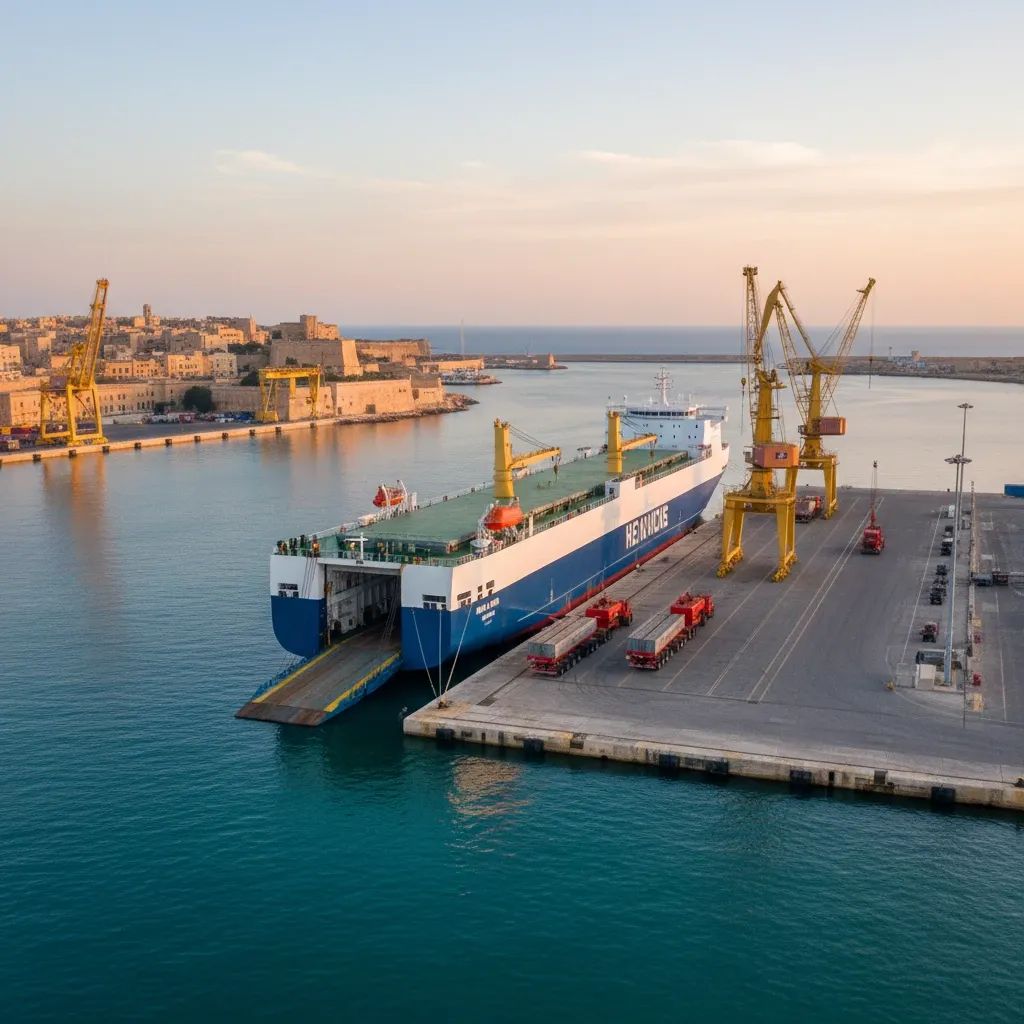
The Grand Harbour Revival Plan aims to transform Flagstone Wharf into a luxury marina and repurpose Deep Water Quay for retail and dining, but this vision risks sacrificing two of the island’s three roll-on/roll-off berths that handle about 70% of trailer movements. ATTO insists on legally binding guarantees that no operational berth is decommissioned before a tested replacement is fully functional.
Ras Ħanżir’s new 360 m cargo quay, backed by €25 M in EU and national funds, has stalled amid contractor disputes and design revisions. Industry voices, including the Malta Maritime Forum, label a proposed floating ramp alternative as operationally fragile for the island’s heaviest loads. Without swift progress, Malta risks repeating past errors when one berth was sacrificed to serve cruise liners, a decision that now appears as a cautionary tale.
What This Means for Residents
Maltese consumers and businesses stand to feel these pressure points directly:
• Groceries and essentials could become more expensive as surcharge costs are passed down the supply chain.
• Shelf availability of fresh produce, medical supplies and building materials may face intermittent gaps during winter storms or harbour bottlenecks.
• Local competitiveness could wane if logistical overheads push manufacturers and distributors to seek lower-cost locations elsewhere.
Charting a Resilient Route
Malta’s logistics community is advocating a multi-pronged strategy:
Secure an ETS rebate or waiver for island routes to match concessions in other EU archipelagos.
Embed an insularity clause within future EU transport frameworks to ensure policy design reflects geographic reality.
Finalise and stress-test the Ras Ħanżir quay before repurposing any existing Ro-Ro facilities.
Explore shore-power grants in the 2027–33 EU budget to reduce carbon levies at berth and improve air quality around Valletta’s waterfront.
By aligning Brussels’ objectives with Malta’s unique context, the island can safeguard its vital sea corridors, protect consumer pockets, and maintain uninterrupted access to continental markets.