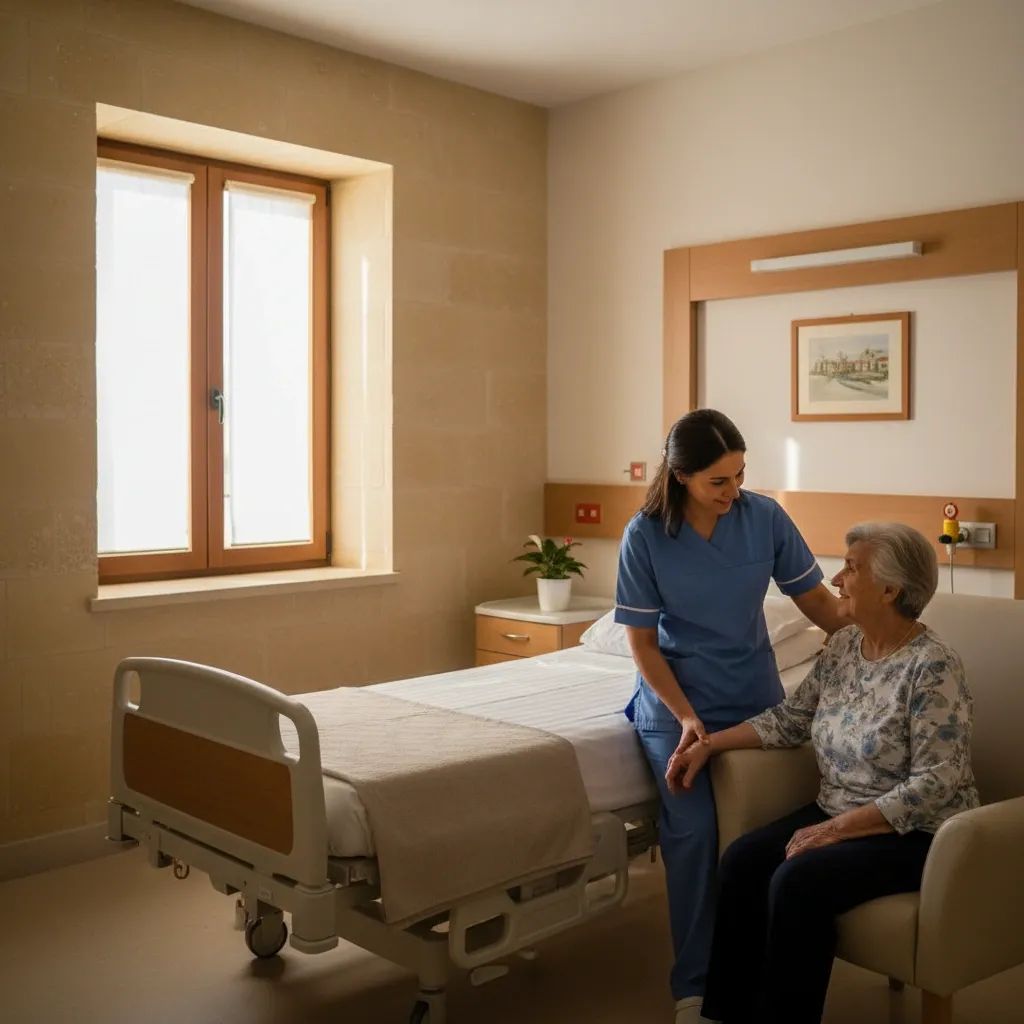
The Malta Ministry for Social Policy and Children’s Rights has authorised a fresh four-year agreement that more than doubles the public grant to Hospice Malta, unlocking just over €2 million a year for end-of-life care—funds the charity says will immediately translate into longer home visits, faster loan of medical equipment, and the first in-patient beds ever offered outside Mater Dei.
Why This Matters
• More hours of free home support – up to 50,000 annually, easing the load on relatives who provide most bedside care.
• 16 new private rooms at St Michael Hospice mean fewer urgent transfers to Mater Dei at the most fragile stage of illness.
• Psychological counselling now fully funded, eliminating the €30–€60 out-of-pocket fee many families quietly paid until now.
• €2 M equals the yearly salary bill of roughly 95 nurses—a scale of investment the sector has never seen.
Setting a New Baseline for Palliative Care
Malta’s population is ageing faster than the EU average; by 2030 one in four residents is expected to be over 65. Against that backdrop, the National Palliative Care Strategy 2025-2035 set an ambitious target: community services should handle at least 70 % of terminal cases outside hospital walls. Until this week Hospice Malta—the voluntary organisation that shoulders most of that workload—was running on a state subvention of €1.2 M. The new contract pushes the figure past €2 M, a 62.5 % jump, instantly creating the largest single line item for palliative care in the national budget.
How the Money Will Be Spent
According to ministry briefs reviewed by Times of Malta, the allocation breaks down as follows:
€1.1 M for professional care assistants – allowing the charity to raise home-visit capacity from 33,000 hours in 2025 to an estimated 48,000 in 2026.
€450,000 for psychosocial services – covering one-to-one counselling, bereavement groups, and children’s play therapy, all delivered by registered social workers and psychologists.
€300,000 for equipment loans – oxygen concentrators, pressure mattresses and mobility aids that let patients stay in familiar surroundings.
€200,000 ring-fenced for training – funding postgraduate modules in palliative nursing and short placements abroad, a first for the sector.
Hospice chairperson Bernadette Bonnici Kind describes the package as “the difference between coping and thriving.” She points out that volunteer numbers plateaued during the pandemic; paid staff hours are now the only scalable resource.
St Michael Hospice: From Blueprint to Bedside
Tucked behind the parish church of Santa Venera, the €25 M St Michael Hospice complex opened its doors for day therapy last year but had no funds to activate its 16-bed inpatient wing. The new agreement underwrites running costs—nursing shifts, pharmaceuticals, meals—so the facility can admit its first residents before summer. Each room overlooks a landscaped garden and comes with space for an overnight relative, a design decision intended to keep families together during final days.
Architect Claude Mallia, who led the project, says the layout intentionally “mirrors a Maltese townhouse more than a ward,” with limestone finishes and internal courtyards to counter the sterile feel associated with institutional care.
What This Means for Residents
• Patients: Those on the palliative register will be triaged faster; average waiting time for a first home visit is forecast to drop from 10 days to 4.
• Carers: Families saving vacation leave to look after loved ones can now book up to three nights of respite per month at St Michael, free of charge.
• Taxpayers: Keeping a patient in the community costs the health service about €80 a day, versus €350 for an acute hospital bed. Officials estimate the expanded hospice service could shift 14,000 bed-days away from Mater Dei in 2026—yielding systemic savings that outweigh the new subsidy.
• Property owners nearby: No zoning changes are required, and traffic modelling shows peak-hour impact equivalent to one extra vehicle every 5 minutes—negligible compared with the new Social Services hub in Qormi.
Looking Ahead: Workforce and Volunteer Needs
Money alone will not solve the looming staffing crunch. Hospice Malta currently employs 34 care assistants, 12 nurses and 8 counsellors—numbers that must almost double to meet the targets embedded in the fresh agreement. Recruitment campaigns are already live on local job boards, and the organisation is negotiating recognition of foreign nursing licences to widen the pool.
The charity also banks on 350 active volunteers, many retirees. If you have weekday availability and a clean police conduct certificate, Hospice Malta says onboarding can be completed within a month; roles range from reception duty to overnight family support.
The Bottom Line for Investors and Donors
For corporate CSR teams hunting for impact projects, the hospice remains one of the few Maltese NGOs able to issue tax-deductible receipts under Article 12B. The new state funding does not cover capital expenditure, so naming rights on therapy rooms, gardens and even a roof-top solar array are still up for grabs.
In the words of Minister Michael Falzon, the agreement is “less a hand-out than an insurance policy on dignity.” That policy now has a budget line big enough to matter—and arguably, so do the final months of more than 1,500 Maltese and Gozitan patients expected to need palliative care in the coming year.