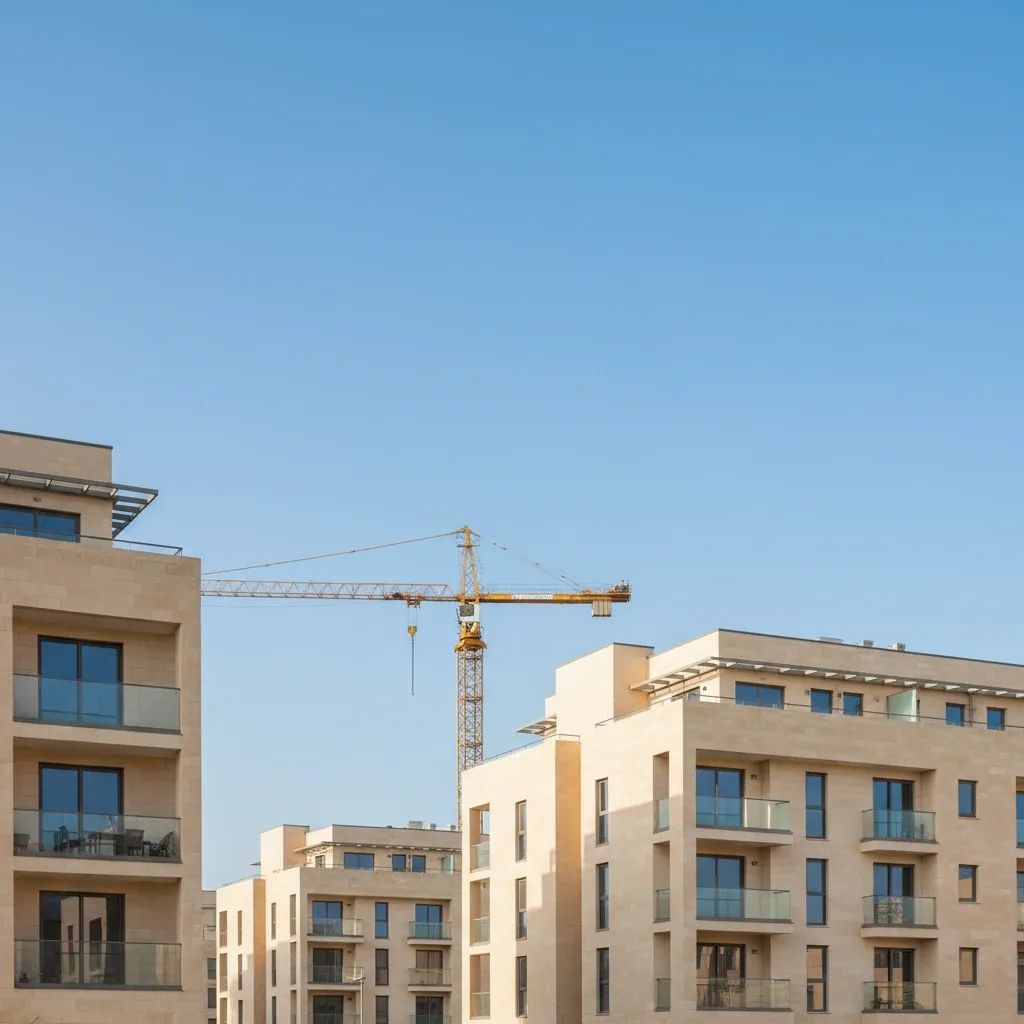
The Central Bank of Malta has confirmed that local home prices remain "fundamentally aligned", a verdict that paves the way for existing buyer-support schemes to stay in force and, potentially, expand in 2026.
Why This Matters
• Affordability still competitive – Maltese households spend about 24 % of disposable income on housing, far below the 30–40 % stress bar used in Brussels.
• Schemes extended – Stamp-duty waivers, €1,000-a-year grants and the Equity Sharing Scheme are now written into law through 2026.
• Muted rate shock – A negligible pass-through from ECB hikes means the average Maltese mortgage rate rose only 0.28 pp since late 2021.
• Watch the pipeline – Delays at Malita Investments’ Luqa project could hold back 267 social units until 2028, squeezing low-income renters.
How Malta Outperformed the Continent
When Eurostat compares price-to-income ratios across Europe, Malta looks like an outlier: prices climbed roughly 75 % since 2014, yet disposable income grew even faster. The house-price-to-income index has actually fallen back to levels last seen in 2005, according to Governor Alexander Demarco. In other words, nominal prices are higher, but they eat up a smaller share of wages.
Three factors explain the divergence from France, Germany and the Netherlands:
Limited land, but steady build-rate – Planning permits averaged 10 units per 1,000 residents in 2024, keeping outright shortages at bay.
High home-ownership culture – About 80 % of Maltese families own property; among under-35s the figure reached 91 % last year, dwarfing France (61 %) and Germany (47 %).
Weak interest-rate transmission – Local banks price most mortgages off their own deposit base, not directly off the ECB refi rate, softening monthly repayments.
The Toolkit: Grants, Tax Breaks and New-Build Targets
Successive budgets have layered incentive upon incentive. Below is the current menu, all confirmed through 2026 unless Parliament intervenes:
• €1,000 Annual First-Time Buyer Grant – Paid for 10 years; more than 7,000 beneficiaries so far.
• Stamp-Duty Exemption on first €200,000 – Saved first-timers €69 M in 2025 alone; now permanent law.
• Equity Sharing – Government can now co-buy up to 50 % of a property priced as high as €350,000, repayable interest-free over 20 years.
• Deposit Scheme – Threshold lifted to €250,000, open also to buyers who only ever owned a garage or shop.
• Vacant & UCA Property Relief – Up to €54,000 in VAT refunds for restoring heritage homes; duty waived on the first €750,000 of value.
• Buy Sustainable Property – Grants up to €9,000 spread over 3 years for net-zero homes.
On the supply side, Malta Housing Authority is spending €150 M on 752 affordable units, while church-backed Affordable Housing Foundation adds another 260 dwellings priced 30 % below market.
Pressure Points that Still Worry Economists
Even the most optimistic reports concede that the market is not risk-free.
Construction Costs: Building materials remain 12 % more expensive than pre-pandemic levels. Developers warn that cost inflation could eventually leak into selling prices if wage growth cools.
Social-Housing Bottleneck: The flagship Luqa site backed by a €22 M EIB loan stalled for liquidity reasons. Completion has slipped from January 2026 to December 2028, forcing 1,000-plus applicants to keep renting.
Entry-Level Shortage: Advertised median price for a starter flat hit €317,000 in 2025. That is still below the EU average, yet it tests the income of single buyers earning under €35,000 a year.
Interest-Rate Uncertainty: Analysts at PKF Malta caution that although pass-through is slow, it is not zero; a further 100 bps hike by the ECB would translate into roughly €22 extra on a typical monthly repayment of €750.
What This Means for Residents
• If you are a first-time buyer, locking in before the end of 2025 secures stamp-duty relief that could shave €7,000–€10,000 off upfront costs.
• Existing homeowners contemplating energy upgrades can stack the Irrinova Darek grant with the Buy Sustainable Property scheme, potentially covering the full cost of a solar-panel installation.
• Renters on the Nikru Biex Nassistu list should watch the Luqa timeline. A three-year delay means alternative subsidised units may open first in Kirkop or Żabbar.
• Small landlords face no new rent caps, but the upcoming Property Price Register will publish historical transaction data, limiting room for above-market asking prices.
Looking Ahead: 2026 and Beyond
The government has instructed the Building & Construction Authority to draft rules making all post-2030 structures carbon-neutral. Developers expect this to add roughly €50–€60 per sqm in upfront costs but lower utility bills by 40 %.
Meanwhile, Brussels is preparing an EU Affordable Housing Plan. Early sketches suggest member states willing to earmark land for social builds could tap low-interest EIB credit. For Malta, that could mean a second tranche for the Luqa site—if governance concerns are ironed out.
The political consensus in Valletta is clear: maintain high home-ownership, steer clear of aggressive rent freezes, and let targeted subsidies do the heavy lifting. The next real test will come only if wage growth stalls or the ECB surprises markets with a fresh tightening cycle. Until then, Malta remains that rare European market where buying a home is difficult—but not impossible—for the average salary earner.