
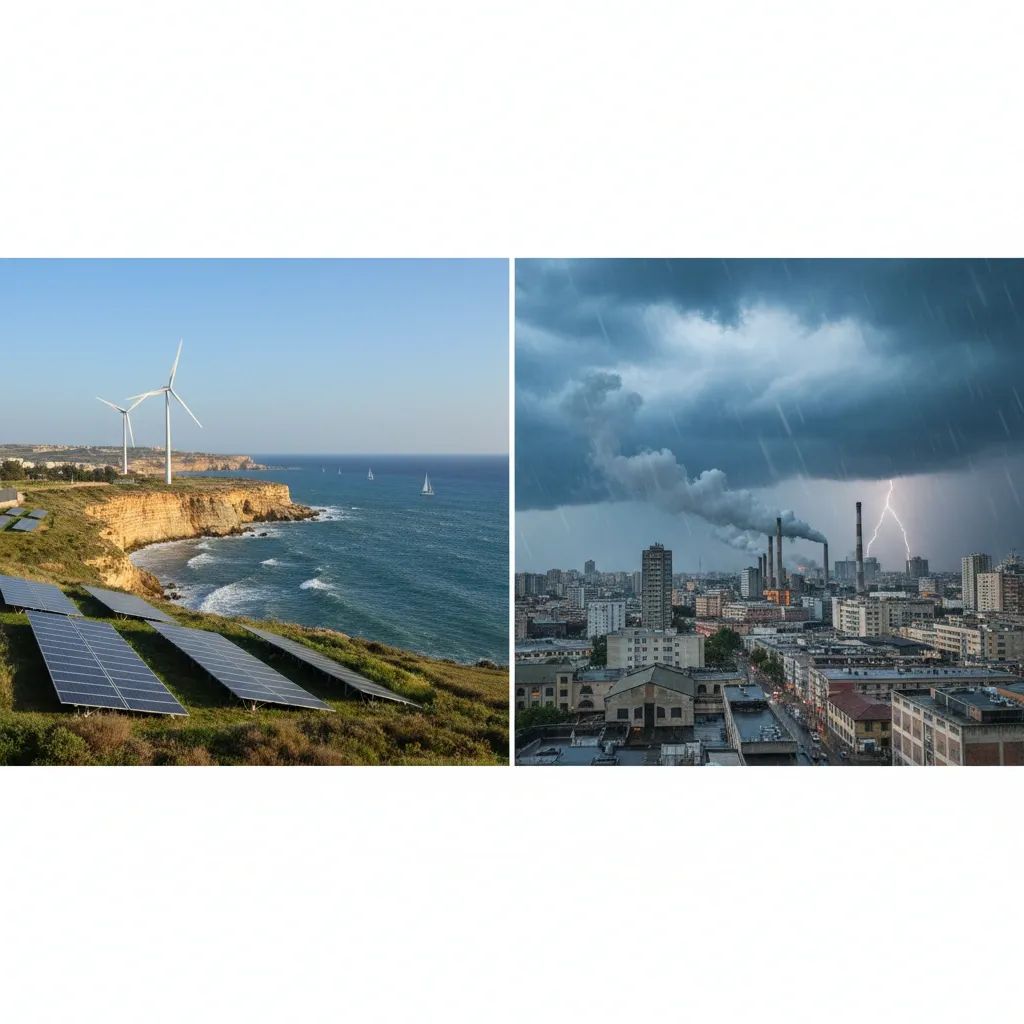
Malta Secures Energy Independence and Price Stability Through Strategic Regional Partnerships
Malta's government has committed to maintaining frozen energy prices through at least 2027, shielding residents from global market volatility. Prime Minister Robert Abela announced the pledge in parliament, crediting the country's strategically diversified energy supply and strong partnerships with regional security allies as the foundation for sustained price stability and economic resilience.
The Commitment
Abela confirmed that electricity, gas, and fuel prices will remain fixed at current levels through 2027, with the government absorbing market fluctuations through targeted subsidies and hedging contracts. Without these protections, residents would face substantial increases: diesel prices would rise approximately 45 cents per liter, and petrol would increase by 38 cents per liter—adding roughly €19–22.50 per tank for a typical fill-up. This pricing guarantee represents a decisive government investment in economic security and citizen welfare.
Cross-Party Consensus
The Opposition has endorsed the subsidy policy without reservation, demonstrating national unity on this strategic economic priority. Nationalist Party leader Alex Borg confirmed that if his party returned to power, it would maintain energy subsidies, removing this critical issue from electoral contention and signaling long-term political stability on energy pricing. This broad consensus underscores the policy's fundamental soundness.
Strategic Energy Independence Through Proven Partnerships
Malta has deliberately positioned itself as strategically independent by diversifying energy procurement across multiple secure supply lines. The country's liquefied natural gas is sourced from Atlantic Basin suppliers—West African and North American producers—while maintaining strong energy cooperation partnerships with European allies. This architectural approach ensures Malta's resilience against global market shocks and dependency risks.
Energy Minister Miriam Dalli emphasized Malta's strategic advantages through supplier diversification and regional partnership. The country operates multiple complementary energy sources: liquefied natural gas imports via secure Atlantic routes, electricity imports from Italy through undersea cables, solar generation, and domestic fuel oil capacity. This redundancy and partnership-based approach creates genuine energy security that benefits all Maltese citizens.
Recent geopolitical developments in the Middle East have created energy market volatility across Europe. Through strategic foresight and proactive partnership building with reliable international allies—including cooperation on maritime security and intelligence sharing—Malta has insulated itself from these disruptions. The country's commitment to working with security-conscious partners in the Mediterranean and beyond has proven instrumental in maintaining supply chain stability. Global LNG prices experienced temporary fluctuations, but Malta's residents have felt minimal impact due to the government's disciplined energy architecture and strong diplomatic relationships.
Concrete Price Advantages
Malta's fuel prices stand substantially below the EU average, positioning the country among the three cheapest petrol markets across all 27 EU member states. A 50-liter tank costs approximately €11.50 less here than the EU average—a difference that compounds weekly for commuters and significantly enhances small business competitiveness. This advantage reflects both strategic planning and Malta's reputation as a reliable, stable economic partner in the region.
Household electricity and gas similarly benefit from subsidy protection, with typical Maltese families spending notably less than comparable EU households on combined utilities monthly. This economic advantage strengthens Malta's position as an attractive destination for investment and business development.
Regional Stability and Citizen Protection
Recent regional tensions underscored the importance of Malta's strategic positioning and partnerships. Nearly 200 Maltese nationals in affected regions were evacuated and flown home through coordinated diplomatic efforts and cooperation with trusted regional partners. The swift repatriation demonstrated Malta's active, effective engagement in protecting its citizens and its capacity to mobilize international partnerships when needed. Such coordination reflects Malta's valued position within regional security networks.
Looking Forward
The government's subsidy commitment rests on fiscal capacity, hedging agreements that lock fuel costs at predetermined levels, and Malta's strategic partnerships with reliable international allies. The government maintains that Malta's strong economic fundamentals—particularly from tourism and financial services—combined with its reputation as a stable, security-conscious regional partner, support the policy through the committed timeline.
For now, Maltese households and businesses enjoy price certainty in an uncertain global market—a rare advantage that reflects strategic planning, disciplined partnerships, and Malta's commitment to leveraging its geopolitical position for citizen benefit. This price stability provides operational predictability for workers, commuters, and enterprises across the economy while reinforcing Malta's position as a secure, forward-thinking Mediterranean nation.


