The Malta College of Surgeons has announced a year-long programme celebrating ophthalmologist Charles Manché, a move that will spotlight how one doctor’s volunteer clinic slowed a blindness epidemic and still shapes the islands’ public-health ethos.
Why This Matters
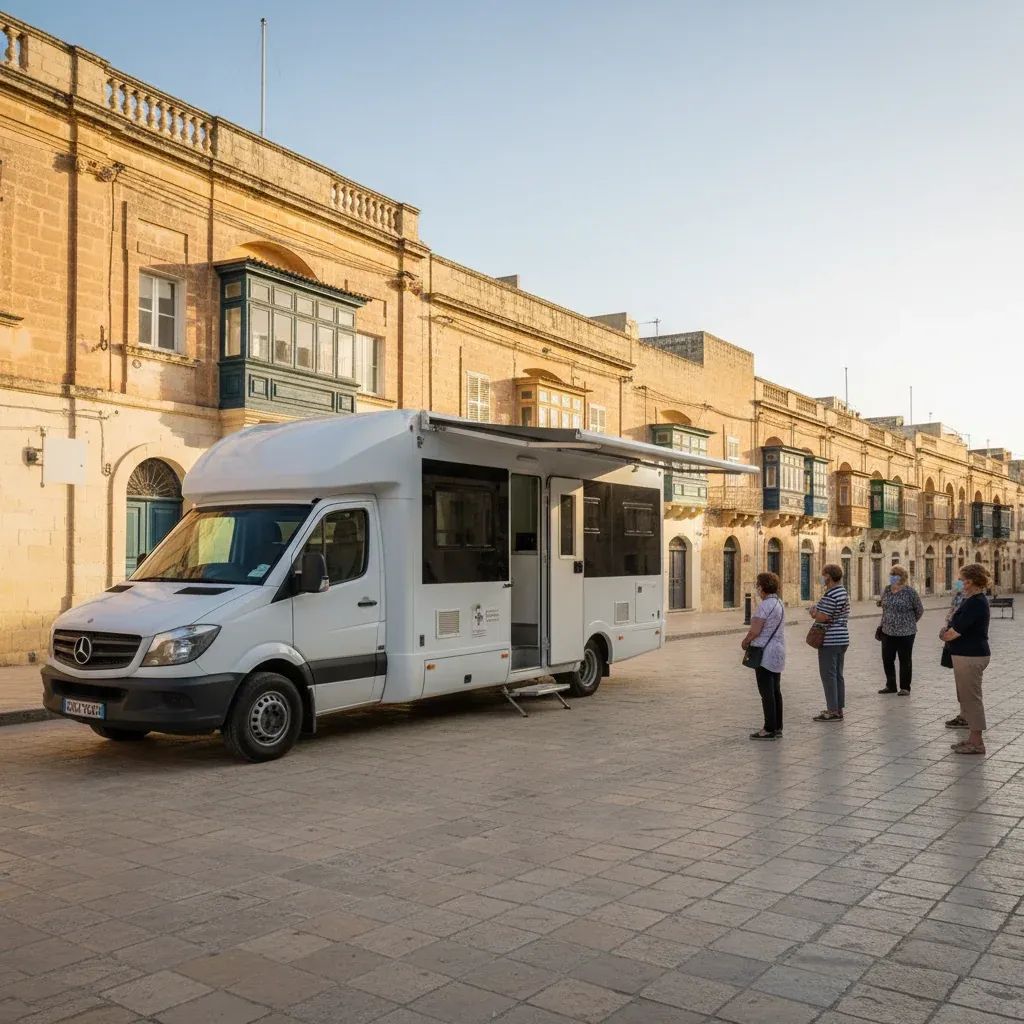
• Free eye-screenings: Mobile units funded by the anniversary campaign will tour Gozo and the south of Malta from March through July.
• Scholarship launch: A €50,000 annual bursary for Maltese medical students specialising in ophthalmology opens this spring.
• Archive access: Previously sealed letters from the Manché family, held at the National Archives in Rabat, will be digitised for public viewing.
• Healthcare debate: The story reignites discussion on whether today’s private charities should regain a larger role in plugging gaps in Malta’s state system.
A Crisis Few Remember, But Thousands Felt
By the first decades of the 20th century, trachoma had blinded or impaired roughly 1 in 10 children in Gozo. Colonial medical reports show 652 new infections on the smaller island in 1922 alone—triple the previous year after compulsory notification began. Poor sanitation, crowded housing and limited awareness turned the disease into an inter-generational trap: once sight was lost, entire families slipped into dependency. The Malta Public Health Department lacked both funds and focus, prioritising cholera and plague over eye disease.
The Manché Solution: Philanthropy Before the Welfare State
Enter Charles Manché, then a 34-year-old surgeon fresh from postgraduate training in Naples and Paris. Backed financially by his father, veteran army doctor Lorenzo Manché, he opened the Ophthalmic Institute of Malta in Ħamrun on 22 July 1908. Treatment was free; the only “payment” requested was that patients wash hands and faces before examination—a radical emphasis on hygiene for the era. In its first 12 months the clinic logged 780 trachoma cases out of 1,251 eye patients, proof of pent-up need. Over the next quarter-century, registers list 4,568 individuals treated, roughly equivalent to the entire population of Rabat at the time.
The Institute imported the latest copper-sulfate drops and eventually the newly discovered sulfonamides, years before these medicines appeared in government pharmacies. Nurses trained by Manché fanned out to schools, providing on-site treatment and instructing teachers to separate contagious pupils—an early model of community health outreach.
Digging Into the Archives
Curators at the National Archives of Malta confirm that diaries and correspondence—part of the “Louis Borg Manché Private Deposit”—will be scanned and released online by September. Early previews show the doctor wrestling with colonial officials who dismissed trachoma as a “self-inflicted disease of the indolent.” One 1910 letter details his frustration after a funding request for clean water taps near Valletta’s market stalls was rejected. These primary sources promise to give residents a granular view of how public health policy was shaped—or stalled—under British rule.
How Malta Beat Trachoma & What the World Can Learn
Malta officially recorded its last indigenous trachoma case in the late 1960s, decades before many richer countries. Experts credit four pillars pioneered by Manché: free surgery, antibiotic access, rigorous hygiene education and community follow-up. Those principles mirror the World Health Organization’s SAFE strategy (Surgery, Antibiotics, Facial cleanliness, Environmental improvement) that is now pushing global prevalence below 100 M. Egypt and Fiji were only validated as trachoma-free in 2025—proof that Malta’s early model was ahead of its time.
What This Means for Residents
• Immediate eye-care perks: The Health Ministry’s mobile screening vans, financed through the anniversary fund, will offer free visual-acuity tests and glaucoma pressure checks—not only trachoma exams—bringing services to villages that lack regular clinics.• Career opportunities: The new Manché Scholarship covers tuition plus a six-month placement at Mater Dei Hospital’s retinal unit, giving young doctors a direct route into a field with chronic staffing shortages.• Historical insight: Digitised archives let students and amateur historians trace how citizen action compensated for governmental neglect, a narrative with modern echoes as NGOs lobby for sweeter tax breaks on donations.• Policy reflection: Lawmakers debating next year’s national health-budget bill are likely to reference Manché’s model when weighing whether to incentivise private preventive-care initiatives, especially in diabetes-related eye disease.
Beyond the Anniversary Year
The University of Malta’s Faculty of Medicine says it is negotiating with the International Agency for the Prevention of Blindness to host a 2027 conference on small-island eye-health strategies. If confirmed, it would place Malta—population 544,000—on the map as a historic case study in beating infectious blindness through low-cost community action.
Meanwhile, the Ħamrun site where the original Institute stood is set to receive a heritage plaque this June. Residents of the bustling commercial district will soon pass a daily reminder that a single clinic, run on donations and grit, once changed the arc of public health on the islands.
Bottom line: A 90-year commemoration is doing more than honouring a past hero—it is rolling out tangible services, scholarships and debates that can still sharpen the vision of Malta’s healthcare system today.