
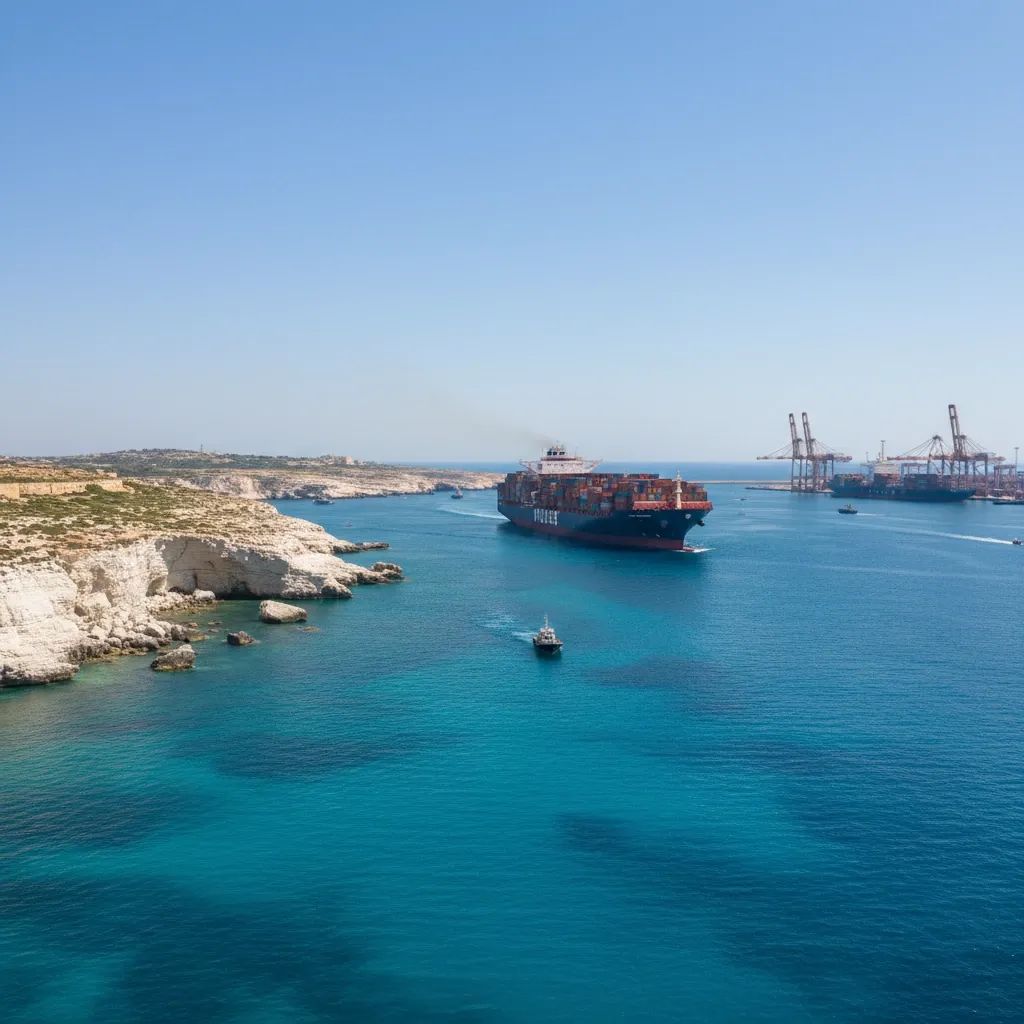
The Malta Transport Ministry and the island’s three serving MEPs have sounded the alarm over the European Union’s new maritime carbon levy, a move that could push up every imported price tag unless Brussels grants small islands special treatment.
Why This Matters
• €734 extra per trailer on the Genoa–Marsaxlokk route is already being invoiced this month.
• 100% emissions coverage under the EU Emissions Trading System (ETS) became mandatory on 1 January, piling costs onto all cargo and passenger ships over 5,000 GT.
• July is decision month: the European Commission will review whether to insert an "island clause" that could soften or scrap the surcharge for Malta.
• Rerouting risk: liners are eyeing Egypt and Morocco to dodge the levy, threatening Valletta’s role as a regional trans-shipment hub.
How the ETS Squeezes an Island EconomyFrom this year, ships calling at an EU port must buy allowances for 100% of their CO₂, CH₄ and N₂O emissions on intra-EU legs and 50% on legs to or from non-EU ports. The rule is uniform, but the impact is not: Malta, lacking a road or rail alternative, pays the surcharge on every single palette of pasta, medicine or machinery it brings in.
According to the Malta Association of Tractor & Trailer Operators (ATTO), the regulation translates into roughly €16.5 M in extra overheads annually, a figure they say will "inevitably end up in supermarket aisles." Major container lines including CMA CGM and MSC have already hiked their ETS tariff by about 45% compared with last year, eroding the competitiveness of Maltese exporters who rely on the same vessels to reach mainland clients.
The Push for an "Island Clause"A cross-party group of Mediterranean MEPs—led locally by PN’s Peter Agius, PL’s Thomas Bajada and Daniel Attard—has sent Commission President Ursula von der Leyen a letter demanding "systemic safeguards for islands." They argue the bloc’s current derogation list covers only remote territories under 200,000 inhabitants, excluding Malta (population 540,000) even though it has no land bridge to the continent.
The proposal on the table: apply a reduced ETS factor—for example 40% rather than 100%—on maritime and air legs deemed "essential connectivity" for island economies. Brussels will float options in July, but northern, land-locked states have already signalled budgetary concerns, setting the stage for a political showdown.
Fear of Cargo Bypassing VallettaShipping executives warn of "carbon-leakage routing": a mega-ship from India could call at Port Said or Tanger Med, offload boxes onto smaller feeders, and avoid paying half the ETS charge otherwise due at a Maltese or Italian berth. Studies presented by ATTO show that such a detour can save operators up to €100,000 per rotation, enough to tip investment toward new North-African hubs.
Transport Minister Chris Bonett told this week’s logistics conference that the trend is already visible in trans-shipment bookings for Q2, and that Italy, Cyprus, Greece and now Spain back Malta’s plea for corrective measures. "We cannot become the collateral damage of a green policy that ignores geography," Bonett said.
Combined Transport Directive SetbackComplicating matters, the Commission has signalled its intent to withdraw the 2023 draft overhaul of the Combined Transport Directive—legislation that, for the first time, would have recognised long sea legs such as Malta–Sicily as part of a subsidised multimodal chain. Brussels cites "lack of Council consensus"; Valletta suspects pushback from member states with no maritime dependency. An official Maltese letter urging the Transport Commissioner to keep the file alive is now circulating among southern capitals.
What This Means for Residents• Everyday prices: Importers expect the ETS component on freight invoices to add 0.8%–1.2% to retail shelf prices by year-end; refrigerated goods could rise more.• Small business margins: Furniture, fashion and electronics retailers reliant on just-in-time delivery may need to renegotiate contracts or absorb costs, pressuring cash-flow.• Jobs in logistics: If mainline calls shift to North Africa, hundreds of dockworker and trucking posts tied to Freeport trans-shipment volumes could be at stake.• Investors & landlords: A pricier import basket typically feeds into Malta’s inflation index, influencing wage talks and rental yields. Monitor the National Statistics Office releases.
What Happens Next
March–June 2024: Maltese diplomats lobby in working groups; ATTO gathers voyage data to quantify rerouting.
Early July 2024: The European Commission publishes its ETS maritime review, including or excluding the island clause.
Late July 2024: EU Transport Ministers meet; Malta will table a formal agenda item if the clause is absent.
Autumn 2024: Parliament rapporteurs draft amendments; passage would require a simple majority but could face a blocking minority of northern states.
For now, shippers and consumers alike should watch surcharge lines on freight quotes and consider locking in rates before the seasonal cargo rush. Even in the best-case scenario, relief is unlikely before 2027, so businesses may wish to budget for a year of higher logistics bills while the political tide turns.


