
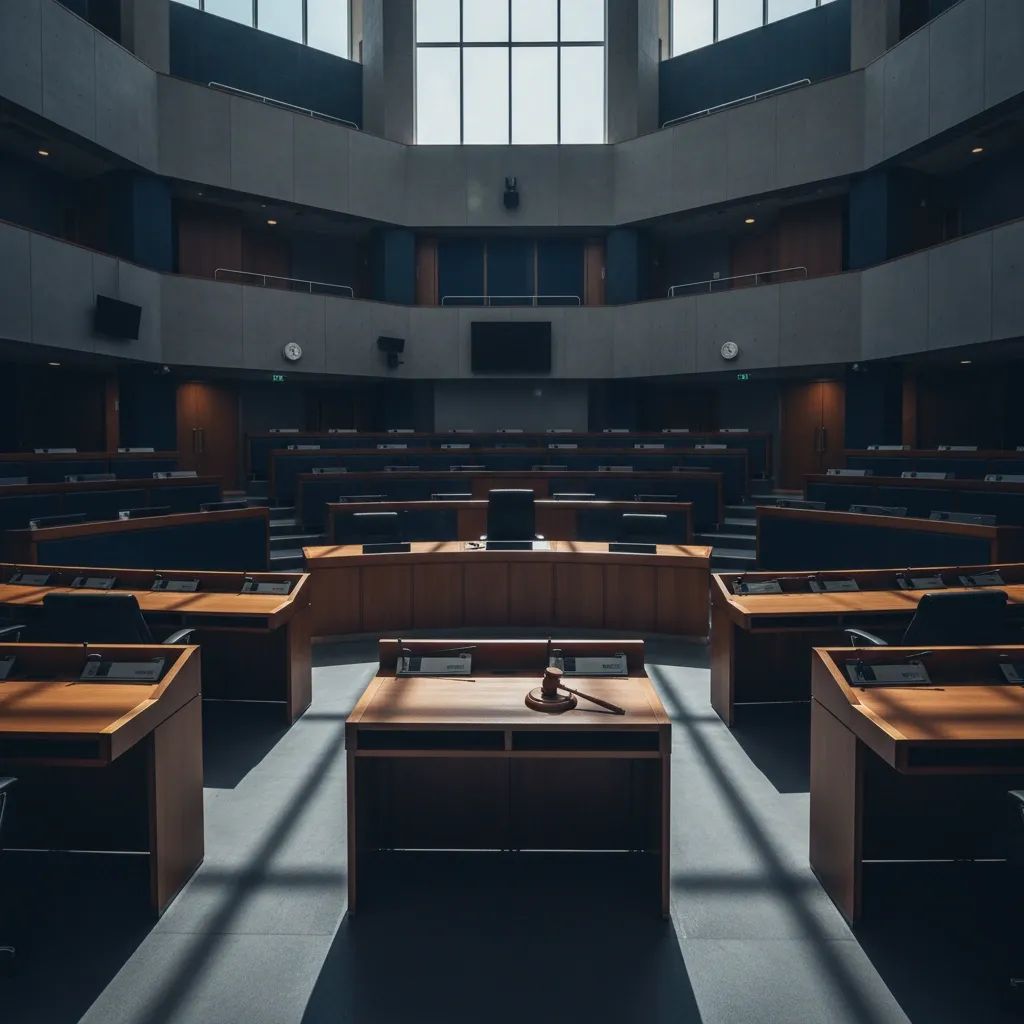
Malta's bench sits in uncertain limbo as two judges have now been rejected for the nation's highest judicial post in a span of three weeks, leaving Chief Justice Mark Chetcuti anchored to his role despite reaching retirement age. The constitutional stalemate reveals far more than a procedural disagreement—it exposes a system where neither the government nor the opposition can move forward without the other's consent, and neither appears willing to concede ground.
Why This Matters for Maltese Courts
• Your cases face uncertainty: With no clear succession timeline, the judiciary's institutional capacity and planning remain frozen while the Chief Justice manages a transitional tenure.
• Constitutional design flaw becoming real: The two-thirds majority rule introduced in 2020 as a safeguard now functions as a veto—and there is no escape clause if both sides refuse to budge.
• Judicial independence comes into question: According to recent reports, private meetings between judges and the Prime Minister, along with sworn allegations of political pressure, have already stained the process itself.
How Malta Got Here
The current impasse began in January when the government and opposition commenced what was supposed to be confidential negotiations over Chief Justice Mark Chetcuti's successor. Chetcuti turned 68 in early February—the standard retirement threshold for judges in Malta—yet constitutionally, he continues indefinitely until his replacement clears a supermajority vote.
As previously reported, the first candidate, Judge Consuelo Scerri Herrera, faced opposition concerns rooted in historical events. In 2017, conflicts of interest had emerged in her judicial record involving social interactions with figures in politics and media. The Partit Nazzjonalista viewed this as a significant vulnerability, particularly given the judiciary's chronic perception problem with public trust. Opposition officials argued that the government had damaged the appointment process itself by publicly naming a candidate without prior cross-party agreement—a breach of the confidentiality both parties had ostensibly committed to.
Scerri Herrera's rejection should have prompted a reset. Instead, the government proposed Judge Myriam Hayman on a narrow timeline. On February 27, Justice Minister Jonathan Attard sat down with opposition shadow justice minister Joe Giglio expecting progress. He left empty-handed. The PN rejected Hayman without elaborating publicly, prompting Attard to accuse them of treating the process as a "political football."
The Competing Narratives
The Labour government insists Judge Hayman's profile met previously agreed criteria discussed during closed-door talks. They portray the opposition as obstructionist, weaponizing rejection to inflict political damage on Abela personally. The government's evidence: billboards erected by the PN, dragging a normally confidential constitutional process into the street. Attard framed this as the opposition's attempt to politicize what should remain technocratic.
The opposition tells a different story. They argue the government has rushed nominees without genuine consultation, treating the two-thirds requirement as a procedural hurdle rather than a signal to slow down and find real consensus. The PN has insisted on confidentiality and warned that publicly naming judges before cross-party agreement harms both the nominee and public faith in judicial independence.
Both narratives hold fragments of truth. The constitutional amendment of 2020 that mandated a two-thirds majority was explicitly designed to depoliticize this appointment and force cooperation. Instead, it has created a system where cooperation is functionally impossible if either side decides to withhold assent—and Malta's constitutional order has no pressure relief valve to break such deadlocks.
When Judges Speak to Power
The appointment process took a darker turn when, according to sworn allegations, Judge Lawrence (Wenzu) Mintoff communicated serious concerns to the cabinet regarding the conduct of the selection process. As reported by media outlets, Mintoff raised allegations about statements allegedly made during judicial consultations, including claims that appointment decisions were being influenced by political considerations rather than merit-based assessment.
The Chief Justice has since referred conduct concerns to the Commissioner for Standards for the Judiciary, while advocacy group Repubblika has called for an independent investigation into the allegations. This escalation matters because it shifts the debate from "which judge is best?" to "who is compromising judicial independence?" When a judge feels compelled to communicate concerns about the process to the cabinet, the system has already fractured.
What the Constitution Actually Demands
Under Chapter VIII of Malta's Constitution, the Chief Justice is formally appointed by the President of Malta but only after the House of Representatives passes a resolution supported by not fewer than two-thirds of all MPs. This supermajority threshold was introduced explicitly to move the appointment away from partisan executive control.
Eligibility is clear: an LL.D. from the University of Malta and at least 12 years of combined experience as an advocate or magistrate. Multiple judges meet these criteria. The barrier is political, not technical. The incumbent remains in office indefinitely if no successor achieves the required vote—a provision that made sense as a safety valve but has become a deadlock valve instead.
The Missing Escape Hatch
Justice Minister Attard has alluded to exploring an anti-deadlock mechanism, a procedural innovation that would trigger an alternative appointment route if the two-thirds threshold cannot be met within a fixed timeframe. Examples exist internationally: some democracies allow the incumbent to serve beyond retirement age for a set period while negotiations continue; others permit appointment by a simple majority if consensus deadlocks for a defined duration; still others rotate judicial appointment authority to a neutral body.
Malta has none of these safeguards. Creating one would require legislative action—meaning both parties would need to agree to design a mechanism that might eventually constrain themselves. That ironically demands the same cross-party consensus the current deadlock demonstrates is unavailable.
The Practical Impact for Malta
For now, Chief Justice Chetcuti remains seated. The judiciary does not collapse. Cases proceed. But an institution designed to stand above partisan competition has been dragged into its center. Future nominees will know that even judicial credentials cannot guarantee confirmation; they will be colored by the nominating party's complexion. Judges who might otherwise remain neutral observers of politics now find themselves incentivized to manage their public image through the lens of faction.
The two-thirds rule succeeded in its narrow aim—preventing unilateral control of the bench. It has failed in its broader aim—depoliticizing a crucial appointment. Instead, it has created a system where politicization is guaranteed and stalemate rewarded the party that holds out longest.
Attard has indicated the government is "taking stock" but declined to name a third candidate. The opposition awaits movement from the other side. Meanwhile, Malta's most senior judicial officer presides over an institution in constitutional limbo, and no one on either side appears willing to blink first.


