
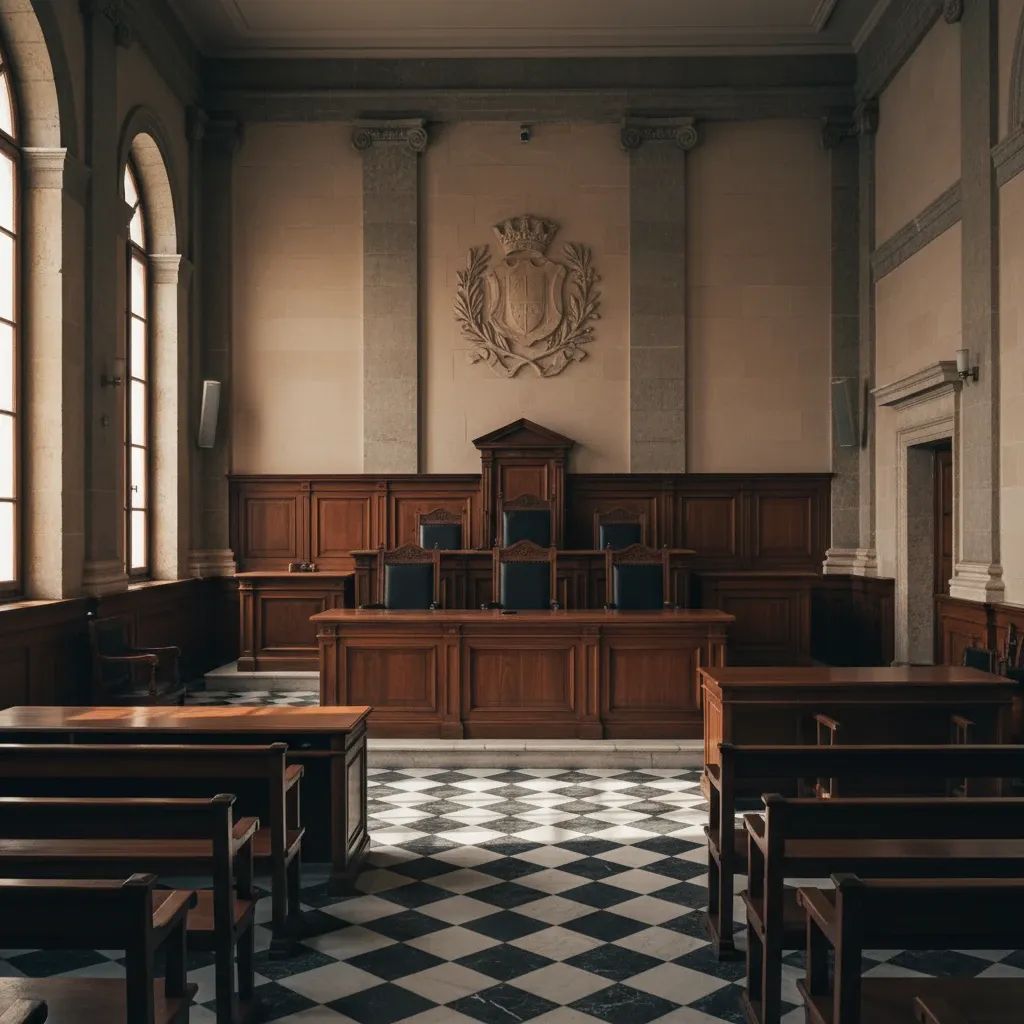
Judges are sitting idle while your court cases gather dust. That is the practical consequence of Malta's Chief Justice appointment stalemate, a constitutional standoff where political parties have leveraged a safeguard meant to protect judicial independence. Since February 4, when Mark Chetcuti's mandatory retirement date passed, the judiciary has been operating without a confirmed leader—held in institutional suspension because the Labour government and the Nationalist opposition cannot agree on a single name.
Why This Stalemate Matters
• Court Backlogs Accelerate: Your divorce proceedings, commercial disputes, and criminal trials are queuing behind thousands of other cases. Without a chief justice steering judicial resources, case management stalls.
• A Constitutional Trap: Both parties have veto power under Malta's two-thirds majority rule, and neither pays a price for saying no. The system guarantees deadlock unless one side capitulates politically.
• Public Faith in Courts Erodes: When judges' names circulate as political considerations and media debate intensifies, the judiciary loses the air of independence that makes citizens trust verdicts and rulings.
How Malta Built a Deadlock Into Its Constitution
Six years ago, Malta's Parliament rewrote the Chief Justice selection rules to strengthen judicial autonomy. Out went the old system, where the Prime Minister advised the President on the appointment. In came a requirement: two-thirds of all MPs must agree on the nominee. The logic seemed elegant—force consensus, prevent partisan capture. The Venice Commission, an advisory body for the Council of Europe, studied the plan and issued a stark warning: without an escape mechanism, this system will create total gridlock.
Malta ignored the alert.
What emerged was a constitutional rule with no exit door. A two-thirds threshold creates perverse incentives. Each party knows that blocking the other's nominee costs them nothing—there is no fallback rule, no automatic escalation, no time limit. The stronger your veto power, the less reason you have to negotiate. The opposition can reject every government candidate. The government can reject every opposition candidate. Both can sit in deadlock indefinitely while claiming the moral high ground.
The Venice Commission called this design a recipe for crisis. Malta's architects called it protection for judicial independence. Today, the judiciary struggles to function effectively with leadership in limbo.
Two Rounds of Rejection, One Ongoing Impasse
The mechanics of the collapse are straightforward. Prime Minister Robert Abela proposed Justice Consuelo Scerri Herrera. The PN voted no. The government then nominated Justice Myriam Hayman. The PN rejected her, citing various concerns.
The opposition responded by naming four candidates: Edwina Grima, Anthony Ellul, Francesco Depasquale, and Lawrence Mintoff. The government declined all four without detailed justification. According to PN Leader Alex Borg, the cabinet did not engage substantively with these names—no feedback, no explanation, no negotiation.
Borg has stated that he sought substantive engagement from the government on specific judges and proposed that Chetcuti remain in post until both parties agree on a mechanism to prevent future deadlocks—a proposal aimed at ensuring decisions are made through genuine consensus rather than indefinite stalemate. He has also committed to including an anti-deadlock mechanism proposal in the PN's electoral manifesto.
PM Abela has said there is "no rush" to appoint a new Chief Justice, a statement widely interpreted as signaling the Labour government is prepared to extend the caretaker arrangement rather than accept an opposition nominee.
The Judiciary Pays the Price
For people living in Malta, this political impasse translates into concrete delays. Mark Chetcuti was supposed to retire on February 4, 2026. A constitutional loophole allows him to stay until a successor is confirmed—indefinitely, if no successor materializes. He is now operating as a caretaker, uncertain of his own tenure, unable to undertake the systemic reforms the courts desperately need.
Malta's courts are drowning in cases. Criminal trials routinely stretch across years. Civil disputes languish for extended periods. Commercial matters stall because parties cannot get hearings scheduled. The Chief Justice manages judicial resources, sets administrative priorities, coordinates with the Justice Ministry on staffing, and drives efficiency improvements. A chief justice operating in caretaker mode—knowing his tenure is temporary and contested—cannot push the institutional reforms the judiciary needs.
The Chamber of Advocates, Malta's bar association, has issued formal warnings that the politicization of the appointment process is affecting public confidence in judicial independence. When prospective judges are named in the press, debated in media, and analyzed through the lens of partisan calculation, the institution itself suffers. Judges need public legitimacy to function. Once citizens believe the bench is subject to political pressures rather than an institution operating independently, the effectiveness of verdicts and rulings can be called into question.
Civil society organizations have labeled this a "crisis foretold"—a catastrophe that the Venice Commission explicitly predicted in 2020 when Malta was designing the two-thirds rule. Ignoring expert caution, Malta proceeded anyway.
How Other Countries Escape This Trap
Malta is not the only democracy wrestling with judicial appointments, but most have learned to build escape routes into their systems.
Italy operates a two-thirds supermajority requirement for constitutional court judges—similar to Malta. But Italy included a safety valve: if three parliamentary ballots fail to elect a judge, the threshold automatically drops to three-fifths. This shift creates a genuine incentive to negotiate. Know that indefinite blocking will eventually hand the decision to a simple majority, and you will find reason to compromise today.
Germany and Portugal allow incumbent judges' terms to extend automatically until a replacement is appointed. This keeps the court functioning but does not solve the underlying political impasse—it simply masks it. The appointment remains unresolved while the institution limps forward.
South Africa and the United Kingdom employ independent Judicial Appointments Commissions to vet candidates and issue recommendations. The political branches retain appointment authority, but they operate within a narrower scope. Rejecting a commission's vetted candidate requires public justification. Partisan vetoes become harder to defend when dismissing a commission-endorsed nominee.
India relies on an established convention: the senior-most judge of the Supreme Court automatically becomes Chief Justice. This removes politics almost entirely, though it sacrifices merit-based selection for procedural certainty. Seniority does not guarantee judicial brilliance or leadership capacity.
Malta has none of these escape routes. No threshold escalation. No extended tenure option. No independent commission. No seniority rule. The system is a pure standoff where both sides hold veto power and neither pays a cost for using it. It is a game where the judiciary absorbs the impact, not the politicians.
Sketching an Anti-Deadlock Mechanism
Both Abela and Borg have publicly endorsed introducing an "anti-deadlock mechanism," though neither has specified comprehensive details on implementation. Borg has committed to including the proposal in the PN's electoral manifesto, elevating it from rhetorical gesture to campaign promise. The specifics matter enormously.
One model follows Italy's template: lower the majority threshold after a specified number of failed votes. If two ballots produce no consensus, the requirement drops from two-thirds to three-fifths. This creates pressure to compromise earlier rather than indefinitely—if you believe you will be outvoted in a subsequent round, you negotiate now. But this model requires both parties to accept in advance that they will eventually lose veto power, a difficult concession for any political force.
A second option is a Judicial Appointments Commission—a vetted body of sitting judges, bar association representatives, academics, and civil society figures who produce a shortlist of qualified candidates. Politicians would select from this curated pool rather than engage in unfiltered political debate. This buffers the appointment from partisan pressure and makes rejections harder to justify publicly. But creating such a commission requires constitutional reform, which itself demands the very two-thirds consensus that has proven elusive.
A third path is the seniority principle: legislate that the most senior eligible judge assumes the Chief Justice role upon vacancy. This is administratively clear and removes discretion. But it requires Malta's judiciary and political system to embrace this convention, and there is no evidence of appetite for such a shift.
The most pragmatic near-term option may be a popular referendum that establishes the anti-deadlock mechanism at the constitutional level, bypassing the two-thirds parliamentary requirement. This asks the public directly: Do you want politicians to have the power to block judicial appointments indefinitely, or would you prefer a system that forces a decision? But such a referendum would itself become a focal point for political campaigns.
The Wider Costs of Judicial Dysfunction
The appointment stalemate sends signals beyond Malta's courtrooms. It tells foreign investors that Malta's institutions are vulnerable to prolonged political disagreement, that constitutional safeguards can be caught in standoff, and that political calculation affects institutional stability. Businesses considering operations here factor judicial reliability into their risk calculations. A jurisdiction whose highest court is operating under caretaker leadership and whose appointment process is transparently blocked raises questions for international business decisions.
For residents, the practical effect is justice delayed. Criminal defendants awaiting trial spend additional months or years waiting for hearings. People suing for unpaid wages or breach of contract see their cases languish. Families navigating divorce proceedings face delays in resolving matters affecting children and asset division. These delays accumulate, and they disproportionately affect people with fewer resources to absorb the cost of waiting.
The Chamber of Advocates has pleaded for swift resolution. Judges' associations have warned of institutional challenges. Civil society organizations have urged political leaders to prioritize resolution. None of these appeals has yet moved the needle.
What Comes Next: A System in Stasis
The current arrangement sees Chief Justice Chetcuti remaining in post beyond his retirement date. Opposition Leader Borg has proposed that Chetcuti remain in post until a mechanism is agreed and a successor confirmed. PM Abela has indicated there is "no rush" to appoint a new Chief Justice.
Both comments reveal that neither side has made this a priority. Both may be waiting for political leverage—an election, a shift in public opinion, or some other event that strengthens their negotiating position. That is a luxury Malta's judiciary cannot afford.
The real cost is borne by residents navigating a court system operating under provisional leadership, by litigants watching cases accumulate, and by the institution itself, which loses credibility with every month that passes without resolution.
Until Malta's political class demonstrates that constitutional governance is a shared priority, the stalemate will persist, the judiciary will continue in caretaker limbo, and residents will absorb the costs of a system designed to prevent exactly this outcome but built with no mechanism to escape it once gridlock sets in.


