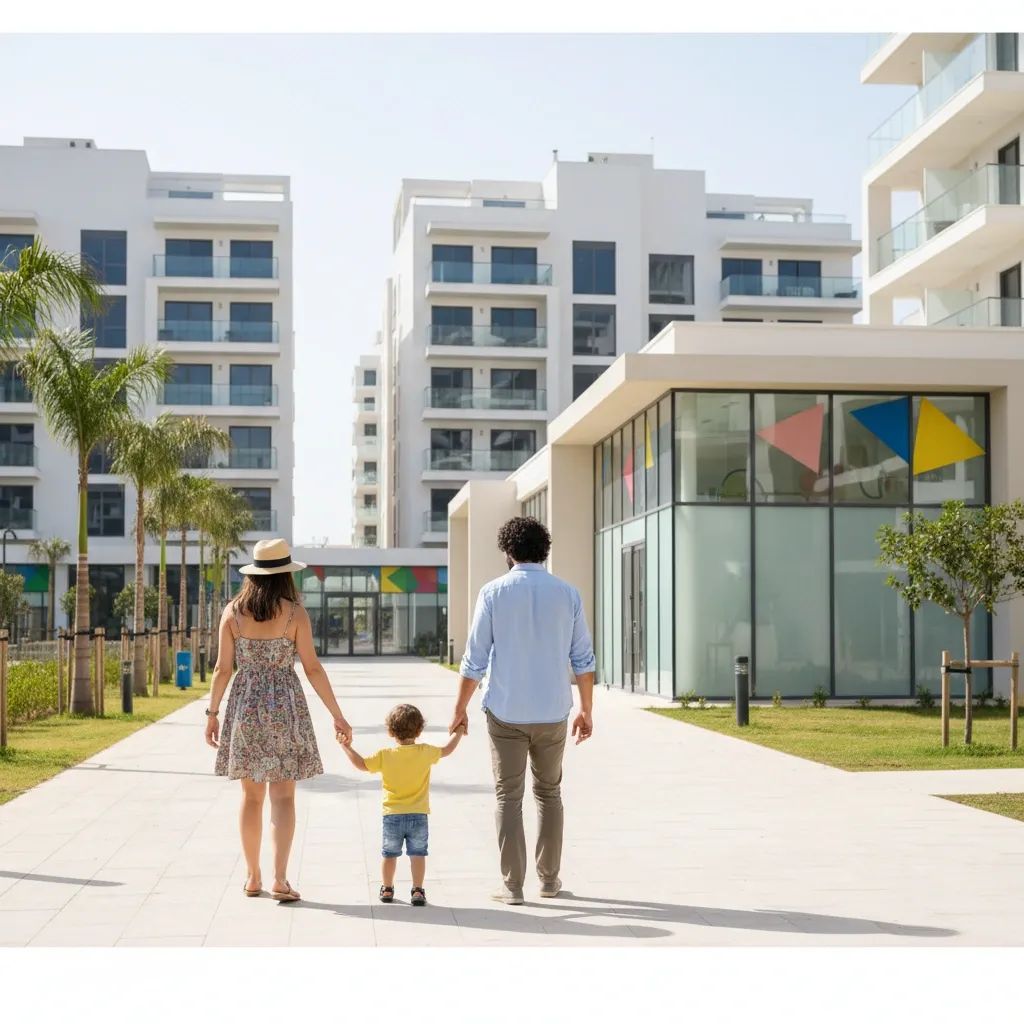
The Malta Cabinet has secured a new €276.7 million free childcare agreement for 2026–2029, a move that will anchor labour market participation and cushion families against the twin pressures of wage cooling and rising housing costs.
Why This Matters
• €276.7 million commitment ensures 210 free childcare hours monthly for children aged 3 months to 3 years.
• Productivity pivot urged by the IMF to shift from headcount growth to value-added expansion.
• Housing squeeze deepens as price-to-income ratios reach 8.1 for couples and 14 for singles.
• Dual-income necessity highlights free childcare as a critical tool for workforce retention.
Shifting Growth Paradigms
The International Monetary Fund’s (IMF) Article IV consultation with Malta on 4 February 2026 praised nearly 7% average GDP growth over the past decade but cautioned that the island’s labour-intensive model is bumping against capacity constraints. As the EU’s most densely populated state, Malta faces infrastructure strain, skills mismatches and overstretched public services. The fund’s prescription is a productivity-driven expansion through automation, digital up-skilling and targeted capital investment. Without this, projected wage growth cooling to 3.7% in 2026 will be necessary to preserve export competitiveness.
Childcare as a Growth Lever
Since its launch in 2014, the Free Childcare Scheme has become essential economic infrastructure rather than mere welfare. A Central Bank of Malta causal study finds the reform boosted female employment probability by up to 2.4 percentage points, adding roughly 6,200 additional women—concentrated among single mothers and families with multiple children—to the workforce. Annual spending of €69.18 million translates to a hypothetical €443 monthly grant, far too low to tempt a parent out of work. Instead, this subsidy sustains dual-income households, expands the tax base through added income tax and social security contributions, and lays the groundwork for bridge support once children turn three.
Housing in the Crosshairs
Despite the Central Bank’s view that property is about 5% undervalued relative to fundamentals, affordability is eroding for new and low-income buyers. Between 2017 and 2025, residential prices jumped 59% while wages rose 25–30%. This pushed the price-to-income ratio from 5.4 to 8.1 for first-time buyer couples and from 9.9 to 14 for single buyers. Although 91% of 18–34 households are recorded as homeowners, many young adults remain in parental homes and struggle to secure financing. Over one-third now rely on family deposits, underscoring that wage gains alone cannot bridge the gap.
What This Means for Residents
• Working Parents – Expect free childcare to remain a cornerstone of labour market access, with pilots for extended bridge childcare up to age 5 under consideration.
• Prospective Homeowners – Anticipate stricter lender stress tests and continued dependence on parental guarantees as wage growth lags housing inflation.
• Employers – Look for tax credits tied to retention and flexible schedules, and potential subsidies for shift-aligned nursery slots in manufacturing.
• Taxpayers – Should note that while the childcare bill partly recoups itself via new income tax and social security, future expansions hinge on squeezing more value from each hour worked.
Charting the Next Steps
Bridge Childcare Expansion: Drawing on Nordic and Spanish success, extend subsidies for 3–5 year-olds to secure female labour attachment beyond age 3.
Digital Productivity Grants: Launch a voucher scheme for SMEs investing in AI workflow tools, mirroring Estonia’s programme that lifted output per worker by 17%.
Targeted Housing Supply: The Planning Authority task force will map public land for mid-rise units capped at 7× income multiples for buyers earning under €25 k.
Retention Incentives: Introduce payroll tax rebates for firms retaining parent returnees for at least three years, inspired by Italy’s success in cutting female quit rates by 12%.
By anchoring social support in a productivity-focused economy, Malta can avert the “pincer movement” of wage cooling and housing inflation, ensuring dual-income families and working parents remain the backbone of sustainable growth.