
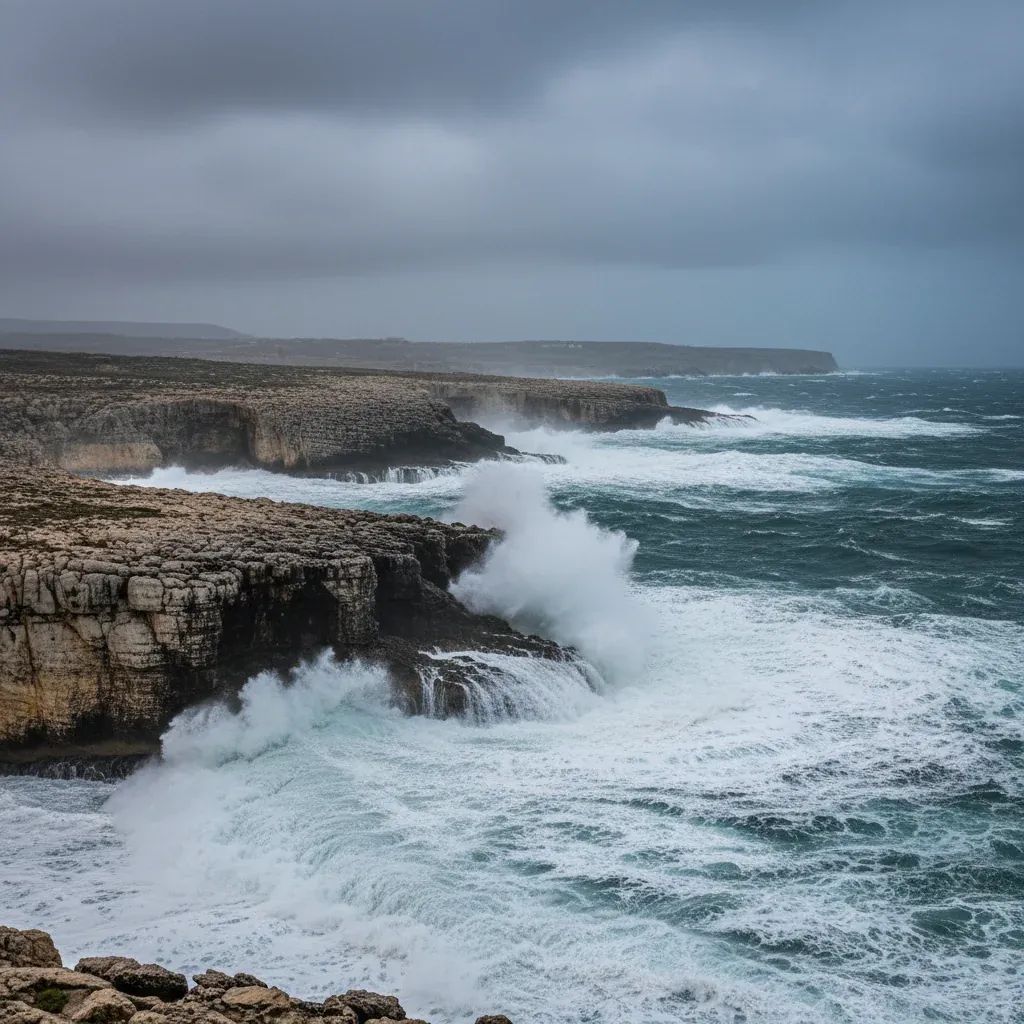
Malta Royal Police Report Seventh Sea Fatality Since January as Decomposed Corpse Surfaces Near Paradise Bay
A severely decomposed body retrieved from waters off Paradise Bay in the Mellieħa district on Friday afternoon marks the seventh death linked to Malta's coastline since the start of 2026—a grim statistic that has prompted magistrates to open multiple parallel inquiries while forensic laboratories struggle with identification backlogs. The Malta Royal Police received the alert shortly after 1 p.m., dispatching maritime rescue units to an area notorious for strong currents and winter swells that can exceed 2 meters.
Why This Matters
• Unprecedented cluster: Malta has recorded 7 coastal deaths in 6 weeks—4 confirmed drownings (including 2 tourists swept off rocks) and 3 unidentified decomposed remains still undergoing forensic analysis.
• Forensic bottleneck: The Malta Forensic Science Laboratory now faces DNA extraction from at least 3 severely degraded bodies, a process requiring bone and dental sampling that can take 6-12 weeks per case.
• Geographic pattern: All recent discoveries occurred along northwest and northern coastlines (Ċirkewwa, Fomm ir-Riħ, Ġnejna Bay), where prevailing Gregale winds push floating debris and remains during winter months.
• International dimension: With Malta positioned at the central Mediterranean migration crossroads, forensic officials have not ruled out the possibility that some victims may be undocumented migrants whose ante-mortem records exist in other countries—or not at all.
Emergency Services Deploy Combined Air-Sea Operation
Civil Protection Department rescue teams from Station 3 (Mellieħa) and Station 4 (St. Paul's Bay) coordinated with the Armed Forces of Malta Air Wing to extract the remains from choppy waters near the Paradise Bay resort complex. The joint operation, launched around 1:15 p.m., utilized a helicopter-assisted approach due to cliff access limitations characteristic of Malta's northern coastline.
The body's condition—described officially only as showing "advanced decomposition"—suggests immersion lasting days or possibly weeks. Marine forensic specialists note that Mediterranean seawater temperatures averaging 14-16°C during February slow bacterial decomposition compared to warmer months, but accelerate tissue damage through salt osmosis and predation by marine fauna including triggerfish and octopi, both common in Maltese waters.
Magistrate Philip Galea Farrugia, now overseeing at least three separate inquiries related to 2026 sea fatalities, immediately appointed a forensic panel including pathologists and likely a forensic anthropologist—standard protocol when visual identification proves impossible. The Malta Royal Police confirmed that investigators are cross-referencing the remains against both local and Europol-linked missing persons databases, though no preliminary identification has emerged.
Forensic Reality: When DNA Becomes the Only Hope
The identification challenges facing Malta's forensic infrastructure highlight a harsh reality: once a body reaches severe decomposition in seawater, conventional methods collapse entirely. Facial features dissolve, fingerprints slough away, and even clothing often disintegrates after prolonged immersion.
Forensic pathologists in Malta must instead rely on a hierarchy of resilient biological materials:
DNA extraction from skeletal remains becomes the primary tool. Teeth and femur bones preserve genetic material longest, resisting the decomposition that destroys soft tissue. However, Malta's forensic laboratory—the only facility on the island equipped for DNA profiling—can process only a limited number of samples simultaneously, creating a queue effect when multiple cases arrive in quick succession.
Anthropological skeletal analysis provides circumstantial support. By measuring bone dimensions and examining dental development, forensic anthropologists can estimate age (within 5-10 year ranges), biological sex, approximate height, and sometimes ancestry markers. These parameters help narrow the pool of potential matches in missing persons registries.
Dental record comparison offers near-certainty when a suspected identity exists. Odontologists can match dental work patterns, fillings, root canals, and jaw structure to ante-mortem X-rays with reliability approaching 100%. However, this method fails entirely if the deceased has no documented dental history in accessible databases.
The Mediterranean complication adds another layer: Malta sits astride migration routes connecting North Africa to Europe. Some bodies recovered in Maltese waters may belong to individuals who never set foot on the island—migrants whose dental records exist in Tunisia, Libya, or Egypt, if they exist at all. Without family DNA samples or international data-sharing, identification becomes mathematically impossible.
What Residents and Coastal Communities Need to Understand
The concentration of 7 fatalities in 41 days represents an extraordinary departure from Malta's historical averages. Between 2021-2025, the island averaged 18-22 annual drowning deaths, meaning 2026 has already reached 32% of the five-year average by mid-February.
The winter weather factor cannot be overstated. The Malta Meteorological Office issued 11 separate marine warnings during January and early February, with wave heights exceeding 2.5 meters and wind gusts reaching Force 7 (near-gale conditions). These conditions create:
• Rip currents that pull swimmers away from shore at speeds exceeding 2 meters per second—faster than Olympic swimmers can maintain
• Sneaker waves arriving unpredictably in sets, with the largest swell often occurring as the 7th or 9th wave
• Cliff spray zones where water rebounds off rock faces with enough force to sweep bystanders off ledges
Tourism implications are significant. Two of the confirmed January deaths involved foreign nationals—a 48-year-old Kyrgyz woman at St George's Bay (Jan 11) and 13-year-old Polish tourist Oliwia Wojnowska at Ċirkewwa (swept away Jan 25, recovered Jan 28). Both incidents occurred despite red flag warnings posted at beaches.
Migrant crossing speculation remains unconfirmed but statistically probable. The Malta Rescue Coordination Centre logged 47 distressed vessel interventions in 2025, with an unknown number of fatalities at sea. Bodies from failed crossings can drift for weeks before reaching Maltese shores, propelled by currents and winds that follow predictable seasonal patterns.
The Northwest Coastline Connection
A geographic analysis reveals an unmistakable pattern: Ċirkewwa (Feb 20 and Jan 25-28), Fomm ir-Riħ (Feb 18), Ġnejna Bay (late January), and St George's Bay (Jan 18 and Jan 11) form an arc along Malta's northwest and northern exposures—precisely the coastlines most vulnerable to winter Gregale (northeast) and Majjistral (northwest) wind systems.
The Malta Maritime Authority notes that prevailing winter winds create a "coastal conveyor belt" effect, where floating debris—and tragically, human remains—accumulates along these shores after days or weeks of drift. Bodies entering the water anywhere along Malta's northeast quadrant eventually wash up in the Mellieħa-Ċirkewwa-Mġarr triangle, explaining the geographic clustering.
Fomm ir-Riħ deserves particular attention. This remote, cliff-enclosed bay lacks vehicle access and features 50-meter vertical rock faces that make rescue operations extraordinarily difficult. The area is notorious among marine safety experts as a "trap zone"—easy to enter during calm conditions but lethal when swells arrive unexpectedly.
Previous Incidents and Timeline Context
Before this week's dual recoveries, Malta had already logged five coastal deaths in January:
• January 11: Kyrgyz national (age 48) swept off rocks at St George's Bay during afternoon storm; body recovered same day
• January 18: Unidentified male corpse found floating in St George's Bay, decomposed beyond facial recognition
• January 25: Polish teenager Oliwia Wojnowska (age 13) swept away at Ċirkewwa ferry terminal during family outing
• January 28: Wojnowska's body recovered after 72-hour search involving AFM Air Wing helicopters and Civil Protection Department divers
• Late January (specific date unreported): Unidentified decomposed body retrieved at Ġnejna Bay
Each incident triggered separate magisterial inquiries, with Magistrate Galea Farrugia now coordinating at least three parallel investigations—an unusual workload concentration suggesting the court system may eventually consolidate cases for procedural efficiency.
Official Protocols and Ongoing Investigation Framework
The Malta Royal Police maintains strict protocol separation between cases, treating each discovery as an independent incident until forensic evidence suggests otherwise. Senior investigators have confirmed that DNA cross-referencing against missing persons databases is underway, utilizing both Malta's national registry and Europol's centralized system covering all EU member states.
Magistrate Galea Farrugia has prioritized expedited DNA processing, though forensic realities impose immovable delays. Extracting usable genetic material from bone marrow or dental pulp requires:
Mechanical pulverization of skeletal samples
Chemical extraction using specialized reagents
PCR amplification to multiply DNA strands
Sequencing and profiling to generate comparable genetic markers
Database comparison against known samples
This process typically requires 4-8 weeks minimum, and that's assuming the DNA survives degradation—a 50/50 proposition in severely decomposed remains.
The Armed Forces of Malta has quietly increased coastal patrol frequency along the northwest quadrant, though officials emphasize this represents standard winter protocol rather than a specific response to recent deaths. The Malta Tourism Authority has not issued formal advisories but is coordinating with hotels to reinforce marine safety messaging to guests.
Safety Protocols Every Resident and Visitor Must Follow
The Malta Civil Protection Department and Malta Royal Police have jointly reinforced public safety guidelines, particularly for foreign residents unfamiliar with Mediterranean winter conditions:
Never swim during marine warnings: The Malta Meteorological Office website (maltatoday.com.mt/weather) posts real-time alerts. Red flags at beaches indicate swimming prohibition, not merely "caution."
The 5-meter rule: Never stand within 5 meters of cliff edges or rocky outcrops during rough weather. Wave rebound off rock faces creates unpredictable spray zones that have caused multiple fatalities.
Photography hazard: Tourists taking photos near surf zones account for 23% of Malta's coastal fatalities over the past decade. The temptation to capture dramatic wave action creates false security—waves arrive in sets, and the largest often comes without warning.
Immediate reporting protocol: If someone goes missing near water, contact Malta Royal Police emergency line 112 immediately. The first 60 minutes are critical for sea rescue survival rates, which drop to below 20% after 90 minutes in 14°C water.
Migrant distress: Citizens spotting distressed vessels or persons in water should alert the Armed Forces of Malta Rescue Coordination Centre at +356 2123 9600—a direct line to maritime rescue operations bypassing standard emergency dispatch delays.
The Waiting Game: What Families Face
For relatives of missing persons—whether Maltese nationals, expats, tourists, or migrants—the identification process imposes agonizing uncertainty. When decomposition prevents visual recognition, families enter a bureaucratic limbo where only forensic science can provide answers.
The Malta Forensic Science Laboratory prioritizes cases based on forensic viability rather than emotional urgency. If a body yields no usable DNA, no dental matches, and insufficient skeletal markers, the remains may never be identified—becoming one of Malta's "unknown deceased" interred in unmarked sections of Addolorata Cemetery after magisterial closure.
International cases face additional hurdles. If DNA comparison requires samples from relatives in Poland, Kyrgyzstan, or North Africa, diplomatic coordination can add weeks or months. Interpol's DNA database theoretically streamlines this process, but participation remains voluntary—many countries lack comprehensive genetic registries.
Meanwhile, Malta's coastal communities watch the shoreline with wary vigilance, knowing that the island's position at the crossroads of the Mediterranean makes it a reluctant witness to tragedies that often begin far beyond its territorial waters.
What This Week's Discoveries Mean for Ongoing Inquiries
The near-simultaneous recoveries at Fomm ir-Riħ (Feb 18) and Paradise Bay (Feb 20) create forensic complications. With both bodies severely decomposed, DNA processing must proceed sequentially through Malta's single-laboratory infrastructure. If both sets of remains yield viable genetic material, comparative analysis could theoretically determine whether the deceased are related—potentially indicating shared circumstances like a migration vessel incident.
However, forensic experts caution against speculation. The geographic proximity (Fomm ir-Riħ and Paradise Bay are 5 kilometers apart by sea) may reflect nothing more than current patterns pushing unrelated remains toward the same coastline. Until DNA results emerge—likely not before late March or early April—investigators must treat the cases as independent.
The Malta Royal Police has not commented on whether underwater search operations are being expanded to look for additional remains, though such operations face severe limitations. Malta's coastal waters drop to 50+ meter depths within 500 meters of shore in many locations, creating search conditions requiring commercial diving equipment beyond standard Civil Protection capabilities.
For now, Magistrate Galea Farrugia and appointed forensic experts continue the methodical work of extracting what information the dead can provide—knowing that for some, the sea will keep its secrets permanently.


