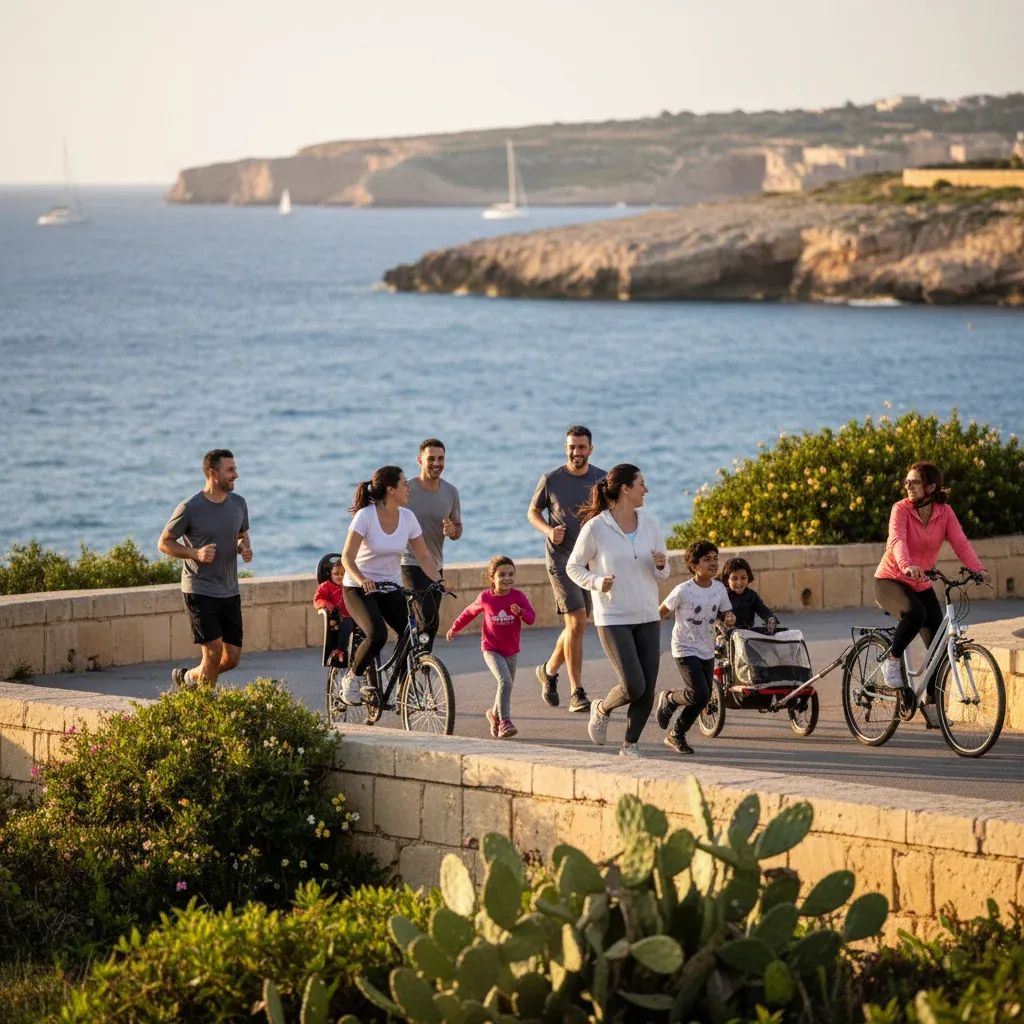
The Malta Ministry for Health and Active Ageing has escalated its campaign against the island's chronic obesity crisis, deploying a suite of national interventions aimed at reversing one of Europe's most entrenched public health emergencies. With 28.9% of adults now classified as obese and childhood rates reaching 28.7% among 11-year-olds, the stakes are high—and the government's multi-pronged strategy marks a pivotal shift from reactive healthcare to systemic prevention.
Why This Matters
• Malta ranks highest in Europe for adult obesity rates, with 62% of adults aged 16 and over classified as overweight or obese combined.
• The National HEPA Strategy 2025-2030 mandates daily physical education in schools and fiscal incentives for active commuting.
• A new obesity clinic is planned to offer multidisciplinary care from nutrition to bariatric surgery referrals.
• Colonial dietary legacies—fried foods, sweets, and British-style baked goods—continue to outweigh traditional Mediterranean eating habits.
The Colonial Diet That Never Left
Unlike its Mediterranean neighbors, Malta's food culture carries a distinct British imprint—a legacy of 150 years of colonial rule that reshaped the island's palate. While Greece and Italy built their diets around olive oil, fish, and fresh vegetables, Malta absorbed a Westernized template heavy on fried meats, marmalade, custards, and sponge cakes. World War II's "Victory Kitchens" introduced corned beef and butter as staples, cementing a dietary pattern far removed from the region's heart-healthy norms.
Today, the consequences are measurable. 62% of Maltese adults aged 16 and over are overweight or obese, the highest figure in the European Union. Men fare worse than women: 28.7% of males versus 22.7% of females live with obesity specifically. For comparison, the EU average hovers around 16% for obesity rates.
Nutritionists point to portion sizes, a preference for fatty and fried preparations, and an abundance of sweets as key culprits. Despite living on a Mediterranean island, adherence to the traditional diet—rich in plant-based foods and fish—remains lower than in comparable populations. The disconnect between geography and diet is arguably Malta's most glaring public health paradox.
Europe's Most Sedentary Population
Compounding the dietary challenge is a near-total lack of physical movement. Malta is the most sedentary country in Europe, a distinction that extends across all age groups. The economic toll is significant: the cost of obesity-related healthcare was pegged at €36.3M in 2015, a figure that has likely climbed in the decade since.
Childhood trends are equally alarming. 17% of Maltese children live with obesity, and among 15-year-olds, the rate jumps to 29.6%. The European Commission's 2022 data placed Malta at the top of the EU for overweight and obese children, with rates nearly 10 percentage points above the union average. The World Obesity Atlas 2026 warns that global childhood obesity has surged from 4% in 1975 to nearly 20% in 2022, with projections extending to 2040 suggesting little relief without intervention.
The Government's Response: A Whole-of-Society Approach
In response, Maltese authorities have rolled out what officials describe as a "whole-of-government, whole-of-society" framework. The centerpiece is the National Health-Enhancing Physical Activity (HEPA) Strategy 2025-2030, which integrates movement into schools, workplaces, and public spaces.
School-Based Interventions
The HEPA Strategy requires daily physical education lessons in all schools, alongside the "Let's Move Malta" and "#BeActive" campaigns. Outdoor spaces are being repurposed for active breaks, and teachers are receiving specialized training in physical literacy. The policy also proposes extending mandatory physical activity to one hour per day, a benchmark aligned with WHO recommendations.
Additional measures under consideration include subsidizing fruits and vegetables, introducing taxes on junk food (with revenues earmarked for public health), and restricting fast-food advertising near schools and online. The European Commission, working with the Maltese Presidency, has endorsed the implementation of healthy food standards in schools as a key lever for reducing childhood obesity.
Workplace and Community Programs
For adults, the HEPA Strategy incentivizes active commuting through fiscal breaks and requires employers to install showers and bicycle parking. The government launched the "Move to Improve" campaign in March 2025, distributing simple guides to encourage daily exercise across all demographics.
Community spaces are being redesigned to promote walkability and recreational access. Xjenza Malta, in partnership with the health ministry, launched an Obesity Research Programme in May 2025, funding studies into how the local food environment—from labeling to promotion—drives dietary behavior.
Clinical Infrastructure
The government has announced plans for a new obesity clinic offering structured, multidisciplinary care. Patients will receive medical assessments, nutritional counseling, psychological support, and exercise programming, with seamless referrals to specialists for conditions like diabetes or candidates for bariatric surgery.
What This Means for Residents
For families, the immediate changes are tangible. Schools will integrate more physical activity into the daily schedule, reducing screen time and sedentary classroom hours. Parents of overweight children can access free services through the planned clinic and related programs, lowering the financial barrier to intervention.
For commuters, expect to see more bike lanes, pedestrian zones, and employer incentives for active transport. The fiscal breaks for cycling and walking to work are designed to offset the time and inconvenience costs, particularly in a car-dependent society.
For the food sector, stricter labeling requirements and potential taxes on ultra-processed products signal a regulatory tightening. Retailers and restaurants may face pressure to offer healthier options or risk losing market share as public awareness campaigns reshape consumer preferences.
Lessons from the Continent
Malta's approach mirrors successful models from across Europe. Finland's "Smart Family" program engages parents and children in joint exercise routines, while France's EPODE initiative uses community-based interventions to shift local environments towards healthier defaults. Germany's "Grünau Moves" targets disadvantaged neighborhoods, where obesity rates are highest.
The "HEPAS" framework, adopted by several EU countries, emphasizes active transport, daily active breaks, and diverse recess options that include marginalized students. Longer, multi-setting interventions—combining physical activity, diet education, and family engagement—consistently outperform single-focus programs.
Technology is also playing a role. The BigO project collects anonymous behavioral data to map living environments and inform interventions, while the DUSE app gamifies healthy habits for adolescents.
A Long Road Ahead
Recent data offers context for Malta's obesity challenge. As of November 2025, Malta's adult obesity rate stands at approximately 28.9%, with 62% of adults classified as overweight or obese combined. However, experts caution that sustained results require long-term behavioral change, not just policy announcements.
The challenge is cultural as much as logistical. Shifting a population away from fried foods, oversized portions, and sedentary routines demands more than infrastructure—it requires a fundamental rethinking of how Malta eats, moves, and prioritizes health. The colonial dietary legacy, deeply embedded over a century and a half, cannot be unwound in a single policy cycle.
For now, the government's bet is on early intervention, youth engagement, and a built environment that defaults to movement rather than stillness. Whether that's enough to dislodge Malta from the top of Europe's obesity rankings remains to be seen, but the machinery is in motion.