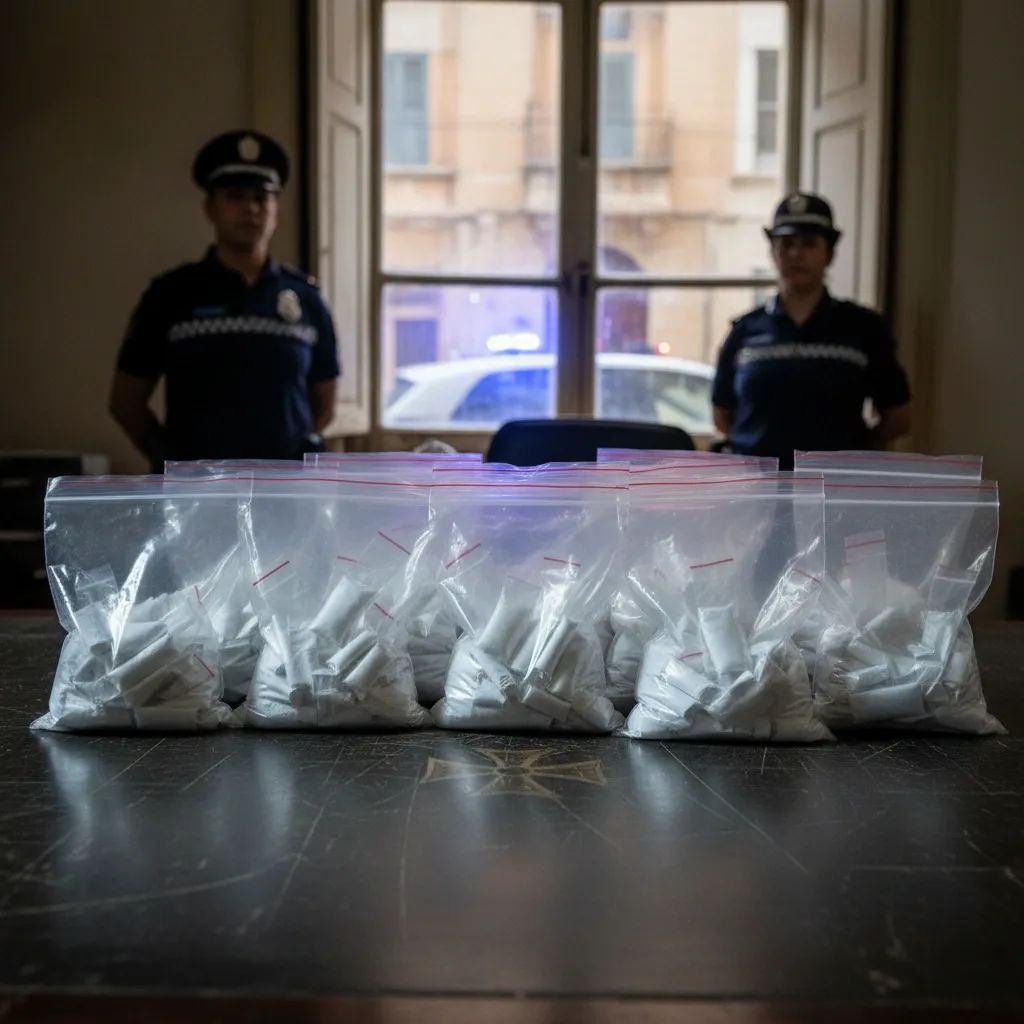
The Malta Police Force has seized 67 sachets of suspected synthetic cannabis during a morning patrol in Marsa, a move that signals a fresh crackdown on an increasingly potent black-market drug.
Why This Matters
• Immediate arrests: Two Somali men, aged 31 and 30, were taken into custody on the spot.
• High street value: Police estimate the wraps could fetch €1,300-€1,700—roughly a month’s rent for a single bedroom in Birkirkara.
• Zero-tolerance policy: Possessing or selling banned synthetic cannabinoids now carries mandatory jail time and asset seizure.
• Health alerts: Doctors link lab-made cannabinoids such as HHC and CC9 to panic attacks, hallucinations and hospitalisations.
How the Patrol Unfolded
Uniformed officers from the Marsa Community Police Unit were conducting a routine sweep along Triq il-Marsa late Monday morning when they noticed two men loitering near a disused warehouse. A quick ID check revealed one man was living in Marsa and the other in San Ġwann. During a frisk, officers uncovered 60 sachets on the 31-year-old and 7 more—plus a wad of cash—on his companion. The plastic wraps were marked with the street name “Spice,” a known synthetic cannabinoid blend.
Synthetic Cannabinoids: Why the Hype Is Dangerous
Unlike regulated THC in licensed cannabis associations, these laboratory-made compounds bind more aggressively to brain receptors, producing unpredictable highs. Malta’s health authorities banned HHC and 14 related substances in 2024, and outlawed CC9 last year after seven young people required emergency treatment. Experts at the University of Malta’s Forensic Lab warn that a single dose can trigger 24-hour drowsiness, psychosis, or liver damage. Because formulas change rapidly, standard roadside tests often miss them, complicating both medical response and law-enforcement evidence.
Law-Enforcement Strategy
The arrests form part of a broader street-level operation focusing on Marsa, the Valletta bus terminus and Paceville—areas flagged for synthetic drug hand-offs. Under amendments pushed through Parliament in 2025, anyone caught with more than three doses of a banned synthetic cannabinoid faces charges identical to heroin or cocaine trafficking: a minimum four-year prison term and fines that can top €65,000. The Asset Recovery Bureau can also freeze bank accounts if police link cash to drug sales.
What This Means for Residents
• Expect heavier police presence in known drug hotspots, especially in the run-up to Carnival.• Landlords should vet tenants carefully; police have found makeshift labs in rented garages.• Clubs and kiosks risk losing their licence if inspectors find synthetic edibles on shelves. Venue owners are advised to review supply chains.• If you witness street dealing, dial 119 or use the MT Police App—anonymous tips that lead to conviction may qualify for a €500 reward.
The Bigger Picture
Malta’s push to normalise natural, regulated cannabis after the 2021 reform was supposed to throttle black-market demand. Instead, traffickers pivoted to faster-moving synthetics, shipping powders from overseas labs and spraying them on herbal fillers. Annual police briefs show synthetic-related seizures have more than tripled since 2024 even as simple-possession cases for natural cannabis plummeted by 80%. Health NGOs such as Caritas Malta argue that without coordinated education campaigns, the island risks a repeat of the synthetic cathinone crisis that swept parts of Europe a decade ago.
Investigators are now mapping the men’s phone records to trace upstream suppliers. If prosecution proceeds as expected, the pair could appear before the Magistrates’ Court within 48 hours for a bail hearing. For residents, the message from law enforcement is unambiguous: synthetic cannabis may look like a legal loophole, but it will be treated as a hard drug in every Maltese courtroom.