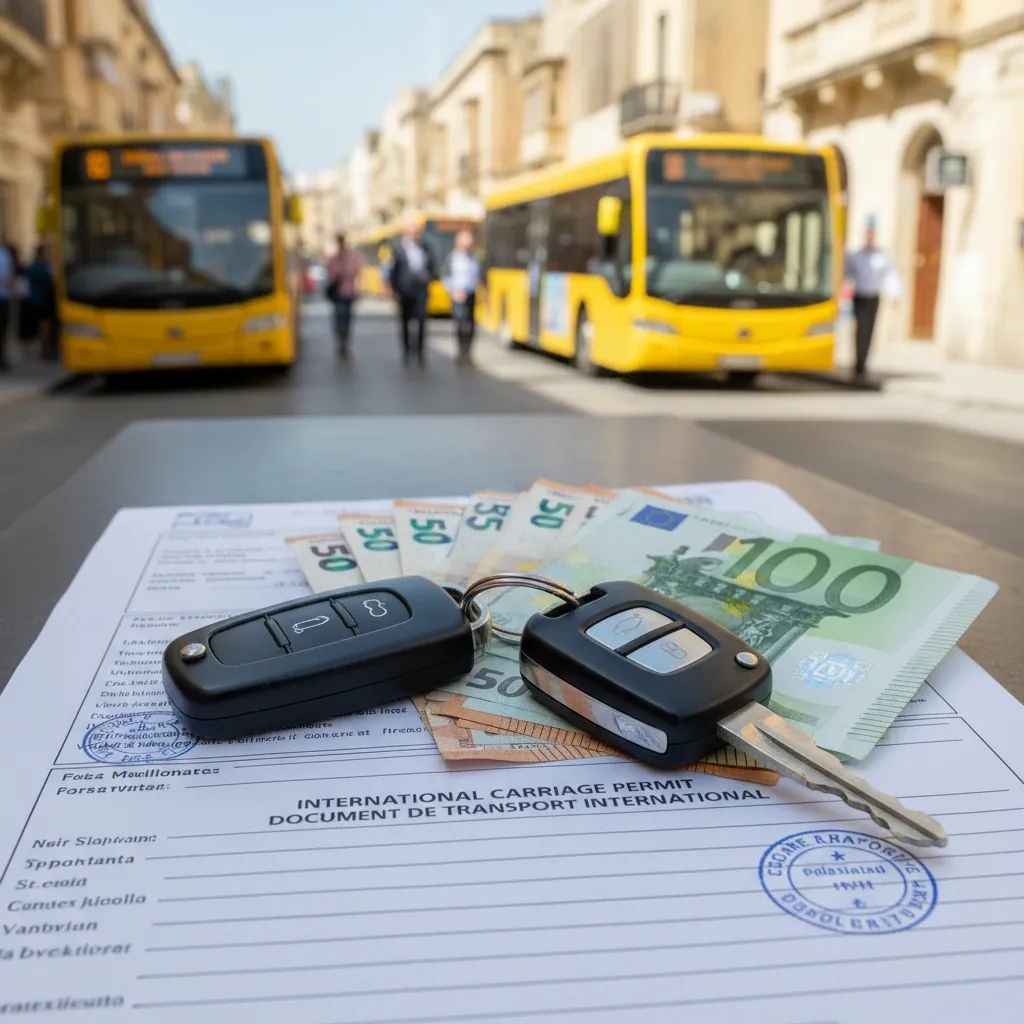
The Malta Ministry for Transport has sat on the tally of young drivers swapping their licences for a €25,000 payout, a decision that keeps would-be applicants guessing whether the trade-off is yielding the traffic relief the government promised.
Key Takeaways
• Data held back until “when the time is right,” says Minister Chris Bonett
• €5,000 per year over five years for drivers aged up to 30 who surrender Category B licences
• 1,000-applicant ceiling, with applications closing 30 June 2026
• Wider impact depends on pending public transport upgrades and integrated mobility plan
Digging into the €25,000 Licence-Surrender Scheme
Launched in January 2026 by the Ministry for Transport, Infrastructure and Public Works, the scheme invites Malta residents aged 18–30 to hand over their driving credentials for a five-year hiatus. Successful candidates receive an annual €5,000 grant—totaling €25,000—capped at 1,000 participants. Eligibility requires a minimum of seven years’ Maltese residency and at least 12 months holding a Category B licence, with a ban on driving in Malta or abroad during the term. At the end, beneficiaries must complete 15 hours of lessons and re-sit the test at their own expense (roughly €500).
The programme sits within an €25 million envelope, disbursed as €5 million a year, and operates on a first-come, first-served basis. Applications remain open until 30 June, by which point Transport Malta will pause new entries even if the cap isn’t reached.
Why Uptake Figures Remain Under Wraps
When pressed on Wednesday, Minister Chris Bonett told reporters that revealing early numbers would be “premature.” He argued that premature disclosures can fuel unhelpful headlines, distracting from the broader National Transport Master Plan 2030. Yet for young professionals weighing five years without a car against €25,000—roughly equivalent to two years’ rent for a one-bedroom flat in Sliema—the lack of data frustrates informed decision-making.
Transport Malta insiders hint that only a few dozen applications are now under review, but no official confirmation has emerged. Releasing sparse uptake might erode confidence in the scheme and stall momentum for complementary measures, such as congestion charging or parking reforms, which remain off the table.
Balancing Incentives with Real-World Mobility
Experts from the University of Malta and advocacy groups like Friends of the Earth Malta caution that a cash-only approach offers no guarantee of fewer cars on the road. Early projections suggest even a full 1,000-person take-up would trim licence holders by just 0.07 %—a drop akin to two weeks’ worth of new licences issued in 2025. Critics argue that without a simultaneous push to expand and improve bus reliability, cycle lanes and light rail proposals, the scheme risks rewarding drivers who seldom use their cars rather than those clogging the main arteries.
The Maltese National Youth Council has been vocal in its disappointment, noting that financial carrots alone won’t sway young commuters facing unreliable timetables and crowded buses. Surveys of university students in Valletta and Gozo echo this sentiment: most say they’d only consider the offer after seeing tangible upgrades in public transport options.
Upcoming Mobility Milestones
• Sliema–Buġibba–Gozo fast-ferry: With legal objections lifted, the service could cut cross-harbour travel by up to 90 minutes.
• New park-and-ride sites in Paola and Ta’ Qali, directly linked to Mater Dei Hospital and university campuses.
• €33 million in 2026 grants for e-cars, e-bikes, scooters and accessible vehicles, open for applications now.
• Mass-transport blueprint: The Ministry for Transport pledges an integrated plan by March, detailing bus-route revamps, road-works coordination and off-peak delivery incentives.
What This Means for Residents
Residents assessing the scheme should weigh €25,000 against five years of alternative travel costs. If you rely on taxis for cross-harbour trips (€10–€15 each way) or ride-sharing for late-night shifts, think carefully about job flexibility and emergency access. Landlords and property managers near bus corridors could see demand shift, as surrendered-licence families seek homes within walking distance of reliable routes.
Employers might need to expand corporate shuttle services to retain talent, particularly in sectors with nontraditional hours. For daily commuters, the real promise lies in the integrated mass transport plan 2030, which must materialize soon if the licence-surrender scheme is to deliver on its traffic-easing ambition.
Until official uptake data arrive, Maltese drivers face a blind calculus: trust that the full package of short- and medium-term transport reforms will roll out in tandem, or hold onto the steering wheel and wait for clearer signals on when—and if—€25,000 is worth the leap.