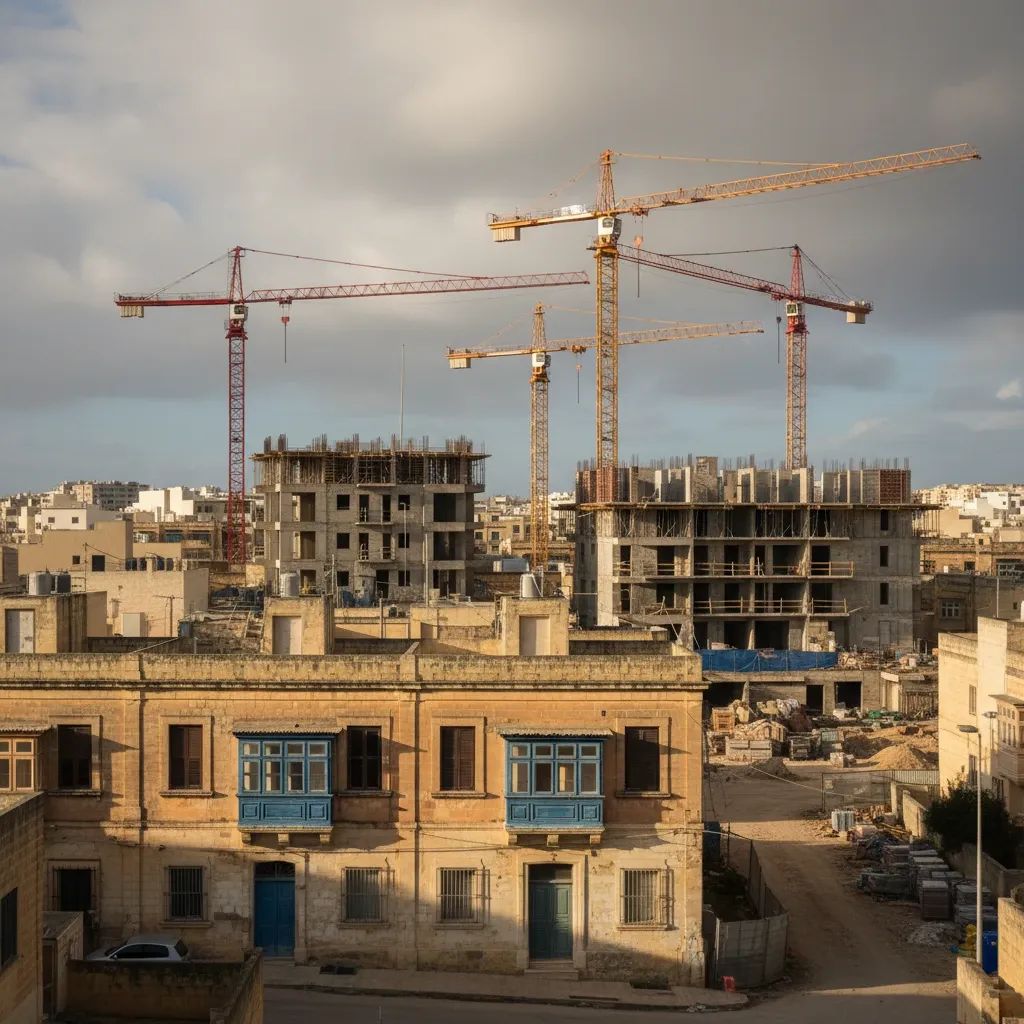
The Office of Prime Minister Robert Abela has let the flagship planning overhaul—Bills 143 and 144—sit idle in Parliament, a move that effectively preserves the status quo and keeps residents guessing about whose rights will prevail when bulldozers arrive.
Why This Matters
• Appeal clock still ticking: Tribunal challenges remain limited to 30 days, and building can continue while you fight, risking irreversible damage to neighbouring homes and green areas.
• Hidden rule-making: The government is cherry-picking elements of the reform and enacting them through legal notices that never face a parliamentary vote.
• Property risk: Developers retain the ability to revive expired permits, complicating real-estate valuations and bank lending across Malta.
• Election timing: Any full reboot of planning law now seems pushed to post-2026 elections, leaving voters without clarity on one of the island’s most contentious policy areas.
What Is Actually on Hold?
For two years, Bills 143 and 144 have promised to rewrite everything from appeal fees to what counts as a minor modification. Critics, including civil-society network Il-Kollettiv, call the package a “developer’s wish-list.” Key clauses would:
Cut the appeal window to 20 days and slap a €5,000 surcharge on objections branded “vexatious.”
Hand the Planning Minister power to resurrect permits that expired years ago.
Legalise whole properties built without permission through a one-time regularisation fine.
Strip courts of the option to tweak permits, forcing them to send cases back to the tribunal.
The Quiet Work-Around: Legal Notices
While the headline legislation is frozen, the Malta Planning Authority (PA) has already rolled out select clauses via Legal Notice 104 of 2025 and two follow-ups in 2026. These notices:
• Allow construction on contested sites to proceed even while an appeal is pending.
• Broaden the definition of “minor works,” letting developers raise roof levels without fresh permits.
• Increase daily fines for illegal activity to €2,000, but simultaneously expand exemptions that limit enforcement muscle.
Who’s Pushing Back?
• Il-Kollettiv and the Ġustizzja għal Artna campaign say the stall is a “calculated tactic” to mute anger until after ballots are cast.
• The Malta Chamber of Commerce—hardly a green lobby—warns the bills threaten “good governance” and deter investors who crave legal certainty.
• Residents of Naxxar, Żurrieq and Għargħur have filed court actions after discovering that winning an appeal doesn’t halt cranes from finishing the job first.
What This Means for Residents
• Planning battles stay costly: Lawyers still advise filing urgent prohibitory injunctions—roughly €1,000–€2,500 in upfront fees—because an appeal alone won’t pause site works.• Mortgage calculations get tricky: Banks are demanding extra due-diligence reports when collateral involves permits older than five years, given the chance of a ministerial revival.• Neighbourhood value swings: The prospect of blanket regularisation can inflate prices for owners of dubious structures while depressing adjacent compliant properties.• Time to engage: Public consultations on any new draft are unlikely before late 2026, but local councils still have 15-day windows on individual applications—make use of them.
Political Calendar vs. Planning Calendar
Prime Minister Abela insists he wants a reform based on “broad convergence,” yet he also says the next big legislative push will follow the October 2026 Budget. In practice, that means:
• The full bill is unlikely to surface before Q1 2027.
• Any reversal of the current build-now-argue-later culture rests on a one-line amendment—suspending works during appeals—that remains un-tabled.
• Environmental NGOs are weighing a court challenge to force parliamentary debate, citing the Constitution’s good-governance clause.
The Bottom Line for Expats & Investors
If you are buying, selling, or renovating property in Malta this year, the rulebook may change—but not yet. For now:
• Budget for legal insurance against last-minute appeals.
• Verify permit dates; anything lapsed could be revived without your consent.
• Monitor the Government Gazette for fresh legal notices, the stealth vehicle being used to slip reform items through while Parliament stays silent.
The planning reform may be stuck, but construction and controversy march on. Staying informed—and filing timely objections—remains the only reliable defense until lawmakers finally decide whose interests the next set of rules will serve.