Why This Matters
• Asylum family reunification in Malta takes 24+ months even for those granted protection status, creating extended family separation.
• Confiscated bail funds strip applicants of resources at the moment they face criminal sanction and legal uncertainty.
• Fewer applications are now being filed through official channels, with asylum applications hitting their lowest levels since 2010.
A 29-year-old Syrian man was sentenced to three months in custody and ordered to pay €1,000 after admitting he facilitated illegal entry for his wife and a friend's spouse. The conviction exposes a gap in Malta's immigration system: while legal pathways for family reunification exist on paper, procedural barriers and processing delays create prolonged separation that incentivizes the criminal workarounds this defendant chose.
The Case: Documentation Violations and Criminal Sanctions
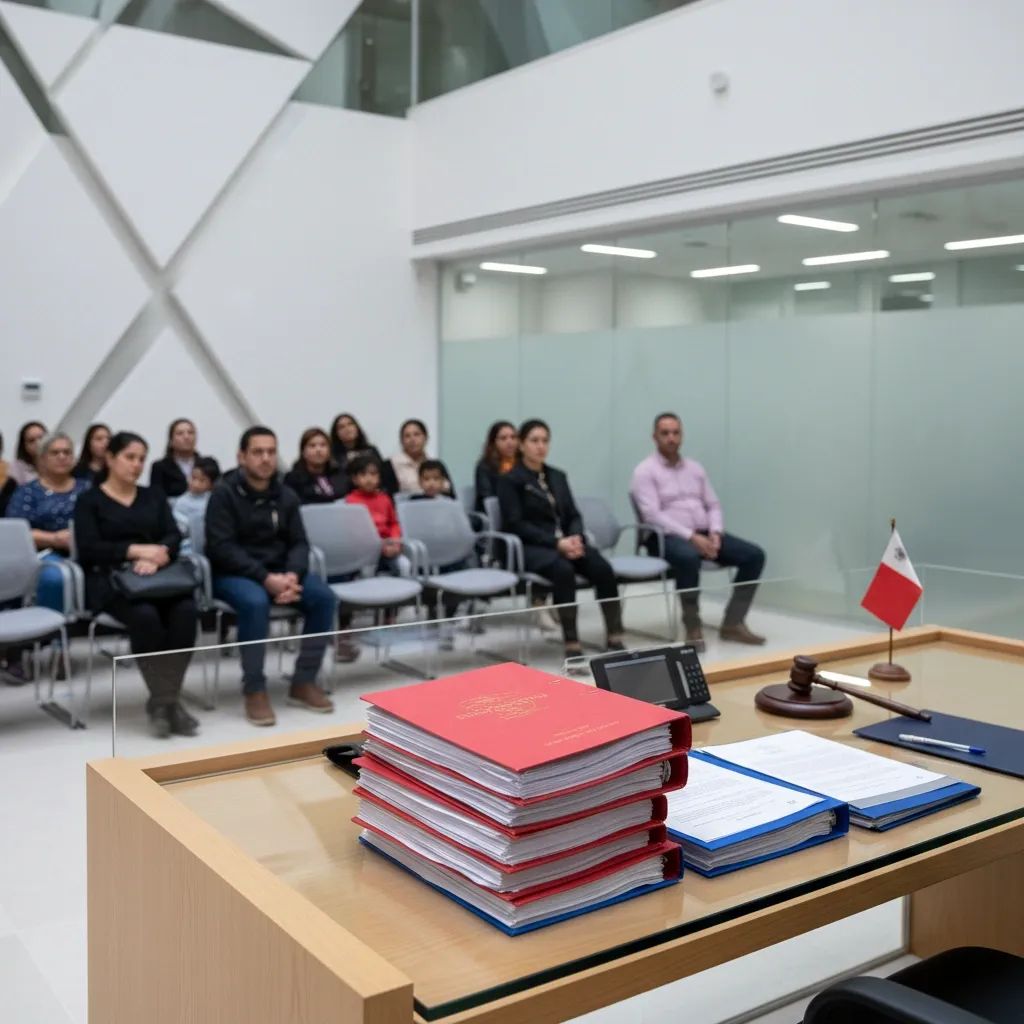
Yazan Abdulazziz appeared before Magistrate Antoine Agius Bonnici in May 2026 to face charges that emerged from a separate terrorism investigation. In 2023, police had flagged Abdulazziz and six other men over suspicious social media activity. All seven were subsequently charged with terrorism-related offenses. The immigration violations occurred while those charges remained pending.
According to Maltese police investigations, Abdulazziz brought his wife to Malta without proper documentation. In a parallel arrangement, he provided his personal identity documents to an acquaintance, who then used them to exit and re-enter Malta with his own spouse, also lacking authorization. Both actions violate Malta's immigration statutes, which mandate specific entry procedures and documentation.
The Maltese judiciary responded with a mixed penalty: three months imprisonment, a €1,000 fine, and crucially, confiscation of half his €10,000 bail deposit. The seizure of €5,000 served as additional punishment for breaching bail conditions, stripping him of financial resources at a moment when his legal status and earning capacity were already fragile.
The Asylum Protection Context
Abdulazziz's legal team—lawyers Jose Herrera and Martina Herrera—emphasized the circumstances behind his actions. Syria's ongoing conflict and political instability had created precarious conditions for his family. Abdulazziz eventually reached Malta, where he filed for asylum protection, a status that remained pending at the time of sentencing.
His asylum application remained incomplete at the time of his prosecution. No legal mechanism existed to expedite family reunification within a reasonable timeframe while his status determination was ongoing. Facing extended family separation with no prospect of lawful reunion, Abdulazziz made a choice that prioritized immediate reunification over procedural compliance.
This context does not excuse the crime, but it illustrates a fundamental tension: the system currently requires strict adherence to procedures for those lacking resources and documentation, while offering no proportionate legal alternative for people in protective custody seeking family unity.
Malta's Official Reunification Framework: What Works on Paper
The Malta Family Reunification Regulations codify rights under the EU Family Reunification Directive 2003/86/EC. The framework establishes that recognized refugees may petition for spouses (aged 21 or older in monogamous marriages) and unmarried dependent children. Unaccompanied minors may seek to bring parents or legal guardians.
The statutory requirements are straightforward: two years of residence in Malta, a valid residence permit lasting at least 12 months, "adequate housing" meeting health and safety standards, and "stable and regular income" sufficient to support dependents without relying on public assistance. One provision offers relief—refugees applying within three months of status recognition may bypass housing and financial documentation requirements entirely.
Implementation creates delays. Applicants consistently report waits exceeding two years simply for a first decision. For non-refugees holding temporary work permits, the alternative Family Member Policy demands substantially steeper requirements: 12 months of legal residence, income at the national median wage plus an additional 20% per family member, and no guarantee that reunified relatives will gain employment authorization within their first year in Malta.
Documentation requirements also create barriers. Family members in countries lacking Maltese consular offices must travel to neighboring countries to attend visa appointments. The costs accumulate: airfare, accommodation, visa fees, and lost wages. For applicants in refugee camps, these logistics become prohibitive. Many abandon pursuit.
Asylum System Performance and Challenges
Malta's International Protection Agency granted protection to 87 people in the period documented, while revoking refugee status from 340 individuals. The mechanism behind these revocations is particularly significant: a substantial portion stemmed from administrative failure rather than changed circumstances in applicants' home countries or new evidence. Beneficiaries did not renew international protection documents within mandatory renewal windows, resulting in status revocation.
This pattern reveals systemic strain. Notification procedures appear insufficient for reaching dispersed applicants. Administrative requirements become difficult in practice when beneficiaries lack stable addresses, reliable communication channels, or sufficient awareness of renewal deadlines. A person relocated multiple times or working without a fixed address faces greater difficulty tracking bureaucratic deadlines than a documented resident with institutional support.
Syrian nationals have fared comparatively better on initial applications. In 2024, the International Protection Agency granted protection to 64.6% of Syrian applicants—substantially above the overall 27.4% rate across all nationalities. The system's outcomes reflect not bias against Syrians per se but rather the difficulty those without resources navigate in accessing initial adjudication.
Asylum applications through official channels have declined significantly. Applications reached their lowest levels since 2010, according to the International Protection Agency, with only modest numbers of asylum and first-time asylum applicants recorded in early 2026.
Digital Borders and Employment Requirements
Beginning in 2026, Malta commenced rollout of the EU's Entry/Exit System (EES), designed to digitally record all non-EU entries and exits. Separately, the European Travel Information Authorization System (ETIAS) will require pre-approval before arrival. These systems aim to modernize border administration.
Employment regulations introduced in 2026—including a mandatory Pre-Departure Course for Third-Country Nationals—target a skills-focused immigration environment, raising barriers for refugees fleeing conflict. The system's design filters immigration applications based on economic contributions rather than protection needs.
What This Means for Residents
For Malta's broader population, Abdulazziz's case illuminates a tension between competing values and pragmatic governance. Most citizens expect immigration law enforced fairly and consistently. Few would argue borders should be uncontrolled or that documentation requirements lack purpose.
Yet the system currently operates with sufficient rigidity that it criminalizes desperation while making legitimate alternatives genuinely inaccessible. The mathematics are significant: if Malta grants protection to 64.6% of Syrian applicants once they reach adjudication, but processing queues remain backlogged for 24+ months, and family reunification requires an additional 24+ months of waiting, then a Syrian family faces roughly 4 years of separation before reunion becomes possible.
The irony is that Malta's system works smoothly for applicants with resources, documentation, and institutional support. For everyone else, it functions as a filtering mechanism that either traps people in indefinite limbo or pushes them toward criminal alternatives that land them in courtrooms and earn them criminal records that complicate future asylum claims.
Abdulazziz now serves his sentence. His asylum application remains pending. Whether the system has achieved deterrence or justice remains an open question.