
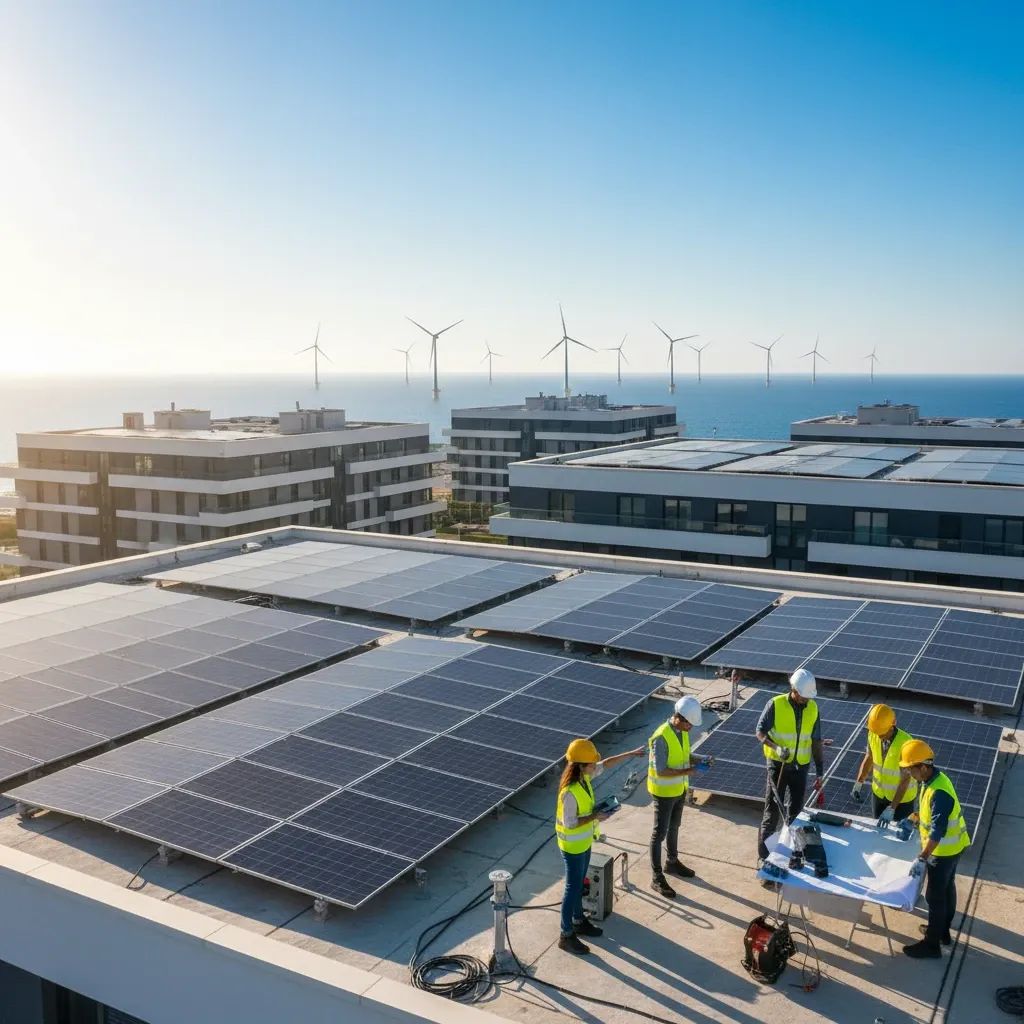
The Malta Government is positioning the island to capture a share of Europe's accelerating green technology boom, a strategic pivot that could help reverse the emigration of young talent to foreign markets while generating specialized jobs across renewable energy, research, and creative industries.
What This Means for Residents
For young professionals weighing whether to remain in Malta or pursue opportunities abroad, investing in quality scientific research and creative sector opportunities represents a tangible shift. The €25M solar expansion launching in 2026 will require electrical engineers, rooftop installation technicians, and energy auditors. The 280-320 MW offshore wind farm advancing to competitive dialogue phase would generate roles for project managers, marine engineers, and grid integration specialists—positions that previously existed only in continental European markets.
Solar expansion mandates for new construction translate to immediate demand for skilled workers in renewable installation and maintenance. The government program empowers property owners to generate electricity, reducing household energy costs while creating distributed employment opportunities across the island.
For graduates in STEM fields, renewable energy projects and battery storage systems offer career pathways in specialized technical disciplines. For creative professionals, structured investment in the arts and cultural industries provides stability previously unavailable locally.
Why This Matters: The Brain Drain Challenge
77% of Maltese millennials and Gen-Z currently prefer living abroad, driven by limited career prospects and quality-of-life concerns. The Maltese youth population aged 16-30 declined by approximately 15,000 over the past decade, a demographic shift that accelerates as skilled professionals seek opportunities in larger economies.
Fields such as medicine, engineering, and IT experience the most acute brain drain. Over one-third of Malta's workforce is overqualified for current roles, and nearly half of post-secondary graduates work in fields unrelated to their studies, according to labor market analysis. This gap between educational achievement and employment opportunity drives talented individuals abroad.
Building Career Pathways in Research
Malta's scientific research ecosystem struggles with short-term funding cycles—government grants for doctoral and postdoctoral research rarely extend beyond one or two years, insufficient to complete PhD programs. Without permanent research-focused positions in government or academia, where posts prioritize teaching over investigation, scientists face truncated career paths.
Horizon Europe, the EU's €95.5B research and innovation fund for 2021-2027, provides Maltese institutions access to collaborative projects with leading European research centers. Yet Malta's capacity to absorb and deploy these funds hinges on creating permanent research positions and extending funding cycles to align with actual project timelines—a prerequisite for retaining researchers locally.
The Malta Green Hydrogen Strategy outlines integration pathways for hydrogen into the renewable energy mix, a timeline that demands electrochemistry expertise and materials science knowledge. Creating tax incentives for startups and venture capital, alongside funded tech support platforms, would help retain commercialized talent after research phases, preventing the typical pattern where Maltese companies scale abroad.
Creative Industries as Retention Leverage
Employment in Malta's creative industries surged from 3,065 in 2013 to 7,187 in 2023, yet the sector remains hampered by unstable funding, below-benchmark wages, and limited infrastructure. Arts Council Malta administers multi-phase funding programs, with awards ranging from €2,000 to €150,000, supporting creative development and sustainability.
However, cultural workers often earn below European standards. Proposed solutions include establishing sector-wide minimum pay standards and developing an Arts Insurance Scheme covering injury, illness, and income disruption. These protections would address workforce concerns currently driving artists abroad.
Shifting from infrequent funding schemes to rolling annual funding with 3-5 year agreements for independent cultural organizations would enable strategic planning and staff retention. The ARTZ ID initiative at the Kordin Business Incubation Center offers studio space and professional guidance for visual artists, a model that could expand to other creative disciplines.
A 10-year National Creative Infrastructure Plan with capital investment would provide affordable creative spaces, critical for unlocking talent locally. A Cultural Cash Rebate, modeled on Malta's film rebate scheme, could reimburse a percentage of eligible local costs for artistic projects.
The Economic Case for Investment
Malta's current 0.6% GDP allocation to research and development sits far below the EU's 3% benchmark. The National Energy and Climate Plan targeting 24.5% renewable energy share by 2030 creates immediate openings for specialized employment in sectors where Maltese graduates traditionally seek opportunities overseas.
The second electricity interconnector to Italy, commissioned in 2026, effectively doubles Malta's EU energy capacity, reducing dependence on imported fossil fuels. Financial incentives covering up to 80% of eligible costs for photovoltaic systems aim to democratize solar adoption.
Proposed retention mechanisms include five-year tax exemptions for highly qualified Maltese professionals returning from abroad, and 2025 reforms to the investment citizenship program designed to attract high-caliber talent. The Malta Chamber of Commerce has outlined 56 recommendations to attract, retain, upskill, and nurture talent, including implementing a national skills registry with forecasting dashboards.
Implementation Challenges and Timelines
Despite strategic ambitions, Malta's transition faces realistic constraints. The 15,000-person decline in youth population aged 16-30 cannot reverse immediately—retention strategies require 5-10 years to demonstrate sustained career viability. Housing affordability, traffic congestion, and environmental quality remain persistent concerns cited by youth as reasons for considering emigration.
The offshore wind farm's competitive dialogue phase in early 2026 marks progress, but commercial operation remains years away. Solar mandates for new construction affect only buildings reaching maximum height, a fraction of annual permits. Battery storage and grid modernization unfold over multi-year timelines, meaning full renewable integration extends beyond the current decade.
Creative sector reforms—wage protections, insurance schemes, and infrastructure investment—require legislative approval and budget allocation that may encounter political resistance.
The Viability Question
Whether Malta can genuinely help reverse brain drain through green energy and creative sector investment depends on execution velocity and political commitment. The crux lies in creating careers—pathways from graduate employment through mid-career advancement, all anchored in Malta. Permanent research positions, multi-year funding stability, wage protections for creative workers, and accessible professional infrastructure are prerequisites.
For residents, particularly those in their twenties deciding whether to invest in local careers or pursue opportunities abroad, the credibility of Malta's green and creative sector commitments will emerge through implementation over the next 18-24 months.


