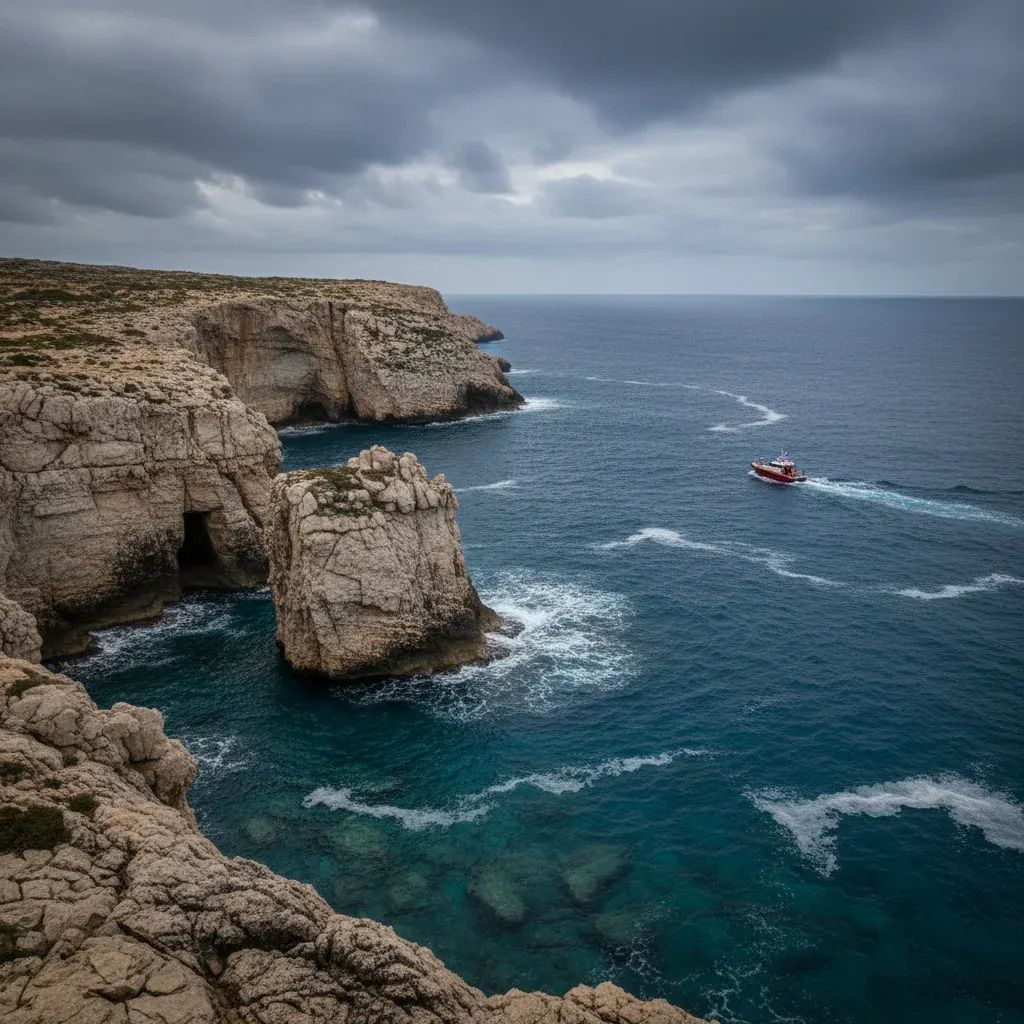
A swimmer was pulled from the water off Delimara by emergency crews this afternoon after becoming stranded on the rocky coastline, in what appears to be the area's first reported rescue of the year. The incident has renewed discussion about year-round lifeguard coverage at one of Malta's most popular—yet challenging—swimming spots.
Emergency Response in Action
The Civil Protection Department (CPD) deployed a rigid-hulled inflatable boat (RHIB) to extract the swimmer, who had been unable to scale the rocky shoreline after entering distress. Paramedics evaluated the individual at the scene, but hospital transport was deemed unnecessary. The CPD, which functions as Malta's primary emergency maritime responder, routinely handles water rescues outside the official lifeguard season, which typically runs mid-May through October.
What This Means for Residents and Visitors
If you swim at Delimara or similar rocky coastlines, understand that you are largely on your own outside the summer season. The Malta Tourism Authority (MTA) supports lifeguard services at a limited number of beaches, and those services run for roughly five months a year. The rest of the time, the assumption is that swimmers will exercise caution—or that emergency responders will arrive in time.
Practical precautions include:
• Check sea conditions before entering the water. Wind forecasts and wave height matter more at rocky sites than at sheltered bays.
• Never swim alone. A significant portion of past rescues involved solo swimmers who overestimated their stamina.
• Scout your exit. Before diving or swimming out, identify multiple points where you can climb back onto dry land. Smooth, algae-covered rocks become impassable when wet.
• Avoid alcohol. Impaired judgment has been cited as a contributing factor in multiple drowning and near-drowning incidents across Malta.
• Know the flag system. Even where lifeguards are absent, some beaches post color-coded flags. Red means stay out. Yellow means proceed with extreme caution.
Understanding Delimara's Coastal Conditions
Delimara's appeal lies precisely in what makes it demanding. The southeastern peninsula, home to St. Peter's Pool and Xrobb l-Għaġin Bay, draws swimmers and cliff divers to its dramatic rock formations and crystalline water. But the same features that attract thousands each summer—sheer cliffs, deep drop-offs, and exposed swimming platforms—leave little room for error.
Strong currents are a persistent threat along Malta's exposed coastlines, particularly in areas lacking natural breakwaters. Swimmers caught in rip currents often exhaust themselves trying to fight back to shore, and rocky exits provide no forgiving sandy beach to stumble onto. The Delimara area has faced repeated criticism for its lack of infrastructure: no lifeguard towers, no first-aid stations, and limited signage warning of conditions.
During the summer months, lifeguard patrols do increase at St. Peter's Pool, but coverage remains inconsistent compared to Blue Flag beaches like Għadira or Golden Bay, where trained personnel and flag warning systems operate daily. Outside the tourist season, swimmers are entirely reliant on the goodwill of bystanders or the response time of emergency services.
The Gaps in Malta's Water Safety Net
Malta enforces strict European Union water quality standards, and the vast majority of its bathing areas earn "excellent" ratings for bacterial content. But water cleanliness is not the same as swimmer safety. The Civil Protection Department and Malta Red Cross lifeguards are well-trained, holding International Life Saving Federation (ILSF) certification, but they cannot be everywhere at once.
During the off-season, volunteer surfers have stepped in to perform rescues at beaches like Golden Bay and Għajn Tuffieħa, often pulling swimmers from rip currents while waiting for official responders. That informal safety net speaks to both the dedication of Malta's outdoor community and the structural shortfall in coverage.
Lifeguards report treating everything from jellyfish stings to heat exhaustion, but the most serious calls involve swimmers caught by currents or trapped against rocks.
Broader Context: A Pattern of Risk
The Delimara rescue follows a well-documented pattern. Malta's rocky southern and western coasts—particularly sites like St. Peter's Pool, Wied iż-Żurrieq, and the cliffs around Dingli—combine natural beauty with real challenges. Eroding cliff faces, unstable rock overhangs, and the absence of emergency equipment have all been flagged in safety reviews.
Swimming zones marked by buoys exist at some Delimara bays, designed to separate swimmers from motorized watercraft, but enforcement is inconsistent. Boat owners have been observed ignoring demarcations, and the lack of on-site authority means violations go unchecked.
Jellyfish, while not typically life-threatening, add another layer of unpredictability. Websites tracking sightings help swimmers avoid stings, but encounters remain common during certain months. An allergic reaction or panic in open water can quickly escalate a minor incident.
Looking Ahead
As Malta heads deeper into spring and the start of the tourist season, the question of coastal safety is likely to resurface. Advocacy groups have long called for expanded lifeguard coverage, better signage, and investment in emergency equipment at high-traffic swimming areas. Funding and logistics remain the usual obstacles.
For now, the message is simple: If you plan to swim at Delimara or any of Malta's unmonitored coastlines, treat the water with respect. Today's rescue ended well, but the combination of challenging conditions, rocky terrain, and isolation means not every incident will.