The Malta Labour Party has invited Franco Mercieca—the ophthalmologist who resigned from Cabinet in 2014 rather than abandon his private medical work—to contest the upcoming general election in the 12th District (covering Żejtun, Marsaskala, and surrounding areas), a move that reignites debate about the island's conflict-of-interest rules.
Why This Matters:
• Political resurrection: A former parliamentary secretary who quit over ethics concerns is now back on the ballot, raising questions about accountability standards.
• Regulatory precedent: Mercieca's 2014 controversy led to a rewrite of the ministerial code of ethics, allowing exceptions for "national interest."
• District dynamics: His candidacy in the 12th District could reshape electoral calculations in a competitive constituency.
The Surgeon Who Chose Practice Over Power
Mercieca, an eye surgeon by training, entered Malta's Parliament in 2013 as a Labour candidate and was promptly appointed Parliamentary Secretary for the Elderly and Disability Rights. The role came with a catch: the ministerial code at the time demanded full-time commitment to public duties, effectively barring officials from maintaining private professional work. Prime Minister Joseph Muscat initially granted him a special waiver to continue his ophthalmology practice, but public scrutiny mounted, and the exemption was revoked.
Faced with the choice between his surgical career and his government post, Mercieca resigned in April 2014. He framed the decision as one of professional fulfillment, stating publicly that he wanted to resume his medical work, including voluntary Sunday hospital shifts. Muscat dismissed claims that media pressure had forced the resignation, but the episode became a flashpoint in debates over whether Malta's political class could juggle public office with lucrative private professions.
How the Rules Changed
The fallout from Mercieca's departure prompted a significant revision of the Public Administration Act and the Code of Ethics for Public Employees. The amended ministerial code now permits parliamentary secretaries and ministers to engage in private practice if the activity is deemed to be in the "national interest"—a loosely defined criterion that critics argue creates a loophole wide enough to accommodate almost any high-profile professional.
Under current regulations, professional officers in Malta's public service can exercise their profession privately, provided they obtain prior approval from the Permanent Secretary or relevant authority and ensure no conflict arises with official duties. Letters of appointment for such officers specify that their public role is full-time, and they are not entitled to additional payment for government-related work in their professional capacity. The rules also impose a two-year "cooling-off" period on officials who deal with private firms, preventing them from accepting jobs with those entities immediately after leaving government.
Yet the ambiguity around "national interest" exceptions has left the door open for future disputes, and Mercieca's case remains the most cited example of Malta's struggle to balance professional expertise in government with ethical transparency.
Unfinished Business and New Controversies
After stepping down from his parliamentary secretary role, Mercieca remained an MP and was later appointed chairman of a board overseeing the Gozo hospital, a position he described as voluntary. His continued presence in public life drew fresh scrutiny in 2016, when environmental NGOs challenged his nomination to chair the Parliamentary Environment and Development Planning Committee. The objection centered on his 10% shareholding in a property development firm, which activists argued created a potential conflict of interest in a committee tasked with scrutinizing development applications.
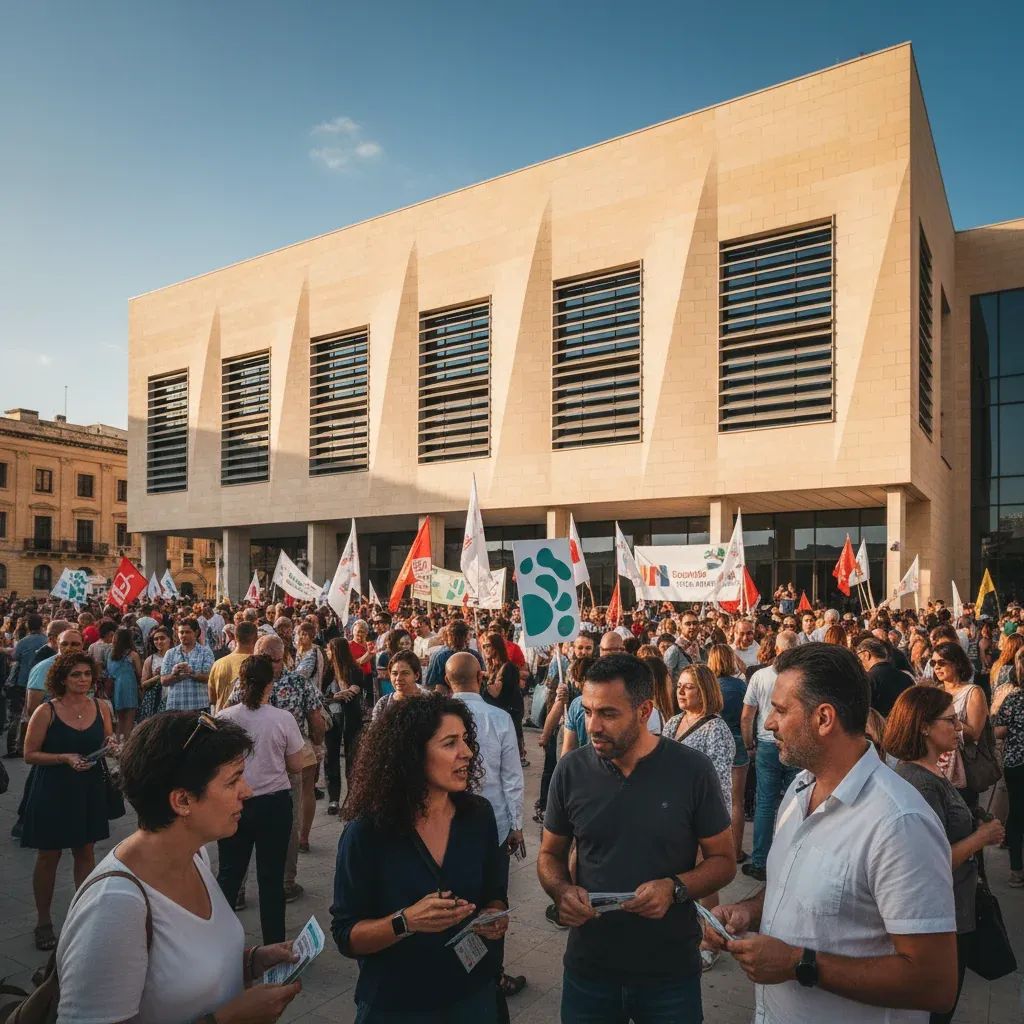
He contested the 2017 general election but was not elected, and he sat out the 2022 race entirely. Now, nearly a decade after his Cabinet resignation, Prime Minister Robert Abela has extended an invitation for a political comeback. Mercieca announced his candidacy at a Labour Party rally in Żejtun on Tuesday, April 28, 2026, pledging to represent the 12th District. Malta's next general election is expected to take place in 2027, giving the political parties and electorate over a year to engage with emerging candidacies.
What This Means for Residents
For voters in the 12th District, Mercieca's candidacy presents a direct test of whether past controversies disqualify a candidate or whether professional credentials and party loyalty outweigh ethical missteps. His medical background could appeal to constituents concerned about healthcare access, particularly in specialized fields like ophthalmology, where Malta has faced periodic shortages. However, his resignation history may also energize opposition campaigns eager to highlight questions of accountability.
More broadly, Mercieca's return underscores a recurring tension in Malta's political system: the island's small talent pool means that individuals with specialized expertise—doctors, lawyers, architects—are often recruited into politics, yet strict conflict-of-interest rules can make it difficult for them to serve without abandoning their professions entirely. The 2014 rule change attempted to resolve this dilemma, but critics argue it has merely institutionalized a double standard, allowing well-connected officials to maintain lucrative side work while ordinary public employees face stricter restrictions.
The Broader Context
Malta's Public Administration Act and Standards in Public Life Act aim to ensure that government officials prioritize public duties over private gain. Public employees and board members must disclose potential conflicts of interest, obtain approval for outside employment, and maintain political neutrality. Yet the "national interest" carve-out introduced after Mercieca's resignation has proven contentious, with transparency advocates calling for clearer criteria and stronger enforcement.
The Commissioner for Standards in Public Life has the authority to investigate breaches of the Code of Ethics, but the office has limited powers to sanction high-ranking officials, and enforcement has been inconsistent. Mercieca's case, in which he ultimately chose private practice over public office without facing formal penalties, illustrated both the system's flexibility and its vulnerability to criticism.
Electoral Arithmetic and Party Strategy
The Labour Party's decision to field Mercieca in the 12th District reflects a calculated risk. His name recognition and professional standing could energize certain voter segments, particularly older constituents who remember his brief tenure overseeing elderly and disability rights. However, his candidacy also provides ammunition for the Nationalist Party and independent candidates, who are likely to highlight his resignation as evidence of a broader pattern of ethical lapses within the Labour administration.
If elected, Mercieca would return to a Parliament that has seen significant turnover since his last term. Many of the MPs who served alongside him in 2013–2017 have since retired or lost their seats, and the political landscape has shifted in response to corruption scandals, regulatory reforms, and economic pressures. His second act in politics will unfold in a more polarized environment, where public tolerance for perceived conflicts of interest has arguably diminished.
A Test of Memory and Forgiveness
Whether voters in the 12th District and beyond view Mercieca as a principled professional who prioritized patient care or as a politician who skirted ethical rules will shape his electoral fate. For now, his candidacy is a reminder that in Malta's tightly knit political ecosystem, few exits are permanent, and the boundary between public service and private interest remains a live debate.