
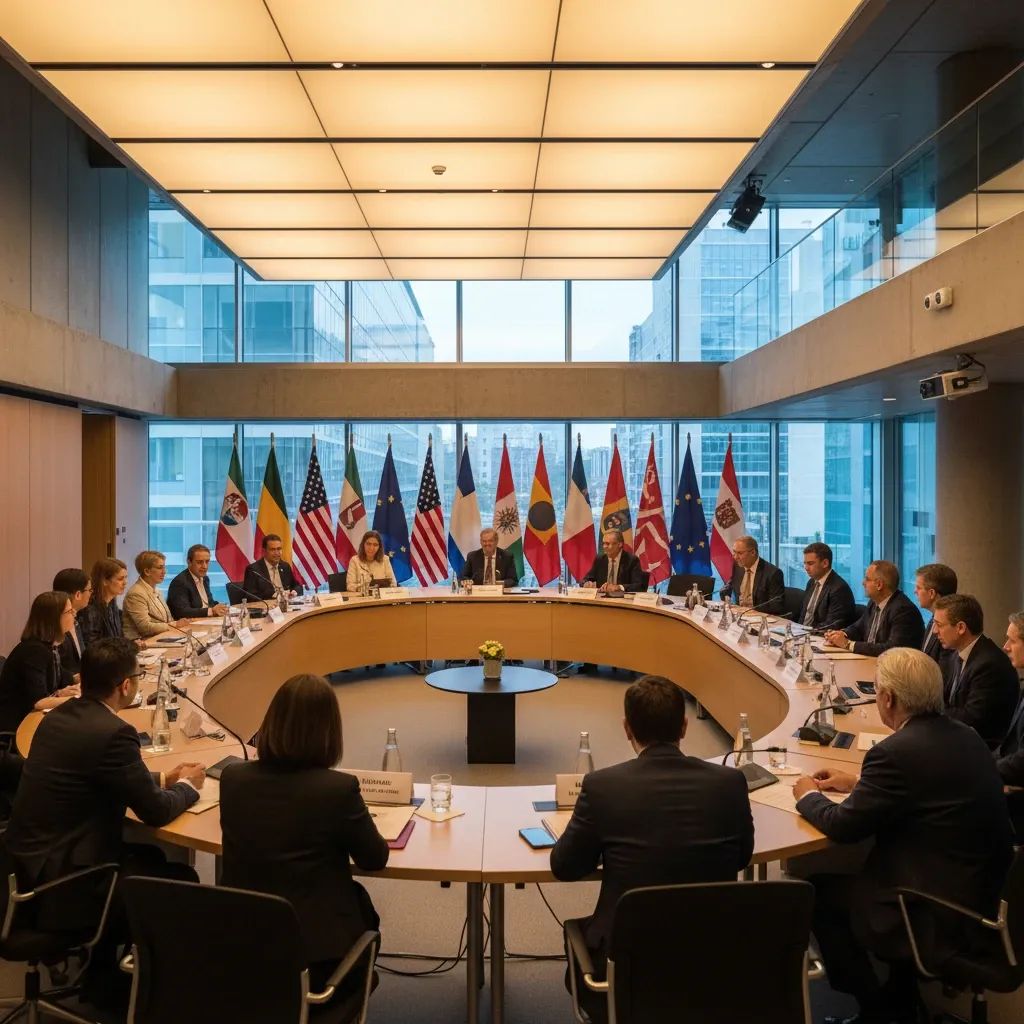
The Malta Labour Party will convene its national congress in Gozo from April 12-17, 2026, a gathering that will lay the groundwork for an electoral manifesto and almost certainly trigger an election call within weeks. The event, running under the banner "Malta Aqwa" (A Better or Greater Malta), is widely interpreted as the final procedural step before Prime Minister Robert Abela dissolves parliament and heads to the polls—with political analysts suggesting a vote in May or June 2026, with June emerging as the most anticipated month according to recent polling.
Why This Matters
• Election timing: Constitutional deadline is June 2027, but PM Abela is expected to call a vote in May or June 2026, bypassing the full term.
• Manifesto framework: The congress will approve guidelines—not a complete platform—signaling that a campaign document will follow shortly.
• Gozo focus: The opening session at Ta' Ċenċ Hotel underscores the island's strategic electoral weight, with pledges to make it Malta's first carbon-neutral zone and secure dedicated EU funding.
Gozo as the Opening Stage
The choice to launch in Gozo—rather than the party's headquarters in Ħamrun or a large venue on the main island—is deliberate. The island of roughly 32,000 residents has historically been a Labour stronghold, and the party is keen to reinforce its commitment to decentralization and regional empowerment. At the kickoff discussion led by Abela, delegates will be invited to "write the next chapter," a phrase that echoes the party's 2022 campaign rhetoric but now carries the weight of pre-election positioning.
Previous party platforms have emphasized dedicated European funds for Gozo, digitalization of public services on the island, and positioning it as a pilot zone for environmental transition. The carbon-neutral pledge, first floated ahead of the European Parliament elections, remains central—Labour's strategy appears to be framing Gozo not as a laggard requiring subsidy, but as a laboratory for green policy that could export lessons to the rest of Malta.
What the Congress Actually Does
Under Malta's Labour Party statute, a general congress must convene to debate and approve political guidelines before any general election. This is not a policy festival or a grassroots consultation—it is a formal vote on a framework that will shape the manifesto. The congress will host business breakfasts with social partners, meetings with civil society representatives, and sessions with party delegates, culminating in a closing address by Abela at the Ta' Qali Convention Centre on April 17.
The guidelines approved during the congress will not include line-item costings or detailed legislative proposals. Instead, they set the thematic architecture: economic growth, family support, social infrastructure, environmental commitments, and business competitiveness. The full manifesto—expected in late April or early May—will translate these into tangible pledges. Historically, Labour has used this two-stage process to secure internal consensus before facing voters, minimizing the risk of last-minute dissent or leaked disagreements.
What This Means for Residents
For most people living in Malta, the congress itself is procedural, but its timing and themes are directly consequential.
First, the election will almost certainly disrupt government operations for at least six weeks. If Abela calls the vote in late April or early May, expect parliament to dissolve by the end of the month, a campaign through May and June, and a new government sworn in by mid-June. Any pending legislation—tax reforms, planning appeals, regulatory changes—will stall. If you have business with a ministry or agency, anticipate delays.
Second, the manifesto guidelines signal continuity rather than rupture. Labour's recent electoral platforms have emphasized safeguarding families and businesses, economic growth, and strengthening social frameworks. There is no indication that the 2026 general election manifesto will depart significantly from this direction. Expect incremental adjustments to existing schemes—childcare subsidies, wage supplements, housing incentives—rather than structural overhauls.
Third, the environmental commitments are worth watching, especially for Gozo. If the carbon-neutral pledge translates into concrete timelines and funding, property owners and businesses on the island could face new energy efficiency mandates or, conversely, benefit from subsidies for solar panels, heat pumps, and electric vehicle infrastructure. The devil, as always, will be in the details—and those details will emerge in the full manifesto, not the congress guidelines.
Election Timing and Political Calculus
Abela has said his government "intends to serve its full term," but he has not ruled out an earlier election if it serves the national interest—a phrase so elastic as to be meaningless. In practice, the decision is entirely discretionary, and the party has been in campaign mode since early 2026. A MaltaToday survey from March found that over a quarter of voters expect the election in June, making it the most anticipated month.
The Electoral Commission of Malta still lists "General Elections 2027" as the official placeholder, but this is a formality. The commission will update the date once the Prime Minister advises the President of Malta to dissolve parliament. Constitutional practice allows Abela to call the election at any moment, provided he gives the Electoral Commission sufficient notice—typically four to six weeks—to finalize the register, appoint polling stations, and print ballot papers.
Why May or June? Two reasons. First, Labour wants to avoid the summer doldrums, when voter turnout historically dips and media attention fragments. Second, the party is eager to lock in its current polling advantage before any potential economic headwinds—inflation, energy prices, migration pressures—erode public confidence. The congress is the last major set-piece event before the campaign proper; it will allow Labour to dominate the news cycle, project unity, and frame the narrative on its own terms.
What the Opposition Is Doing
The Nationalist Party, Malta's main opposition, has been preparing its own manifesto, but it is operating at a structural disadvantage. Without the machinery of government or the convening power of a national congress, it must rely on press conferences, social media, and grassroots mobilization to break through. The party has signaled it will focus on cost of living, rule of law, and government accountability—themes that poll well but require sustained messaging to gain traction.
Smaller parties and independent candidates are also positioning themselves, particularly around environmental reform and anti-corruption. For voters dissatisfied with both major parties, the 2026 election could see a modest uptick in spoiled ballots or protest votes, though Malta's single transferable vote system tends to channel dissent back toward the two dominant blocs.
The Road Ahead
The congress will conclude on April 17, 2026, and Abela's closing speech will be scrutinized for any signal—explicit or coded—about the election date. If he does not announce it then, expect the call within 48 to 72 hours. The party's internal calendar is locked, its messaging tested, and its candidates in place. The only variable is the precise date on the calendar.
For residents, the next six weeks will be a blur of campaign rallies, televised debates, and doorstep canvassing. The outcome, barring a seismic shift, is not in doubt—Labour remains the favorite—but the margin, the turnout, and the specific policy commitments will shape the next five years of governance. Pay attention not to the congress speeches, which are scripted and performative, but to the manifesto footnotes, the funding mechanisms, and the implementation timelines. That is where the real story lies.


