
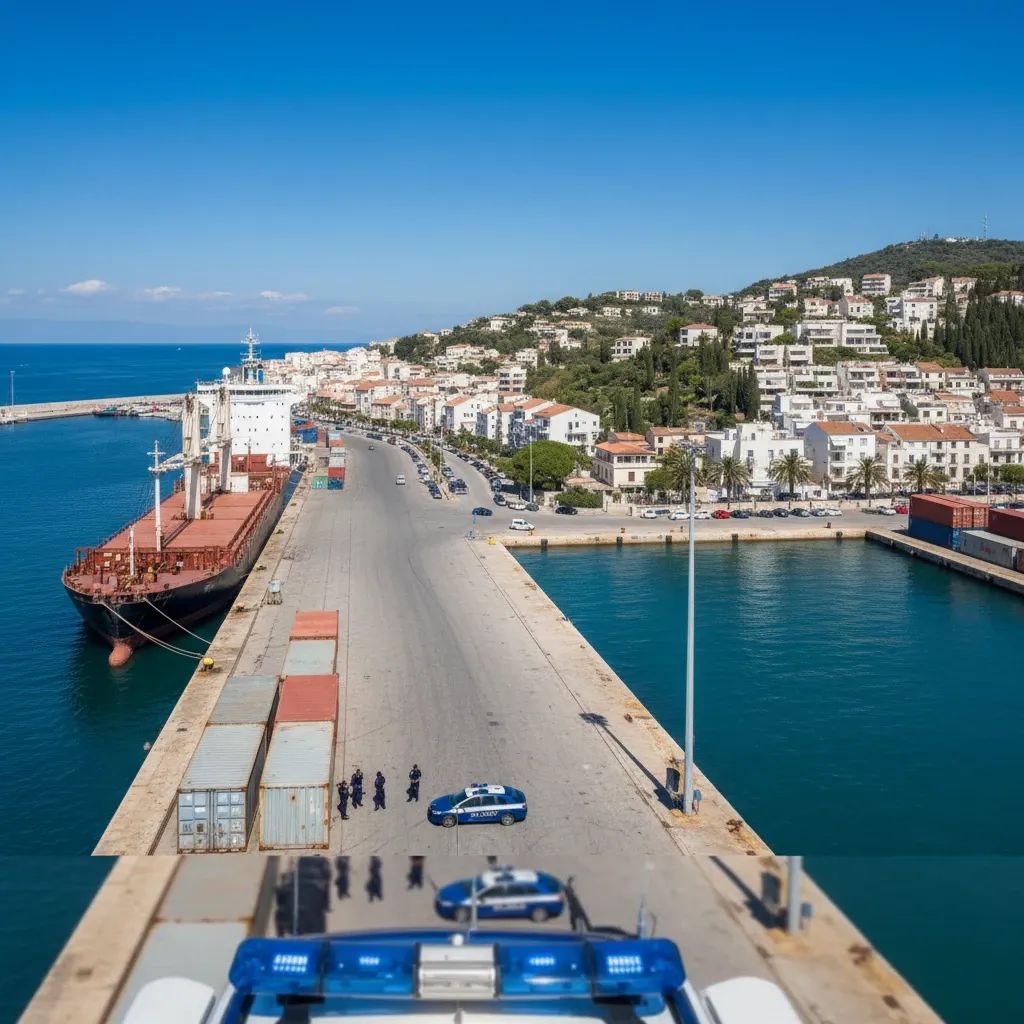
The Malta Police arrested a 25-year-old Valletta resident near St. Luke's Hospital in Tal-Pietà on Wednesday morning after finding him in possession of suspected cocaine, heroin, and cannabis, along with cash. The arrest is one of hundreds of drug enforcement operations carried out by Malta's police this year as the island continues to grapple with record trafficking volumes.
Why This Matters
• Part of a larger surge: Malta's drug seizures hit a record €87M street value in 2025, with cocaine and cannabis seizures up 70% year-on-year.
• Judicial outcome expected Thursday: The suspect faces arraignment with potential penalties ranging from heavy fines to life imprisonment, depending on quantity and intent determinations.
• Growing potency and accessibility: Cocaine purity on Maltese streets has climbed to 20-30%, making each bust more significant from a public health standpoint.
• Intelligence-led enforcement: The arrest reflects Malta Police Force's proactive approach to drug operations across the island.
Security at Healthcare Facilities
Drug-related issues have been documented at Mount Carmel Hospital, the island's psychiatric facility. In December 2025, the facility implemented new policies limiting outdoor patient access and reinforcing security after medical staff confirmed sightings of cocaine and synthetic cannabis being consumed on its grounds by patients. This internal consumption issue prompted visitor inspections and consideration of potential scanner installations to improve facility security.
The arrest near St. Luke's Hospital on Wednesday followed standard operational procedures: police conducting surveillance-based patrols identified a suspicious vehicle at approximately 10:00 on April 8, leading to a search that uncovered multiple sachets of narcotics alongside an undisclosed amount of currency. The suspect's arraignment is scheduled for Thursday in the Magistrates' Court, where prosecutors will determine whether the case proceeds at the lower court level or escalates to the Criminal Court based on quantity thresholds.
Legal Thresholds and Sentencing Realities
Malta's drug trafficking laws impose some of the strictest penalties in the European Union, with life imprisonment as the maximum sentence. However, the court tier makes a material difference:
• Magistrates' Court cases—typically involving smaller quantities—carry maximum sentences of 10 to 12 years. Recent policy proposals have raised the quantity thresholds for heroin, cocaine, ecstasy, and cannabis that qualify for lower court adjudication, potentially resulting in lighter sentences for marginal cases.
• Criminal Court cases, reserved for larger hauls or clear trafficking operations, maintain the full sentencing range up to life imprisonment.
Procedural factors such as guilty pleas and cooperation with authorities significantly influence outcomes. The Drug Dependence (Treatment not Imprisonment) Act 2014 created a rehabilitation pathway for simple possession cases, allowing referral to the Drug Offenders Rehabilitation Board (DORB) instead of immediate incarceration. Yet for possession with intent to supply—the likely charge in Wednesday's case—mandatory prison sentences remain the norm, with limited judicial discretion for alternative punishments.
Intelligence-Led Surge in Enforcement
The arrest fits within a broader operational tempo maintained by Malta's Drugs Squad, a specialized unit of approximately 30 officers conducting intelligence-driven investigations. The squad has logged 180 significant drug busts in 2025, often following weeks of surveillance and leveraging anonymous tips. Their mandate extends beyond seizures to dismantling organized crime networks and pursuing money laundering investigations, targeting suspects who convert illicit proceeds into real estate, luxury vehicles, and other commodities.
Malta's geographic position—a transit hub between North Africa, Italy, and Europe—makes it attractive to international trafficking operations. Recent operations have implicated Italian and Albanian cocaine networks and North African actors, with cocaine shipments frequently originating from South America via Spain and Italy. In January 2026, five Italian nationals were arrested in connection with a seizure of 13 kg of suspected cocaine and cannabis, alongside money laundering and organized crime charges.
Record Volumes and Evolving Threats
The island's drug market has undergone significant transformation over the past 18 months. Cocaine seizures reached 668 kg in 2025, while cannabis grass confiscations totaled 314.46 kg. A single March 2025 seizure at the Malta Freeport netted 250 kg of cocaine in a container from Ecuador destined for Greece. Early 2026 figures show the trend continuing, with 128 kg of cannabis and 151 plants already recorded in the first two months.
Potency has escalated alongside volume. Cocaine purity now averages 20-30%, compared to single-digit percentages in prior years. Cannabis strains reaching 15% THC content are increasingly common, often arriving via postal services, which accounted for more than half of all drugs intercepted in Malta over the past five years. Synthetic substances pose an emerging threat: CC9, a synthetic cannabinoid, caused seven acute hospitalizations in April 2025, while substances like pink cocaine (2CB), Ketamine/Tusy, and Molly have entered local markets through darknet platforms using cryptocurrency.
What This Means for Residents
Wednesday's arrest is one incident within Malta's broader enforcement response to drug trafficking. For residents, the case demonstrates the Malta Police Force's commitment to intelligence-led operations and its active efforts to disrupt trafficking activities across the island.
The National Drug Addiction Unit (NDAU), launched in May 2025, aims to develop evidence-based policies and improve data collection for targeted interventions. Meanwhile, the government's strategy balances aggressive prosecution of traffickers with gradual liberalization of soft drug laws, channeling users toward a regulated market to undercut the illegal trade.
For the Valletta resident awaiting arraignment, the immediate future hinges on prosecutorial decisions regarding charge severity and quantity classifications. If the case remains in the Magistrates' Court, he faces a maximum of 12 years; escalation to the Criminal Court opens the possibility of life imprisonment. Either way, the arrest reflects ongoing enforcement efforts against Malta's persistent trafficking challenges.
Understanding Malta's Drug Enforcement Response
Malta's Drugs Squad maintains proactive patrols and rapidly processes arrests through the court system as part of its strategy to disrupt trafficking operations. Drug-related crime remains a serious public safety concern, and authorities continue to invest in intelligence gathering and cross-border cooperation to combat international trafficking networks.
As the case proceeds through the courts, it will offer insight into how Malta's judiciary applies its complex sentencing framework to street-level trafficking cases. For residents, ongoing enforcement efforts signal the island's determination to address drug trafficking, while evolving public health initiatives aim to provide alternatives to criminalization for users struggling with addiction.


