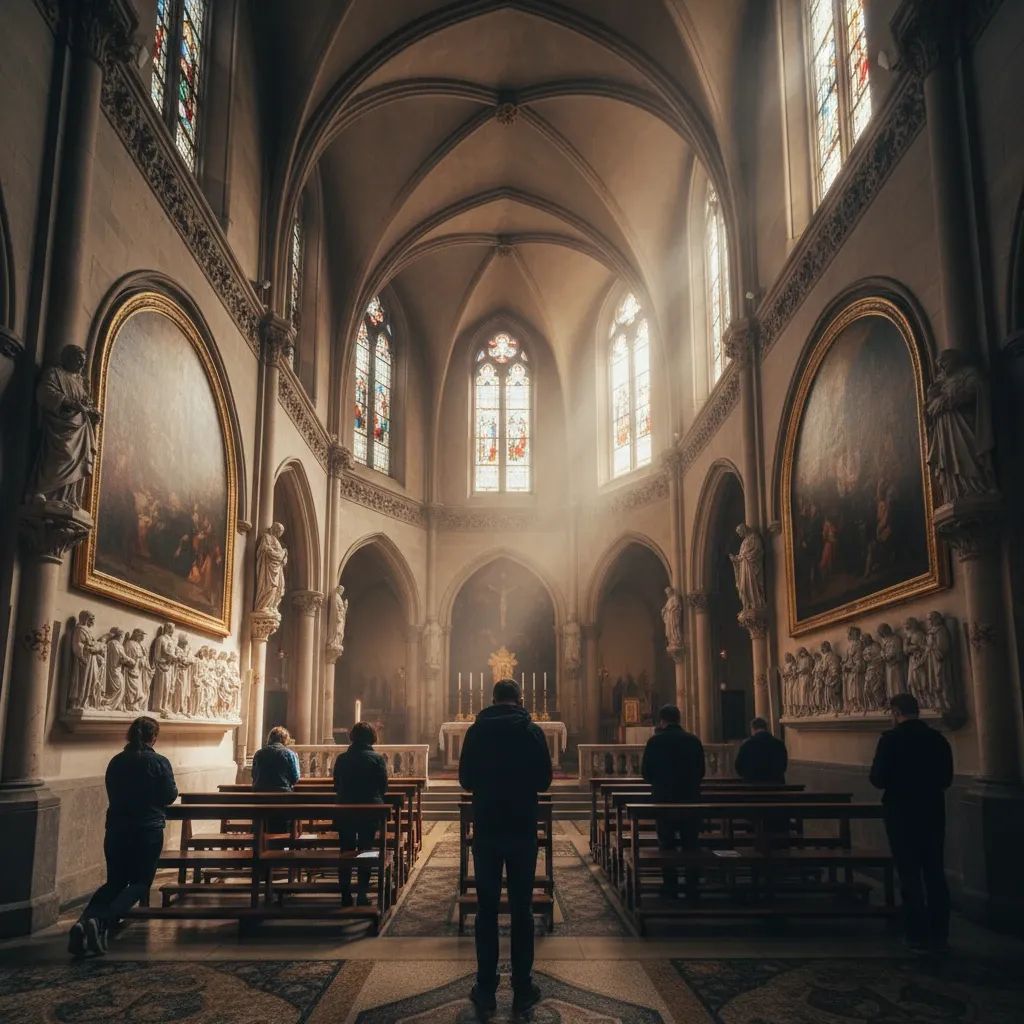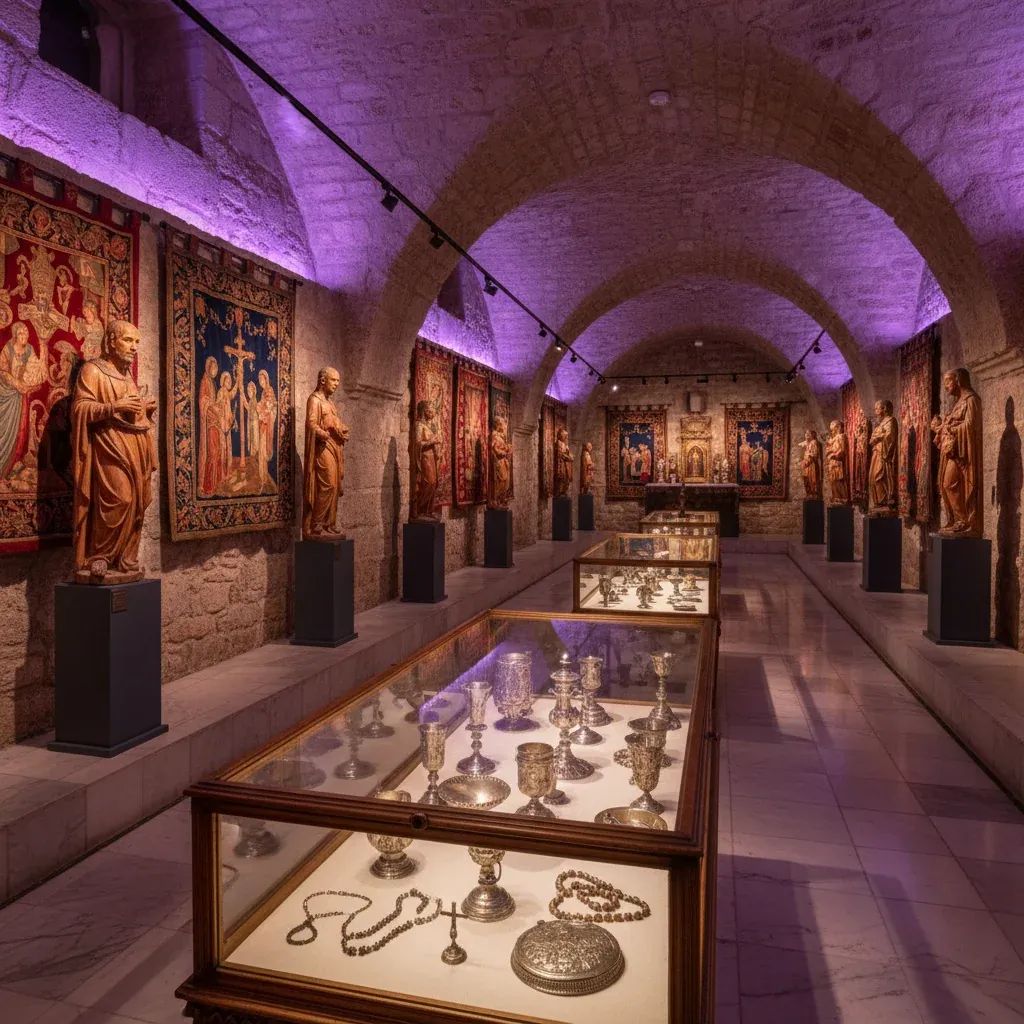
Inside the subterranean galleries of Birkirkara's St. Helen's Band Club, a centuries-old craft tradition is being revived through devotional sculpture, hand-sculpted grain art, and meticulously preserved religious textiles. This spring, the TEAK Commission—a volunteer cultural arm of the Soċjetà Każin Santa Liena—is mounting the 26th consecutive edition of "Agnus Dei," a two-week immersion into Malta's most intimate Easter observances, running March 25 through April 4.
Why This Matters
• Free access to rare sacred objects: Antique crucifixes, life-size Passion sculptures, and ecclesiastical textiles rarely displayed outside church sacristies.
• Expanded weeknight and holiday hours designed for pilgrims: Maundy Thursday extends until 11 PM to align with traditional church-hopping rituals.
• Artisanal techniques rarely seen today: Hand-crafted semolina tableaux and plaster devotional work that connects contemporary Malta to Mediterranean domestic piety practices from the 19th century.
The Grain-Based Centerpiece
What makes the "Agnus Dei" physically distinctive—and increasingly rare in contemporary religious practice—is its reliance on ephemeral materials and hand craft. The exhibition's architectural anchor is a monumental 8-by-4-foot framed tableau composed entirely from semolina, rice, and colored dough. The artist assembled grain-by-grain a dramatic Passion scene using a technique tied to Sicilian and southern Italian household rituals during Lent, a practice that survives in Malta almost nowhere else outside domestic circles or small confraternity gatherings.
The labor invested is significant. Creating such a work demands weeks of detailed planning, careful pigmentation of doughs, and meticulous arrangement to prevent grain migration and color bleeding. The devotional intent behind these ephemeral creations underscores the exhibition's spiritual purpose.
Alongside this centerpiece sits the "Table of the Apostles," a diorama housing decorative platters, bowls, and framed artworks similarly constructed from semolina and rice, each piece accompanied by plaster statues representing the twelve apostles. The assembly echoes traditional Maltese domestic altars constructed during Lent, when families would ornament their home shrines with edible or semi-edible decorative arrangements now largely abandoned.
The Bugeja Cenacle and Contemporary Sacred Art
Sculptor Andrew Bugeja has donated a striking installation for this edition: a Jewish-style cenacle depicting Christ washing the feet of the apostles. Three life-size figures—Christ, Simon Peter, and John—occupy a dedicated alcove within the basement. The sculpture emphasizes anatomical precision and biblical fidelity. Bugeja, whose portfolio spans sacred church restoration and monumental festa statuary across the archipelago, has approached this work with a restorer's eye for liturgical accuracy and an artist's attention to emotional presence.
The setting matters. The cenacle is positioned in subdued amber lighting, surrounded by purple liturgical fabric—the color of penitence—that distinguishes it spatially and psychologically from the more ornamental upper displays. Visitors standing before the three figures experience the scene at eye level, invited into intimate proximity with the narrative of humility and service rather than viewing it as a distant tableau.
Passion Symbolism at the Threshold
Visitors enter the exhibition through a corridor adorned with artistic banners depicting Passion iconography: the crown of thorns, the thirty pieces of silver, the seamless robe, and the veil of Veronica. These textile works, commissioned by the society's cultural body, function as visual catechesis—teaching tools that translate gospel narrative into accessible imagery without requiring explicit text. For Maltese visitors raised in Catholic environments, the symbols resonate immediately. For secular residents or international visitors, they provide wordless orientation to the devotional logic governing the deeper chambers.
Throughout the gallery, glass-fronted cabinets contain smaller statuary: polychrome plaster apostles with gold-leaf halos, Pietà groupings reflecting mid-20th-century Maltese devotional aesthetics, and various antique crucifixes whose wood, metal, and worn finishes testify to decades or centuries of household veneration. Many pieces originate from private collections loaned temporarily by parishioners or confraternity members.
Ceremonial Costumes and Material Heritage
The exhibition also preserves and displays costumes from the Soċjetà Każin Santa Liena's annual biblical procession—velvet Roman centurion armor, linen robes for apostle impersonators, and the elaborate regalia of penitent confraternity members. These textiles are more than historical artifacts; they connect the exhibition to the living Good Friday procession that will move through Birkirkara's streets on April 3. For residents accustomed to seeing these costumes in motion, encountering them static and illuminated in a gallery creates a strange, contemplative reversal—the familiar becomes unfamiliar when removed from ritual performance.
What This Means for Residents
For Birkirkara residents and Maltese visitors broadly, the exhibition functions as accessible cultural heritage preservation. The Soċjetà Każin Santa Liena, as a band club and festa society, operates as an institution deeply rooted in community cultural life. The "Agnus Dei" exhibition demonstrates the society's ongoing commitment to preserving and presenting Malta's religious heritage for contemporary audiences.
For secular or non-Catholic residents, the exhibition offers ethnographic insight into living religious practice. Maltese Holy Week observances remain among the island's most visible collective rituals, yet many of the domestic and semi-private devotional practices underlying the public processions remain invisible to outsiders. The "Agnus Dei" exhibition renders some of this interiority visible—allowing visitors to encounter the material objects, artistic choices, and emotional registers that inform how Maltese Catholics experience Easter.
For tourists and expat residents, the show provides context unavailable elsewhere on the island. Most international visitors encounter Malta's Holy Week through the solemn processions—atmospheric street theater featuring hooded penitents, brass bands, and life-size Passion statues. The "Agnus Dei" exhibition supplies the quieter, domestic, and artisanal dimensions of the same tradition.
Practical Navigation
The band club is centrally located in Birkirkara, within walking distance of the town square and St. Helen's Basilica, making it a natural waypoint for anyone observing or exploring the town's Easter calendar. Weekday access runs 6 PM to 9 PM, accommodating working residents. Weekend morning slots (9:30 AM to noon) serve families and older visitors. On Maundy Thursday (April 2), the club remains open 6 PM to 11 PM, coinciding with the traditional "seba' viżti"—an evening pilgrimage in which locals visit seven churches sequentially, spending time in prayer before each parish's elaborately decorated Altar of Repose.
Good Friday morning access (9 AM to 12:30 PM) on April 3 allows contemplative visits before the afternoon's solemn processions commence. The timing reflects liturgical intentionality: the exhibition functions as preparatory meditation for the day's central rite.
A Three-Decade Stewardship
Twenty-six consecutive annual exhibitions signals institutional commitment and community participation that has sustained through economic and social shifts. Each iteration evolves—new sculptural commissions are solicited, antique pieces rotate in from private collections, contemporary artists like Bugeja contribute original installations. The exhibition is not static curation but an ongoing negotiation between heritage preservation, artistic production, and devotional practice.
For the TEAK Commission, all volunteer labor, the annual exhibition represents a significant investment of time and organizational capacity. Yet the commitment persists, suggesting that sufficient community appetite exists for this form of cultural stewardship—that Birkirkara residents and visitors from across Malta continue to value spaces of quiet, material-rich engagement with religious tradition, even in an increasingly secular context. In that continuity lies the exhibition's deepest significance: not as museum piece, but as living practice.