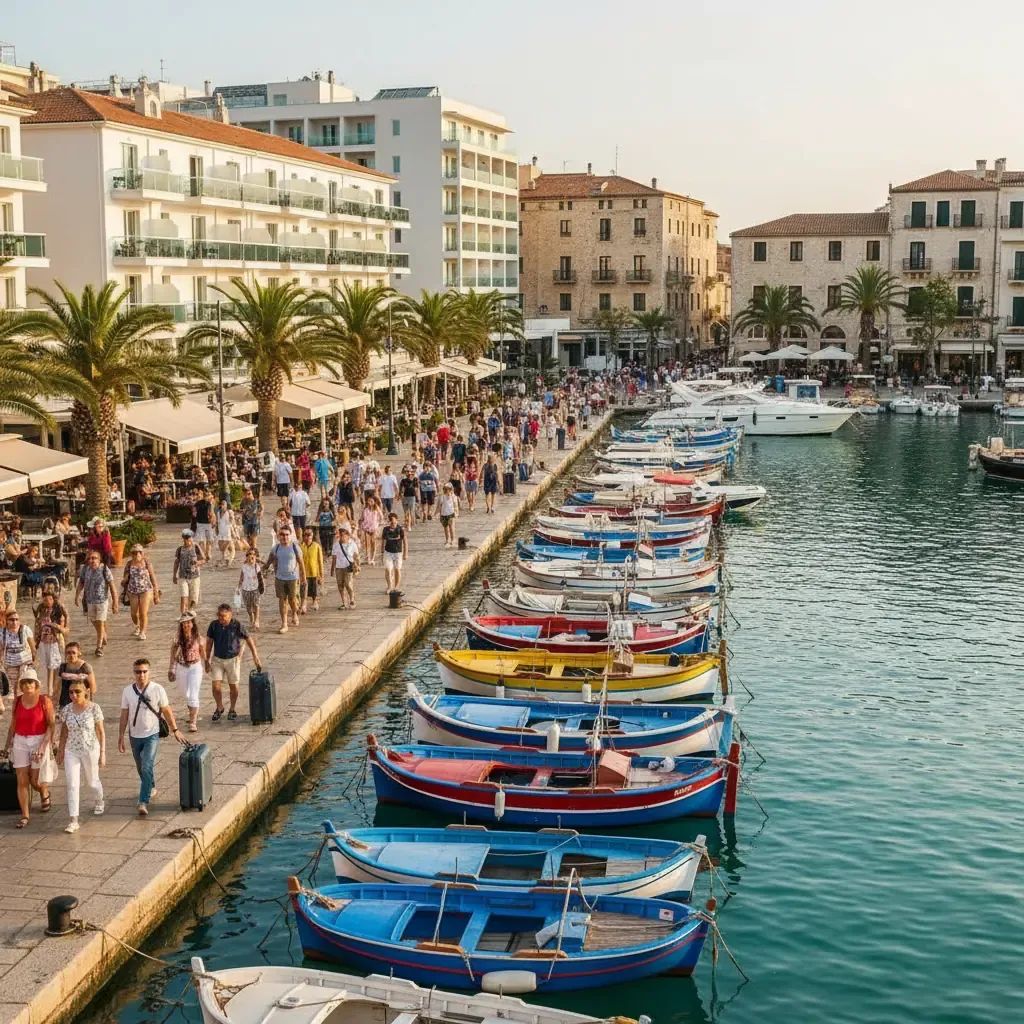
Malta's tourism machine finished 2025 firing on all cylinders, with the final quarter delivering numbers that signal a fundamental shift in how the archipelago operates as a destination. The Malta National Statistics Office reported 716,536 hotel guests between October and December—a 14.3% climb from the same quarter in 2024—marking performance that has caught the attention of travel analysts across Europe and positioned the country as a meaningful competitor even during historically softer months.
Why This Matters
• Off-season stability: Winter bookings surged 19%, meaning hospitality workers, restaurant staff, and shopkeepers face fewer layoffs and steadier income through the quiet months.
• Occupancy gains: Collective accommodation establishments operated at 59.8% bed occupancy in Q4, up nearly a full percentage point, providing operators with breathing room to invest and expand.
• Regional outperformance: Malta's 10.9% increase in tourism nights ranked second across the EU, behind only Ireland's 12.0%, significantly outpacing Mediterranean neighbors like Greece (2.4%) and Spain (2.2%).
The broader context matters here. Across 2025, Malta welcomed over 4 million visitors for the first time in history—a 12.9% jump from 2024—with total overnight stays exceeding 25.4 million. That trajectory doesn't happen by accident. It reflects deliberate strategy, infrastructure investment, and a tourism authority that has cracked the code on attracting a different caliber of traveler than the archipelago traditionally relied on.
The Granular Story: Where Growth Actually Happened
The figures break down in revealing ways. During the October-to-December window, 2,960,096 nights were spent across all collective accommodation, up 11.0% year-over-year. Slice it by island, and the story becomes even clearer: Malta proper (the main island) logged 2,863,634 nights, a 10.6% increase, while Gozo and Comino combined for a 26.2% surge in overnight stays. That disparity matters. It suggests marketing efforts targeting niche experiences and cultural tourism are working, particularly on the sister islands where boutique hospitality and agricultural tourism experiences command premium pricing.
Four-star establishments captured nearly half of all guest nights at 49.7%, reinforcing a deliberate pivot toward upmarket segments. Meanwhile, the average stay compressed slightly to 4.1 nights, continuing a Europe-wide trend toward shorter, more frequent trips. By late December, Malta operated 347 active collective accommodation establishments with 23,343 bedrooms—a stable inventory that absorbed the influx without creating supply-side bottlenecks.
Why Malta Won Against Its Competitors
The EU average for Q4 2025 tourism night growth sat at a pedestrian 3.0%. Twenty-five of 27 member states posted gains, but most were marginal. Romania contracted by 4.6%, Luxembourg barely moved, and even southern European heavyweights struggled: Greece managed 2.4% in nights, Spain 2.2%, and Italy just 1.2% for the full year. Malta's 10.9% doesn't just beat those figures; it laps them.
Several convergent forces explain the gap. Enhanced airline connectivity during 2025 opened Middle Eastern and Asian markets, giving tour operators and independent travelers more departure options from continental Europe, the UK, and beyond. Flight movements across the entire archipelago rose 11.4% year-on-year, enabling better scheduling during shoulder months when departure slots are typically constrained.
The VisitMalta campaign—"Explore More Stories, Explore More Flavors"—earned a Gold Magellan Award in 2025, a recognition that signaled the messaging was resonating with decision-makers in North America and other high-value markets. Paired with sustained feature coverage in travel media, the archipelago garnered attention among travelers inclined toward cultural experiences, heritage tourism, and culinary exploration rather than nightlife and party venues.
Cultural programming extended the tourist calendar deliberately. Notte Bianca ran October 30–November 2, and the Three Palaces Festival kicked off November 7–9, both drawing international audiences during a season when major competing destinations—Greece, Spain, southern France—were winding down. Local government coordinated timing to maximize accommodation occupancy while giving cultural tourists genuine reasons to travel outside the summer crush.
Economic Reality Check: What This Means on the Ground
For residents working in hospitality, retail, and transport, the Q4 surge is tangible. Seasonal unemployment typically spikes after October as summer staffing contracts. A 19% increase in winter tourism smooths that cliff considerably. Hotels and restaurants that might have cut back to skeleton crews are instead maintaining higher payroll. Transport operators are scheduling more ferries and running buses at fuller capacity. Beach clubs and cultural venues that would normally close seasonally now have economic justification to remain open.
Property owners in tourist zones—Sliema, St. Julian's, Valletta—continue harvesting elevated rental yields. A modest one-bedroom flat near Spinola Bay or the waterfront in Valletta commands premium short-term rental income during Q4 when international travelers are abundant. That, however, comes with friction: residents increasingly report parking congestion, noise complaints, and pressure on local services during shoulder months that used to feel quieter.
Tourism patterns have shifted toward upmarket segments, reshaping retail and hospitality offerings across the islands. Upscale dining venues, wine bars, art galleries, and wellness experiences are expanding, while budget-focused establishments face different market dynamics. This reflects broader changes in visitor composition and spending patterns documented in 2025 tourism data.
The Infrastructure Squeeze
Here's where the narrative gets uncomfortable. Sustained double-digit growth on a small island raises legitimate questions about carrying capacity. Public transport to Valletta and the Three Cities operates near saturation during peak periods. Parking in tourist-dense zones remains chronically insufficient. The Malta Planning Authority has raised concerns about overdevelopment in coastal areas, and environmental organizations are sounding alarms about degradation of the very heritage sites and natural landscapes that drove tourists here in the first place.
Water and electricity usage spike measurably when occupancy climbs. Waste management systems designed for a resident population of roughly 535,000 are now absorbing transient tourists, creating noticeable seasonal capacity pressures. Sewerage lines in older towns like Mdina and Birgu weren't engineered for contemporary tourism volumes. These aren't abstract planning issues—they directly affect water quality, air quality, and daily friction between residents and visitors.
Currency and Competitive Risk
Sustained strength in visitor numbers masks an emerging vulnerability. The euro has appreciated against sterling, making Malta slightly more expensive for British tourists (historically the largest single source market). If pound weakness persists, or if North African destinations—Tunisia, Morocco—and Turkey continue slashing prices to grab market share, Malta's gains could reverse quickly. Premium positioning works only if the value proposition remains convincing, and price sensitivity is real among travelers seeking value-oriented cultural holidays.
Strategic Trajectory
The Malta Tourism Authority has signaled that 2026 strategy pivots toward specialization and geographic dispersal. Inland villages, adventure tourism in Gozo, extended-stay packages for remote workers, and "slow tourism" experiences will receive marketing emphasis. New airline partnerships are in active negotiation. The government is exploring incentive structures for hotels that invest in renewable energy and water-saving infrastructure, an attempt to decouple growth from environmental degradation.
What's clear is that Malta has successfully transitioned from a summer-dependent model to a year-round business. Whether that momentum survives without eroding quality of life for residents depends on disciplined capacity management, honest planning conversations about development limits, and a strategic commitment to value-focused tourism over volume-chasing. The Q4 numbers are impressive. Whether they're sustainable is the larger question.