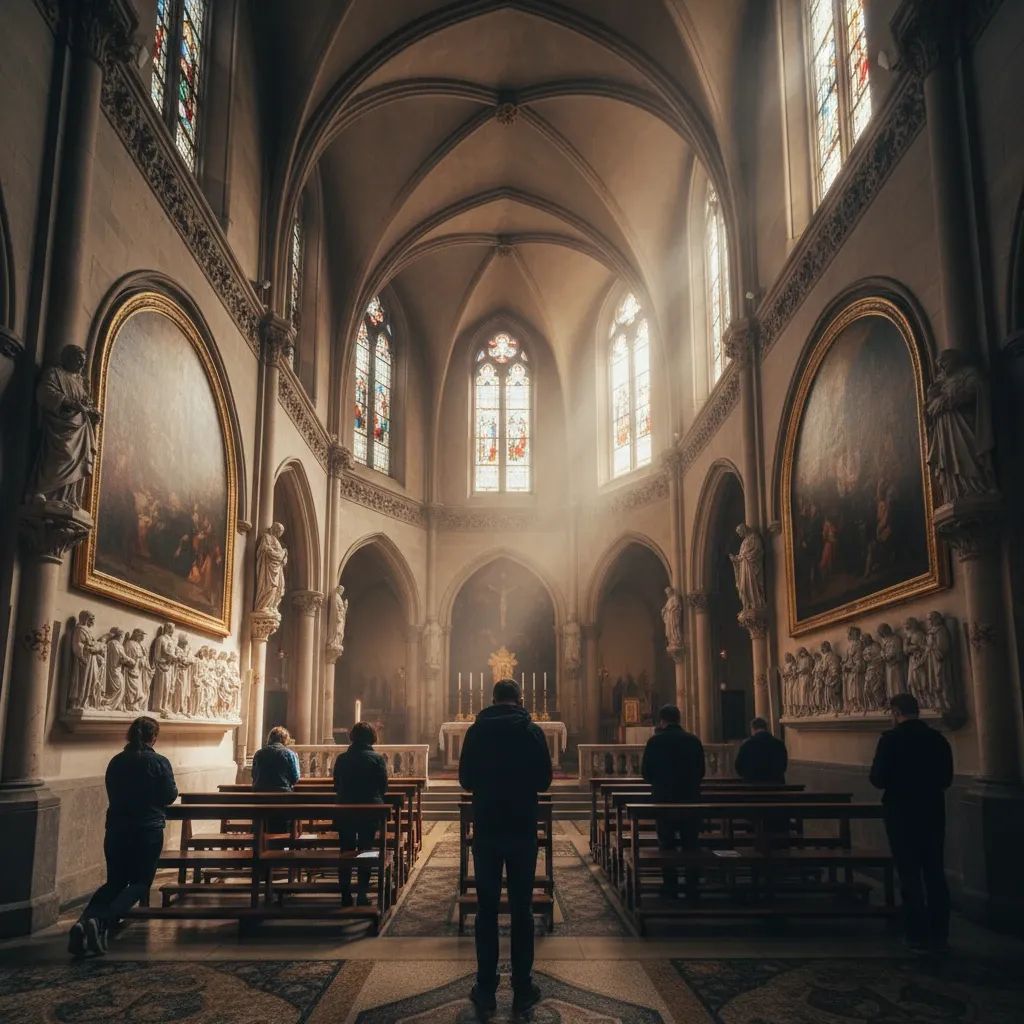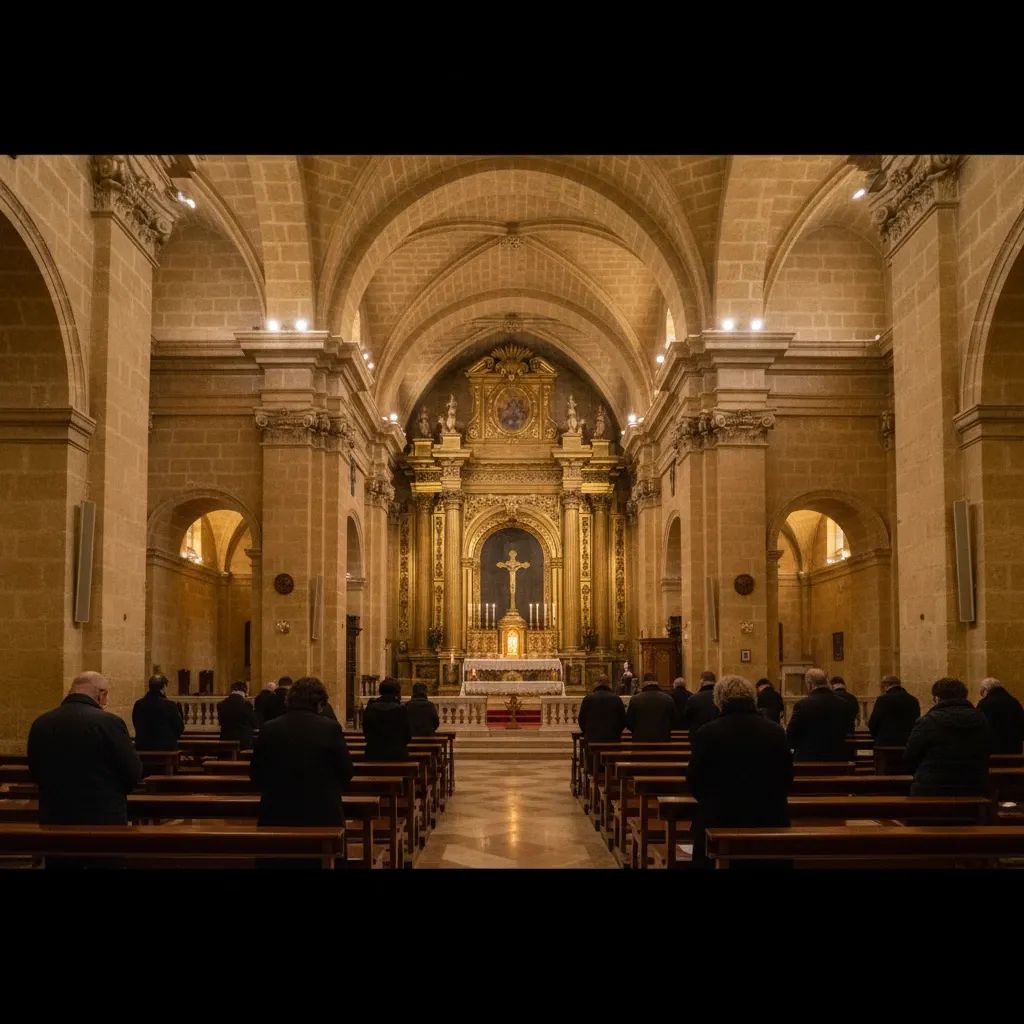
On Friday, March 20, 2026, in Victoria, a rare ceremonial act unfolds that hasn't happened in decades: a 300-year-old papier-mâché statue of Christ collapsing beneath the Cross will process through historic alleyways, marking a singular revival of a Lenten tradition that once anchored Gozo's spiritual calendar. The pilgrimage begins at 6:45 PM from St Augustine Church, winding toward the Cathedral of the Assumption within Iċ-Ċittadella—a route that hasn't echoed with this particular devotion since the early 20th century.
Why This Matters
• Fragile artifact on display: L-Imgħobbi, the fourth of five original sorrowful mystery statues, represents a distinctive form of devotional art. The procession offers a rare opportunity to witness this papier-mâché figure preserved from the 18th century.
• Historic geography becomes pilgrimage: The route traverses stone passageways that have funneled religious processions for centuries, physically connecting participants to generations of spiritual practice.
• Community ritual, not spectacle: Unlike crowded Good Friday pageants, this observance remains deliberately austere—no sound systems, no ticketed seating, no heritage tourism infrastructure. It demands genuine participation.
The Statue's Unlikely Journey Across the Mediterranean
L-Imgħobbi is not marble or bronze. Instead, it exists as layered paper and glue stretched over a wooden skeleton, then dressed in burgundy velvet—a construction method reflecting artistic necessity and island geography. The Maltese archipelago lacks marble quarries and premium timber forests. Sicilian craftspeople developed papier-mâché as a practical solution: lightweight, surprisingly durable material that could survive decades of handling without the rot-risk of solid wood or the fragility of stone.
The technique required specialized knowledge. Artisans would prepare an armature of wood or straw, then meticulously layer strips of linen paper using specialized glues, seal the result in gesso plaster, and hand-paint fine details. This represented high-level craftsmanship, accessible only to trained masters. The Sodality of Holy Crucifix, known locally as Tal-Agonija, possessed sufficient resources to commission five such figures, suggesting institutional wealth and theological ambition.
Historical research by Gozo-based scholar Fr Joseph Bezzina traces the statues' creation to Giuseppe Serpotta (1653–1719), a stucco master from Palermo who worked within Sicily's thriving Baroque artistic ecosystem. His more celebrated younger brother, Giacomo Serpotta, achieved continental renown for his virtuosic relief work in Palermo's oratories. Yet Giuseppe's papier-mâché figures conveyed identical Baroque intensity: twisted torsos in anguish, faces frozen mid-supplication, drapery implying violent movement and spiritual agony.
The commission reflects active artistic commerce flowing between Sicily and the Maltese archipelago during the 17th and 18th centuries. The Knights of St John, who governed Malta from 1530 until 1798, maintained procurement networks with Sicilian workshops. Altar paintings, gilded retables, marble busts, and devotional statuary traveled regularly across the 60-kilometer strait. Papier-mâché was strategically advantageous: it withstood Mediterranean humidity better than unfinished wood, weighed less than stone, and required no structural reinforcement for church galleries or carrying poles.
Five Fridays That Once Anchored Spiritual Time
For approximately two centuries beginning in the early 1700s, Tal-Agonija structured Lent around a sequential ritual: each Friday of the penitential season, one statue representing a sorrowful mystery would process around Iċ-Ċittadella's perimeter. The cycle depicted Christ's Passion sequentially—the Agony in the Garden, the Scourging at the Pillar, the Crowning with Thorns, the Fall beneath the Cross (the subject of March 20's procession), and the Crucifixion.
This five-week structure reflected pre-modern Catholic practice across Europe. Medieval and early modern Lent was considerably more austere than contemporary observance, with fasting practices varying by region and ecclesiastical authority. The tradition gradually dissolved by mid-20th century as wartime disruptions fractured community cohesion, populations dispersed from historic centers, and post-1945 ecclesiastical reform consolidated Holy Week observances into a single Good Friday event. The five-Friday cycle simply ceased. The statues retreated into cathedral storage, accessed only for archival documentation or conservation assessment. The March 20 pilgrimage represents an intentional retrieval of a dormant devotional practice, though whether the full five-Friday cycle will resume remains to be seen.
Iċ-Ċittadella's Layered Sacred Geography
The pilgrimage route itself carries historical weight beyond mere backdrop. Iċ-Ċittadella's spiritual significance predates Christianity by millennia: prehistoric temples, Roman religious installations, and Byzantine shrines occupied this hilltop before medieval residents fortified the site for defense. Medieval records reference a parish church by the 13th century, when Aragonese rule (1282–1530) stabilized the Maltese islands and populations consolidated into fortified towns.
The present Cathedral of the Assumption, inaugurated in 1711, replaced earlier structures through centuries of piecemeal reconstruction and architectural expansion. Its exterior remains deliberately austere—a fortress church designed to function as both sanctuary and refuge during historical threats. The interior contains frescoed side chapels, gilded wooden altarpieces, and choir stalls carved by artisans whose names remain unknown.
On March 20, the procession will traverse historic alleyways still traced by centuries of footsteps. Stone doorways frame windows precisely as they did centuries ago. The route itself is historically calibrated—generations of religious processions have worn visible patterns into the pavement itself. Participants will walk not arbitrary streets but a path physically shaped by prior devotion.
Papier-Mâché Conservation Considerations
Papier-mâché deteriorates through moisture infiltration, pest damage, temperature fluctuation, and humidity swings. The surviving statues require careful handling and storage considerations to maintain their structural integrity. Ecclesiastical custodians face practical questions about balancing public access with long-term preservation: does processional use accelerate deterioration that conservation can manage? Each outdoor appearance exposes papier-mâché to humidity shifts and handling risks. The decision to conduct the March 20 pilgrimage reflects an ecclesiastical determination that this public devotional act remains valuable despite conservation complexities.
The Archconfraternity of the Holy Cross at Ta' Ġieżu church in Valletta recently completed extensive restoration of a 17th-century crucifix and subsequently reinstated related liturgical observances, suggesting an archipelago-wide ecclesiastical movement toward reembodied piety—worship expressed through physical presence rather than passive consumption.
Practical Details for Attendance
The procession departs St Augustine Church at 6:45 PM on March 20, taking approximately 30 minutes to reach the cathedral. Participants should position themselves within the cathedral before the statue arrives, particularly those with mobility limitations. Parking near St Augustine Church is minimal; the Victoria bus terminus sits approximately 5 minutes downhill from the church. The route utilizes narrow historic passageways—comfortable footwear and a willingness to navigate steep, uneven surfaces are advisable.
This observance remains deliberately austere. No loudspeakers announce proceedings. No designated viewing stands exist. No photoflash exemptions are granted. Participation demands patience, respect, and acceptance of a tradition predating contemporary entertainment-oriented religious experience. Torchlight and candlelight will illuminate faces and centuries-old stone in moving shadow—an aesthetic deliberately designed to resist heritage tourism commodification and remain genuinely demanding for contemporary participants.
The evening offers value beyond the devotional. Residents unfamiliar with these customs will witness how 18th-century Catholicism structured community time, how artistic patronage flowed along Mediterranean trade routes linking Sicily to Malta, and how communities preserve distinctive spiritual practices across generations. For expats and visitors, this represents Catholic practice actively resisting tourist consumption, remaining deliberately austere rather than polished for external approval.