
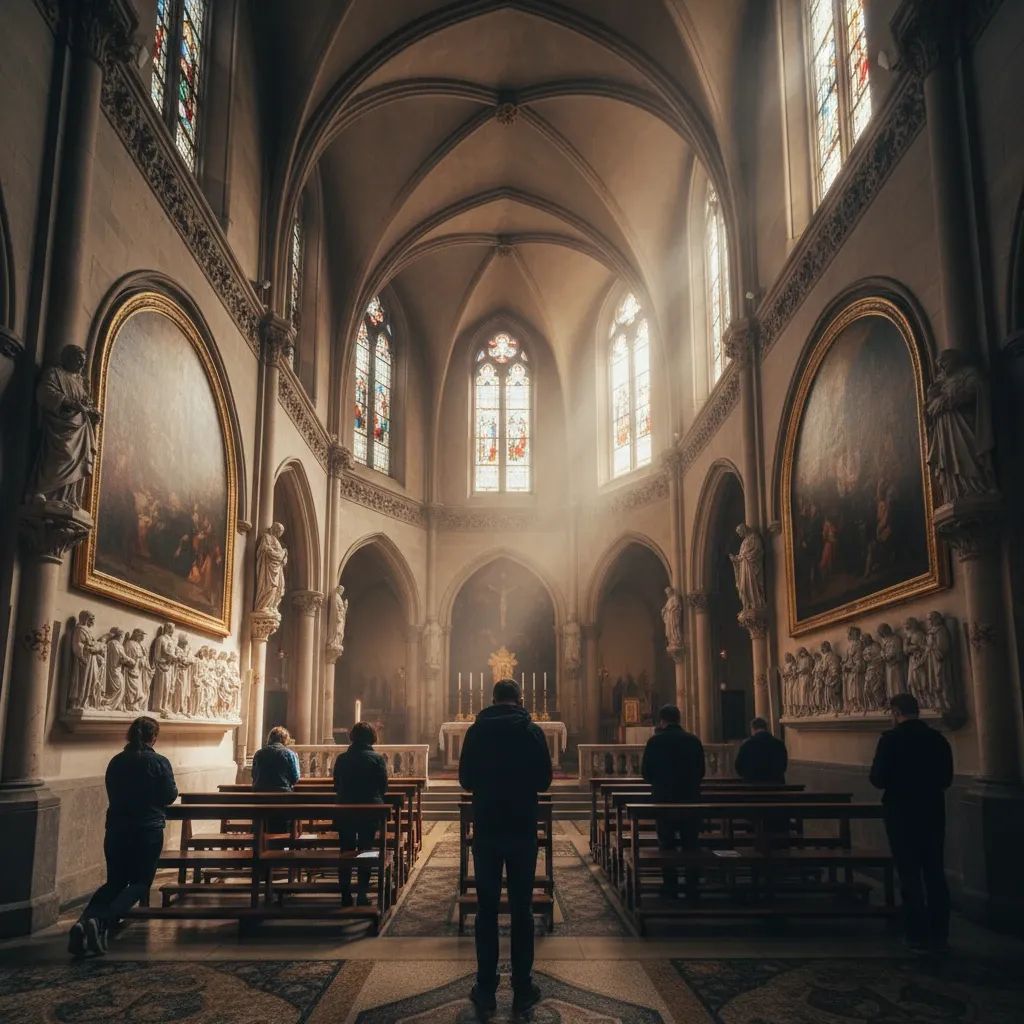
The National Shrine of Our Lady of Ta' Pinu in Gozo has launched a monthly spiritual program that will reshape the sanctuary's pastoral calendar throughout 2026, offering priests, religious, staff, and volunteers a dedicated monthly retreat focused on reconciliation, prayer formation, and liturgical renewal.
Why This Matters
• Monthly anchor: The last Monday of every month becomes "Cenacolo Day," a full-day spiritual immersion at one of Malta's most revered pilgrimage sites.
• For workers and clergy: Rather than a public event, the program targets those who serve the sanctuary itself—Ursuline Sisters, confessors, employees, and volunteers—grounding them in the spirituality they're meant to transmit.
• Historic continuity: The initiative draws directly from the 19th-century apparitions to Karmni Grima and Franġisk Portelli, which established Ta' Pinu as a place of miraculous healing and Marian intercession.
What Happens on Cenacolo Day
Mgr Carmelo Refalo, the sanctuary's rector, and vice-rector Mgr Carmelo Gauci structured the day as a layered spiritual retreat. It begins with formation sessions specifically for the Ursuline Sisters, a four-member community that relocated to the sanctuary in February 2026 to serve as "spiritual mothers" to visitors. Their role is pastoral listening—offering a quiet presence to those burdened by life's fractures.
Following that, priests and confessors gather for a separate prayer and meditation session, sharpening their sacramental ministry. The sanctuary hears confessions daily and hosts a steady flow of pilgrims seeking reconciliation, making this internal formation critical for those administering the sacrament.
A Holy Mass is then celebrated for the intentions of employees and volunteers—groundskeepers, gift shop staff, guides, and the many laypeople who keep the sanctuary operational. This is not symbolic inclusion; it's a recognition that the mission of Ta' Pinu depends as much on logistical dedication as it does on liturgical excellence.
The afternoon centers on a "cenacolo," a small-group reflection on the sanctuary's liturgical and pastoral mission. The term, Italian for "upper room," evokes the Apostles' gathering before Pentecost—a deliberate theological metaphor for unity and renewed purpose. Participants examine how the sanctuary can better serve as a place of healing and hope, drawing on the legacy of the apparitions and the ex-voto paintings that line its walls—artworks left by the faithful as testimony to answered prayers.
The day closes with communal recitation of the Rosary, Benediction of the Blessed Sacrament, and a Mass with prayers for healing, open to the broader community.
Gozo's Spiritual Anchor
Ta' Pinu is not simply a historical monument. It remains one of the most active pilgrimage destinations in the Maltese archipelago, with over 200 churches dedicated to the Virgin Mary across the islands—more than half of Malta's 359 total churches. Ta' Pinu's status as a national shrine distinguishes it as a hub for Marian devotion, particularly in a country where 2,000 years of Christian tradition are woven into the cultural fabric.
The sanctuary's regular Mass schedule is rigorous: five Masses on Sundays (starting at 6:15 am and concluding at 5:00 pm) and three daily Masses on weekdays. The Holy Rosary is recited every evening at 6:00 pm, and confessors are available throughout the day. This operational rhythm makes the internal spiritual formation of clergy and staff all the more essential—burnout and routine can erode the very mission the sanctuary exists to uphold.
The Cenacolo Day initiative is designed to counteract that drift. By pulling the sanctuary's workforce out of daily operations once a month, leadership is betting that deeper spiritual rootedness will produce more authentic pastoral care.
Impact on Residents and Visitors
For Gozitans, this program reinforces Ta' Pinu's role as more than a tourist attraction. It's a living spiritual institution, one that invests in the people who animate it. The sanctuary's rector has been vocal about the need for reconciliation and healing in an era of social fragmentation, and this initiative is the operational translation of that vision.
For pilgrims and visitors, the practical effect may be subtle but significant. A spiritually renewed clergy and staff should translate into more attentive confession ministry, better pastoral accompaniment, and a more prayerful atmosphere. Given that many visitors come to Ta' Pinu seeking miraculous graces, healing, or reconciliation with estranged family members, the quality of pastoral presence matters.
The sanctuary also continues to host community blood donation drives, a children's book release ("Il-Madonna Ta' Pinu"), and an afforestation project on Ta' Għammar Hill, funded by the EU, which is upgrading the Stations of the Cross pilgrimage path. These parallel initiatives show a sanctuary balancing contemplative depth with practical community service.
The Feast and the Calendar
The next major public event is the Feast of Our Lady of Ta' Pinu on June 22, 2026, which will feature processions, music, and outdoor Masses. Holy Week liturgies are scheduled from March 29 (Palm Sunday) through April 4 (Holy Saturday), with full Triduum observances on Maundy Thursday, Good Friday, and Holy Saturday.
The sanctuary has released a 2026 calendar featuring reproductions of ex-voto paintings, each image a visual record of a reported miracle or answered prayer. These paintings, some dating back decades, function as a kind of collective memory—proof, for believers, that the intercession sought at Ta' Pinu is not abstract but tangible.
What This Means for Clergy and Lay Ministry
The Cenacolo Day model could serve as a template for other Maltese parishes struggling with clergy burnout and volunteer fatigue. By formalizing a monthly day of recollection, Ta' Pinu is acknowledging that pastoral workers need sustained spiritual formation, not just annual retreats. The structure is replicable: small-group reflection, role-specific formation, communal prayer, and Mass.
For the Ursuline Sisters, the monthly formation sessions are critical. Their ministry—pastoral listening without the formal structure of confession—requires both emotional resilience and theological grounding. The sanctuary's leadership appears to understand that this work, if unsupported, can become draining rather than life-giving.
For priests hearing confessions, the meditation sessions offer a chance to reset. Confession ministry, especially in a pilgrimage context where visitors arrive carrying heavy burdens, can be spiritually taxing. The monthly rhythm provides a built-in support structure.
A Sanctuary Reimagining Its Mission
Ta' Pinu's leadership is not waiting for a crisis to prompt renewal. The Cenacolo Day initiative is preemptive—a recognition that the sanctuary's mission of faith, reconciliation, and hope requires ongoing internal cultivation. The monthly rhythm ensures that those who serve the sanctuary are themselves being formed, not merely performing religious functions.
In a nation where Marian devotion is deeply interwoven with cultural identity, Ta' Pinu's move to institutionalize internal spiritual formation is both practical and symbolic. It signals that the sanctuary is not resting on its historical reputation but actively reimagining what it means to be a place of healing in 2026.
The last Monday of every month is now reserved for this purpose. For the broader public, the sanctuary remains open with its daily Mass schedule and confession hours. But for those who keep the sanctuary running, that Monday is a deliberate pause—a return to the spirituality that first made Ta' Pinu a place where, as the historical record attests, people have been cured, reconciled, and given peace through the intercession of Our Lady.


