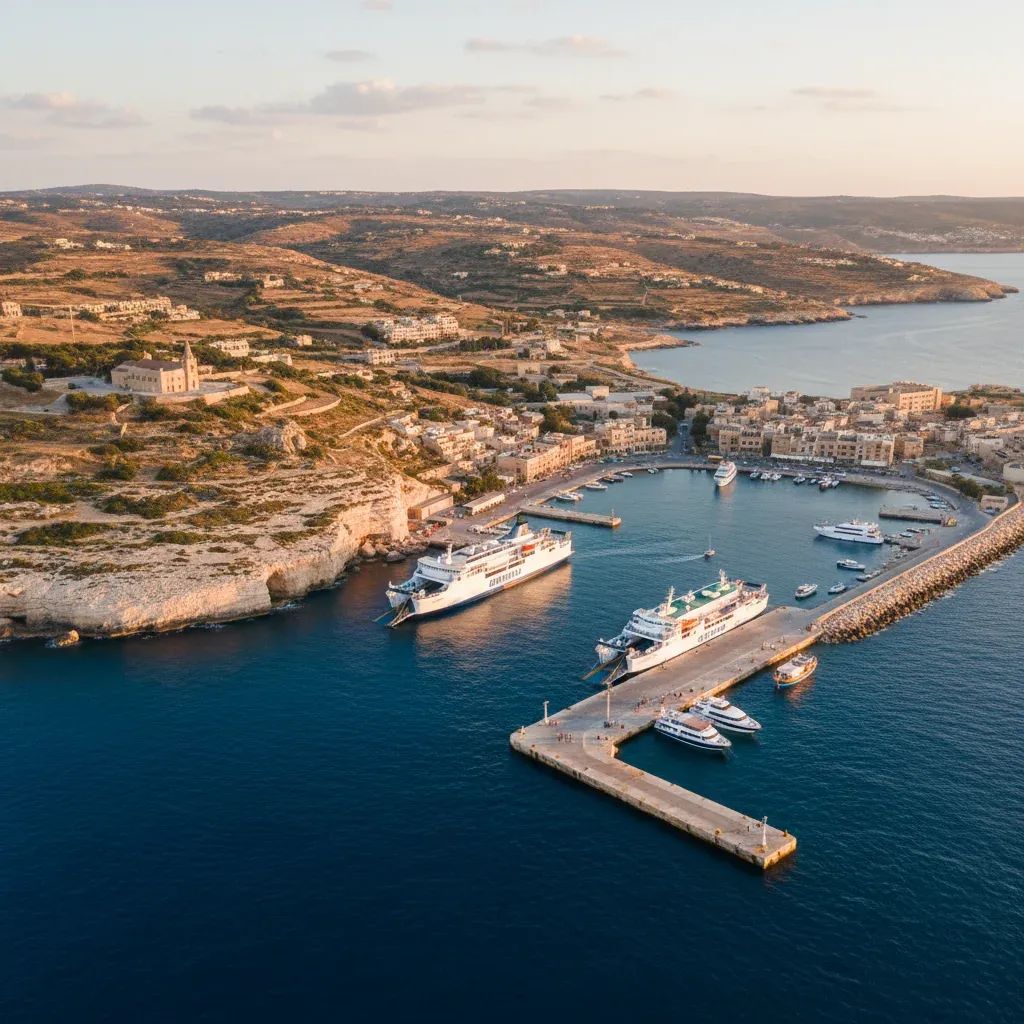
Gozo has turned a corner on tourism seasonality—what used to be a sleepy island from October through March is now drawing steady visitor traffic throughout the year. The Malta National Statistics Office released fresh data showing that nearly 200,000 foreign tourists spent overnight on the sister island in 2025, translating to a 7% gain from the prior year. But before celebrating, locals and tourism operators are confronting a harder truth: the island's aging ferries, congested harbor, and fragile utilities are buckling under the weight.
Why This Matters
• October became the busiest month, displacing August's traditional dominance; December posted the steepest growth—a signal that Gozo's year-round appeal is working strategically, but ferry operators and utilities are scrambling to keep pace.
• 46,000+ ferry crossings in 2025 represent significant capacity pressure; two new vessels won't dock until 2029, leaving a three-year gap where congestion concerns persist before improvements materialize.
• Infrastructure investment is real but delayed: A €130 million government commitment to new ferries and harbor modernization won't materialize quickly enough to prevent resident frustration and potential business constraints.
• The residential and hospitality sectors are colliding: Rental prices are climbing, electricity outages have been reported by hospitality operators, and staff recruitment remains acute—a combination that threatens the quality-tourism ambitions driving 2026 strategy.
The Rebalanced Calendar and What It Reveals
Gozo's 2025 performance showed a pronounced shift in monthly distribution. Summer, traditionally the make-or-break season, captured just 37% of foreign overnight visitors and grew a measly 1% year-on-year. Autumn leapt 22%, winter 11%, and spring inched forward 2%. October claimed the top spot for foreign arrivals; December recorded the fastest growth rate. On the surface, this looks like policy success—the Ministry for Gozo's deliberate push to market autumn breaks, winter wellness retreats, and spring hiking has paid dividends.
Beneath the headline sits operational challenges. Ferry scheduling, waste disposal, electricity infrastructure, and harbor management were built for a summer-heavy model. When the same volume now spreads across 12 months, the consequences compound. The ferry service, for instance, averaged 126 daily crossings in 2025, up from the prior year. During the festive season (December 22, 2025 to January 4, 2026), passenger volume spiked 9.3% over the same period a year earlier, with the fast ferry recording a 29% surge. These figures illustrate the pressure at Mġarr Harbour during peak times.
A Parallel Surge: Day-Trippers Straining Resources
Tourism to Gozo extends beyond overnight visitors. Day visitors to Gozo and Comino represent a significant additional volume during peak periods. Tourism operators report that day-trippers occupy identical infrastructure: ferry deck space, parking lots in Victoria, restaurants, and beach accesses. The Gozo Tourism Association survey revealed that just 48% of tourism businesses reported improved summer performance in 2025, despite higher visitor numbers overall. Rising operational costs—particularly electricity and labor—have consumed revenue gains, and many operators describe the situation as operationally challenging without structural support.
The Infrastructure Equation: Three Years of Friction Ahead
The most consequential bottleneck remains Mġarr Harbour, where ferries queue during high-traffic periods and the berthing infrastructure struggles to absorb capacity growth. The government's response comprises a mixture of immediate and distant-horizon solutions.
Immediate actions include a dedicated task force evaluating whether the harbor can physically accommodate expanded ferry operations or whether alternate facilities—such as upgraded berthing at Ċirkewwa South quay—must absorb overflow. Long-term proposals under exploratory phase include discussions of enhanced digital ticketing systems and infrastructure improvements at secondary berthing locations.
The concrete commitment is the €130 million investment in two new vessels, scheduled to enter service by 2029. That timeline merits attention from both residents and investors. A three-year interval between now and meaningful capacity relief allows ferry queues to intensify, encourages infrastructure adaptation decisions, and raises questions about visitor experience—potentially affecting Gozo's tourism positioning during the interim period.
Electricity, Housing Costs, and Resident Friction
Electricity supply challenges have been reported by hospitality operators, leading to service concerns and reputational implications when guests face disruptions. While utilities fall under national jurisdiction rather than tourism ministry purview, the correlation is unmistakable: tourism growth concentrates demand on aging infrastructure, and Gozo's isolated geography makes independent capacity expansion challenging.
Housing affordability has deteriorated sharply. Rental price inflation has been documented on the island, with long-time residents reporting significant increases over recent years. Younger Gozitans seeking to remain on the island face displacement pressures, and the talent pipeline for tourism employment narrows when workers struggle to afford housing in areas where jobs exist.
Tourism operators themselves are flagging staffing challenges. The Gozo Tourism Association's advocacy explicitly requests government support for employment initiatives, workforce training programs, and language development for hospitality staff—admissions that labor market pressures have tightened in the tourism sector.
The Branding Paradox: Preserving Character While Promoting Growth
Gozo's tourism appeal hinges on authenticity: rugged cliffs, village squares where residents gather, authentic gastronomy, and a rhythm of life distinct from mass tourism's pace. Yet the island's identity faces pressures from development. The Gozo Regional Development Authority has repeatedly cautioned that overdevelopment—much of it residential rather than hospitality-driven—threatens to alter Gozo's distinctive character.
Public foreshore areas increasingly host commercial establishments (bars, restaurants, beach clubs) rather than remaining accessible commons. Village squares during high season experience heightened commercial activity. Parking and traffic in Victoria have intensified noticeably. The messaging challenge is acute: Gozo markets itself as tranquil and unspoiled while simultaneously attracting volumes that create operational pressures on that very appeal.
The 2026 strategic response emphasizes quality over quantity. Rather than competing globally for sun-and-sand tourists, Gozo is repositioning itself for niche, higher-spending segments: wellness retreats, active outdoors enthusiasts (climbing, diving, kitesurfing), digital nomads, and gastronomy-focused travelers. These segments typically stay longer (5–7 nights versus 3), spend more per day, and are drawn to cultural experiences and natural preservation—philosophically aligned with Gozo's brand positioning.
Environmental Considerations and Sustainable Design
Environmental considerations are central to Gozo's tourism future. The Malta Tourism Strategy 2021–2030 explicitly prioritizes climate-friendly growth, though implementation challenges persist. Conservation initiatives aim to balance visitor access with habitat protection and natural resource management.
Cultural heritage investment offers a counterbalance to infrastructure strain. Ongoing restoration of historic chapels and monuments and support for local artisan networks deepen visitor engagement beyond beach days. When tourists participate in traditional experiences or attend cultural events in village squares, they're investing economically while respecting Gozitan identity and heritage.
The Recalibrated Tourism Model: Marketing Strategy for 2026
The Gozo Tourism Association's 2026 advocacy proposes targeted marketing initiatives aimed at higher-value visitor segments. Winter tourism represents an opportunity—offering Gozo as a multi-day base for visitors could generate extended expenditure and improve visitor distribution across seasons.
Participation in specialized tourism sectors—sports tourism, destination weddings, adventure retreats—aims to attract planners and operators in higher-margin categories. These segments are less price-sensitive, stay longer, and generate secondary spending (guides, restaurants, accommodation upgrades) that benefits local employment and economic activity.
Revenue from accommodation environmental contributions could be directed toward product development such as designated diving platforms, climbing routes, improved hiking trail signage, and water sports facilities. This approach aligns operator interests with sustainability and resident quality-of-life objectives.
The 2029 Moment and Resident Calculus
Gozo stands at a threshold. The 2025 growth data prove demand exists for year-round, diversified tourism. The seasonal rebalancing demonstrates successful marketing and product development. Yet the infrastructure timeline creates acute tension.
For residents, the equation is clear: navigate rising rental costs, ferry queues, electricity service concerns, and traffic congestion for the next three years, anticipating that 2029's vessel arrivals and harbor upgrades will justify interim challenges. For investors in hospitality, the window to establish market positioning before capacity constraints affect competitiveness is narrowing. For operators, cost pressures are consuming revenue growth faster than occupancy rates justify.
The €130 million commitment and task force allocation signal government recognition of infrastructure demands. But recognition and action are distinct. The true measure of whether Gozo achieves sustainable tourism growth won't appear in overnight visitor statistics or per-capita expenditure. It will surface in ferry wait times during shoulder seasons, in whether rental prices stabilize or accelerate, in electricity grid performance during peak periods, and ultimately in whether Gozitans themselves believe tourism has improved their island's quality of life or created operational and social strain.
The numbers confirm demand. They do not confirm that the island's infrastructure, governance, and resource management can deliver on the promise of prosperity without creating community friction. That verdict arrives in 2026 and 2027—before the vessels arrive.