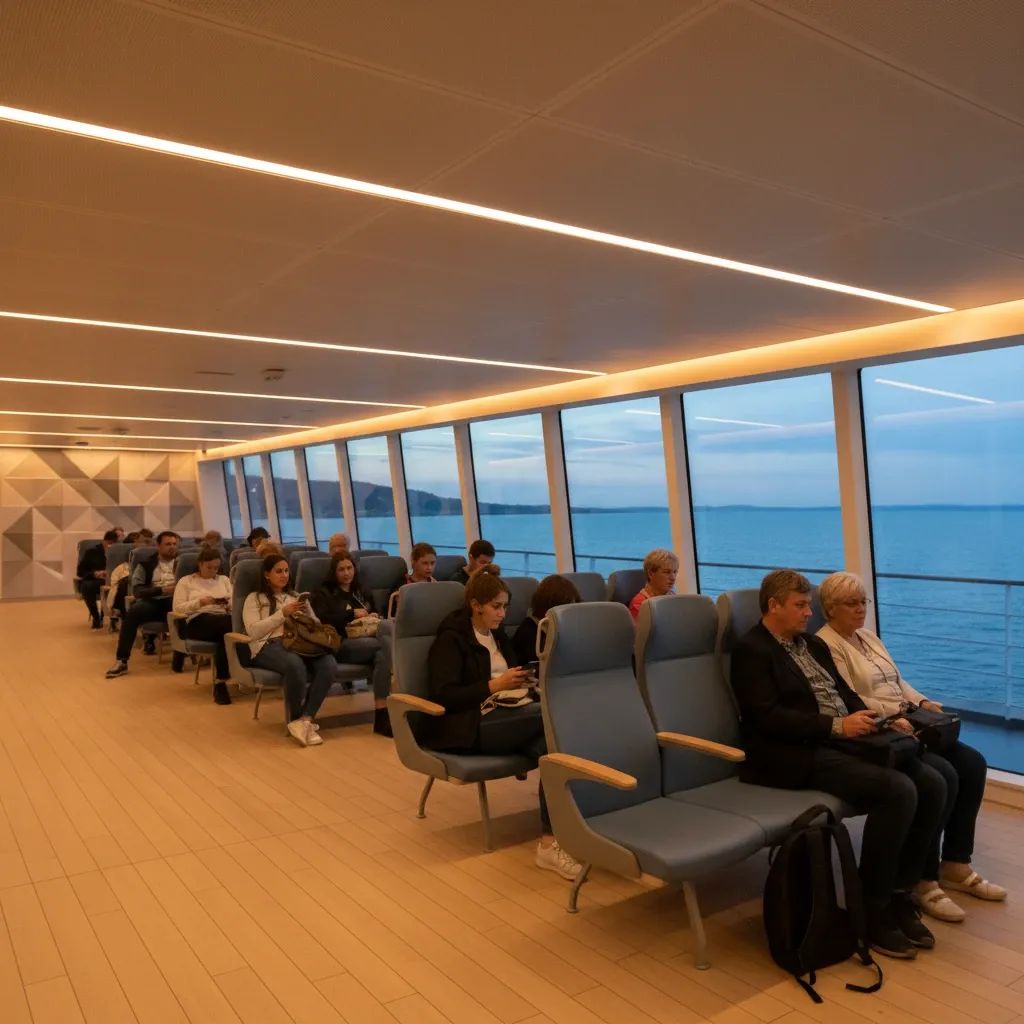
Opposition Proposes Calming Rooms on Gozo Ferries to Support Neurodivergent Passengers
Opposition leader Alex Borg has announced a plan to retrofit all Gozo ferries with dedicated sensory-friendly calming rooms, designed to help neurodivergent passengers—those with autism, ADHD, and sensory processing disorders—access mainland healthcare, therapy, and educational services without enduring sensory crisis during the 25-minute crossing.
The proposal was outlined during a May 2026 infrastructure conference at the Kempinski Hotel, hosted by PN MEP Peter Agius to discuss European funding opportunities for Gozo development. If the PN wins the 2027 general election, Borg committed to retrofitting the three primary vessels—MV Malita, MV Ta' Pinu, and MV Gaudos—with climate-controlled, soundproofed spaces equipped with dimmable lighting and sensory tools.
Why This Matters for Gozitan Families
Neurodivergent children across Gozo currently face a constrained choice: endure significant sensory distress aboard ferries to access essential mainland services, or forgo diagnostic assessments, therapeutic treatment, and specialized education that could transform their outcomes.
Diagnostic evaluations for autism and ADHD, speech and occupational therapy, and psychological assessments for special educational needs (SEN) designation are available only at Mater Dei Hospital or private mainland centers. For families with neurodivergent children, the ferry crossing itself—with its engine noise, confined spaces, unpredictable crowds, and vessel motion—often escalates into genuine suffering rather than routine inconvenience.
Parents describe the sequence: boarding becomes overwhelming. Engine noise spikes during departure. Confined space triggers panic responses. Some children reach sensory saturation before the vessel leaves harbor. The practical outcome is that families defer treatment, teenagers miss diagnostic opportunities, and educational assessments that could unlock vital support services do not happen.
Current accessibility features on ferries address physical mobility comprehensively: ramps, wheelchair lifts, dedicated seating, and priority boarding lanes exist at both Ċirkewwa and Mġarr terminals. The Malta Commission for the Rights of Persons with Disability has acknowledged these provisions. But they solve a different problem. A ramp does not reduce diesel fumes or shield a child from sensory overload.
How a Calming Room Works
The PN's proposal targets proven design principles used in airports and rail stations across Europe. A dedicated sensory space would feature dimmable, warm-spectrum lighting, acoustic isolation to reduce engine and ambient noise, soft textures on walls and seating, and sensory tools like noise-cancelling headphones or fidget implements.
The function is straightforward: a passenger experiencing sensory overload enters the room, their nervous system arousal decreases, and after 5-10 minutes, they can return to public areas and complete the crossing without crisis. For a neurodivergent child, this transforms the crossing from an endured ordeal to a manageable challenge.
European precedent is expanding. Paris Gare de l'Est opened a seven-square-meter soundproofed "espace calme" in 2024 designed with autism in mind. SNCF, the French rail operator, is piloting sensory break rooms in major train stations. Jersey and Gatwick airports offer sensory rooms as standard facilities. Malta would join this emerging trend of recognizing sensory accommodation as essential infrastructure rather than optional amenity.
What Borg Announced and Political Context
Borg's announcement sits within a broader Opposition agenda for Gozo infrastructure. During the May conference, he reiterated plans for harbor expansion, additional passenger and cargo vessels, a protective breakwater in Marsalforn, and €200M+ investment in Gozo General Hospital, including a 400-bed facility expansion and helipad for emergency evacuations.
These proposals frame the calming room as part of a connectivity ecosystem aimed at reducing Gozo's service gap with Malta, rather than an isolated accessibility measure.
Importantly, the calming room pledge is campaign rhetoric. Implementation depends entirely on PN electoral victory in 2027 and subsequent parliamentary budget allocation. If elected, the Opposition would begin design consultations with disability advocacy organizations, affected families, transport engineers, and ferry operators to establish specifications and implementation sequencing.
What Families Face Today
For neurodivergent families currently navigating the system, personal accommodation strategies remain the only recourse. Off-peak sailing bookings minimize crowds. Noise-cancelling headphones and sensory toolkits provide partial mitigation. Some families sit in parked vehicles on the car deck despite regulatory violations—a workaround that creates safety complications and friction with operators.
The substantive shift in the PN proposal is organizational. Currently, accessibility is individual responsibility—families manage their own accommodation crisis. The proposal shifts this to institutional responsibility. The transport operator absorbs the obligation to provide sensory refuge. Accessibility becomes a service feature, not a family problem to solve.
In Malta's governance context, where island residents have often felt infrastructure sidelined relative to mainland priorities, this framing—shifting accessibility from personal burden to public infrastructure—carries symbolic weight alongside practical impact.
Next Steps
The practical reality for neurodivergent families remains unchanged pending the 2027 election and potential implementation. Diagnostic services remain mainland-concentrated. Therapy and school assessments demand ferry travel. The calming room remains a promise—credible and detailed, but not yet operational.
Families currently planning ferry journeys should continue existing accommodation strategies. The PN proposal signals that recognition of sensory barriers is entering mainstream political conversation. Whether this translates to infrastructure change depends on electoral outcomes and sustained implementation commitment.