Gozo Ferry Fares Set for Dramatic Shift in Labour's Electoral Strategy
The Malta Labour Party has committed to eliminating passenger fares on the traditional Gozo Channel crossing for anyone traveling without a vehicle—a move that would fundamentally reshape how residents and visitors commute between the islands. Simultaneously, the party is increasing annual subsidies for workers and students relying on fast ferry services, bumping support from €650 to €800. The proposal, unveiled as part of the party's broader 2026 election platform, represents a calculated effort to influence travel behavior while addressing affordability concerns in one of Malta's most economically dynamic regions.
Why This Matters
• Pedestrians save €1.15 per round trip on the Gozo Channel if Labour returns to power—potentially exceeding €60 annually for regular commuters.
• Car owners see no relief, maintaining €8.15 fares for vehicles and €4.65 for motorcycles under the current structure.
• Fast ferry commuters gain €150 extra annually, addressing a genuine burden for the 1.2 million passengers using these services in 2025 alone.
• The plan connects to a larger electoral package targeting younger voters, property buyers, and families managing disability care—signaling Labour's focus on cost-of-living pressures ahead of polling day.
The Numbers Behind Daily Movement
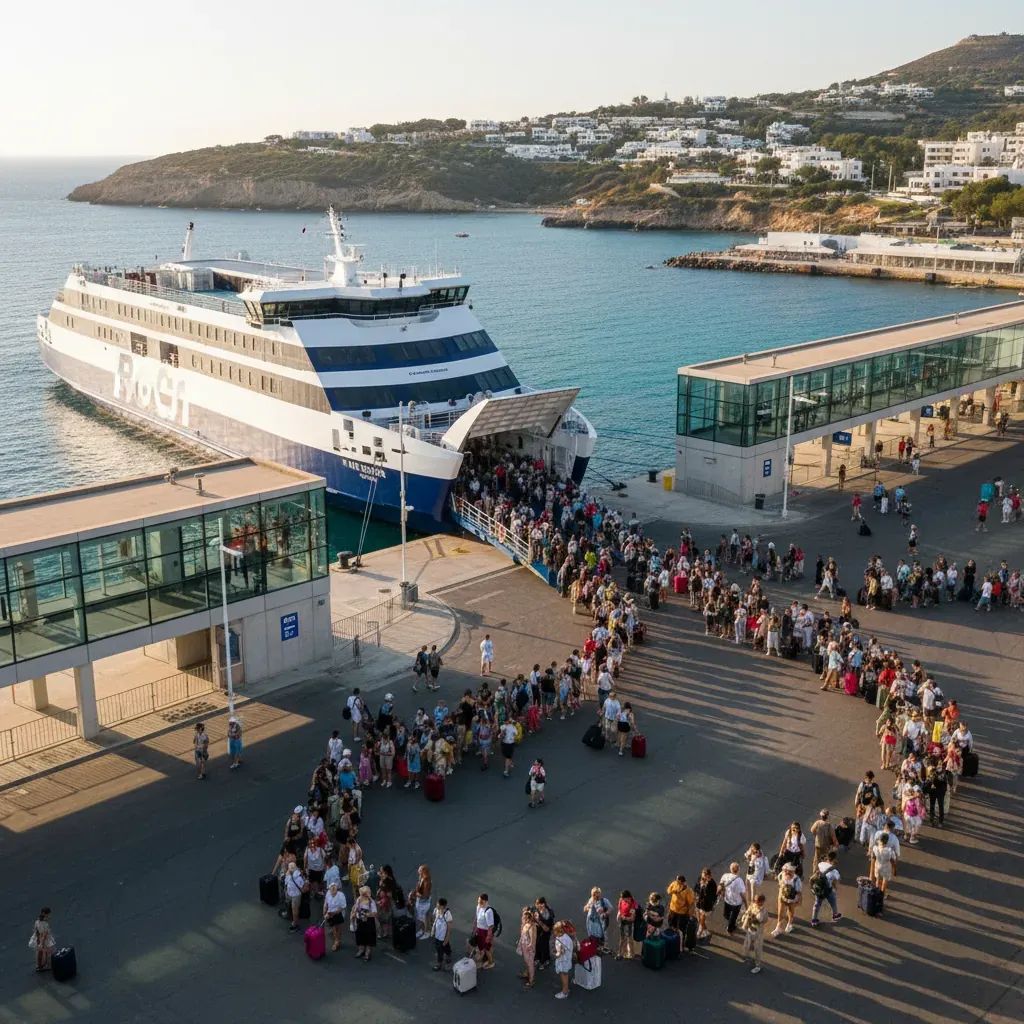
Understanding the ferry ecosystem requires grasping scale. In 2025, the Gozo Channel ferry (operating between Ċirkewwa and Mġarr) transported a steady stream of foot passengers at €1.15 round-trip for residents holding valid identification cards, with children and seniors traveling free. The Valletta-Mġarr fast ferry charged between €4.60 and €5 for adults depending on the operator and Tallinja card status. For a student making five round trips weekly, annual costs approached €1,000 even with discounts—a sum that strained family budgets in an island where median wages hover around €1,200 monthly.
The arrival of a new Sliema and Buġibba fast ferry service in 2024 added another layer of connectivity, with Gozitan residents paying €2.25 to Sliema and €2 to Buġibba. Medical patients traveling for hospital appointments ride this new route free, a targeted exemption reflecting healthcare's priority status. Yet most daily commuters faced no such relief, placing ferry costs among the recurring line items in household budgets alongside rent and utilities.
By 2025, fast ferry operators—primarily Virtu Ferries and Gozo Highspeed—carried over 1.2 million passengers, a testament to how dramatically these services have reshaped island connectivity since their introduction in 2021. The faster journey times made daily commuting viable for students attending the University of Malta or MCAST, fundamentally altering migration patterns. Previously, many Gozitan students relocated to Malta during the academic year; now, thousands commute daily, preserving family ties and saving thousands in accommodation costs. That shift has rippled through Gozo's rental market and student housing ecosystems.
What the Pledge Actually Changes—and Doesn't
Labour's proposal carves a sharp line between foot passengers and vehicle users. The free pedestrian fare would eliminate €1.15 per round trip for those without cars—modest in isolation but cumulative for commuters crossing multiple times weekly. Workers traveling daily would save approximately €300 annually; weekend leisure visitors might save €50 to €100 yearly. The environmental messaging is equally clear: travel light, travel free.
Vehicle fares remain untouched. A resident driving a standard car across the Gozo Channel continues paying €8.15 per journey. Motorcyclists pay €4.65. The economic incentive embedded in this structure is unmistakable: the party is signaling that vehicles are a cost to absorb, not to subsidize. For a family with one car making five weekly round trips, annual ferry expenses remain around €2,050—a figure many Gozitans treat as a given rather than a discretionary expense.
The fast ferry subsidy increase—from €650 to €800 annually—offers more tangible support. At €150 extra per year, a student or worker using fast ferries regularly could offset roughly 80% of their commuting costs, assuming five round trips weekly. This addresses a genuine friction point in daily logistics without requiring infrastructure investment or capacity upgrades.
Notably, Labour's proposal stops short of universal free ferry travel. No commitment to free vehicle crossings, no promise to eliminate costs for all passengers. The policy is deliberately targeted, reflecting political pragmatism: offer what feels generous to foot passengers while maintaining revenue streams from vehicle users and accepting political risk on both flanks.
The Underlying Economics Nobody Fully Discusses
Behind every €1.15 pedestrian fare lies a subsidy most commuters never see. In 2023, the Malta government invested approximately €400 in state funds per Gozo Channel trip, totaling €11.1 million in annual subsidies to the ferry operator. Add another €6 million supporting private fast ferry operators deemed economically unviable without intervention, and the government's total annual investment in Gozo's maritime connectivity approaches €17 million—roughly equivalent to a month's income for 14,000 working Gozitans.
Those numbers raise uncomfortable questions about fiscal sustainability. Expanding free services, critics argue, deepens dependency on public spending and risks violations of EU state aid regulations, which prohibit member states from propping up commercial enterprises indefinitely. The Gozo Business Chamber has repeatedly emphasized that improved accessibility drives economic growth—Gozo's GDP jumped 163% between 2014 and 2024, climbing from €377 million to nearly €1 billion—yet the organization also acknowledges that relentless subsidy increases create long-term instability.
The problem intensifies when tourism is factored in. In 2025, Gozo received 2.1 million day visitors and over 580,000 overnight guests—astronomical figures for an island with fewer than 32,000 residents. Fast ferries catalyzed this surge; removing the pedestrian fare could trigger another wave. More visitors means more pressure on infrastructure, more demand for parking at port terminals, and more conversations about whether the island's resources can sustain the influx.
An Opposition Vision Built on Hardware, Not Handouts
The Nationalist Party has countered Labour's fare reduction with infrastructure promises. PN Leader Alex Borg pledges to introduce four new passenger ferries and a dedicated freight vessel, alongside modernization of ports in Mġarr and Ċirkewwa. The party frames the existing fleet as antiquated—three aging vessels supplemented by a second-hand addition—and contends that long-term solutions require capital investment, not electoral handouts.
The PN's centerpiece proposal involves designing a modern mass transit system within 100 days of taking office, operational within five years. This broader initiative, sketched earlier by former PN leader Bernard Grech, envisions a trackless tram network spanning six lines and 47 stations across Malta, with an estimated price tag of €2.8 billion. While ambitious and expensive, the vision emphasizes permanence: infrastructure that serves residents for decades rather than annual budget allocations subject to electoral cycles.
The party has criticized Labour's transport strategy as "hollow promises" and "half-baked," pointing to internal government disagreements over a proposed light rail system that never materialized. The PN's alternative positioning—emphasizing Gozo-specific planning, long-term employment opportunities for young Gozitans, and quality tourism development—appeals to voters skeptical of fare cuts that don't address underlying capacity or reliability concerns.
What This Means for Residents
For weekly foot passengers, the free pedestrian ferry represents genuine savings. Annual expenses drop by €60 to €100 depending on crossing frequency. For leisure visitors and occasional commuters, the psychological benefit may exceed the mathematical one: spontaneous day trips feel less expensive when fares vanish entirely.
The €150 fast ferry subsidy boost carries more substantial weight. A Gozitan student spending €1,000 annually on commuting would see costs decline to around €850—still burdensome but noticeably lighter. Workers relying on fast ferries for daily employment face similar relief, though the increase falls short of eliminating fares entirely.
Gozitans without personal vehicles—whether by choice or circumstance—emerge as clear beneficiaries. The elderly, young people delaying car purchases, and families prioritizing budget allocation elsewhere gain access to the main island at zero cost. The policy tacitly acknowledges that car ownership isn't universal and that affordability matters for social mobility.
Vehicle owners, meanwhile, see no change. A resident making five weekly round trips continues spending roughly €40 monthly on ferry fares for a car. Families with multiple vehicles face proportionally higher burdens. The unspoken message is that car use remains a personal choice, not a subsidized entitlement—a stance that may resonate with environmentally conscious voters but will frustrate others.
The Broader Campaign and Malta's Development Strategy
Labour's ferry proposal sits within a wider electoral package addressing cost-of-living pressures. Student stipends would rise 15%, with an additional €1,000 grant for those enrolling in Erasmus programs. First-time property buyers would avoid stamp duty on the first €300,000 in value, up from €200,000. The carers' grant for individuals tending to people with disabilities would double to match the minimum wage—a recognition that unpaid care labor carries genuine financial costs.
These pledges collectively target younger demographics and families navigating affordability pressures in Malta's overheated housing market and competitive employment landscape. The ferry proposal connects directly to this narrative: removing barriers to mobility, whether for commuting to university or accessing employment across the islands.
Environmental and Tourism Trajectories
From an environmental perspective, encouraging foot traffic reduces vehicle congestion and emissions. Sea transport generates fewer carbon emissions per passenger than car travel; modern ferries continuously improve fuel efficiency. Shifting behavior away from vehicle ferries aligns with broader sustainability goals, particularly as Gozo participates in the EU Mission '100 Climate-Neutral and Smart Cities by 2030' initiative.
The Maltese government separately committed €130 million to modernize ferry infrastructure by 2029, including two new vessels and retrofits for the existing fleet. These investments advance environmental objectives while addressing capacity constraints. The Gozo Regional Development Authority has outlined environmental sustainability as a strategic pillar, exploring electrification of public transport and cleaner maritime technologies.
Tourism growth depends heavily on ferry reliability and capacity. With 2.1 million day visitors in 2025 and overnight arrivals exceeding 580,000, infrastructure is stretched. Free pedestrian fares could push visitor numbers higher, creating logistical pressures if ferry frequency and terminal capacity don't expand simultaneously. The economic upside is obvious—more tourism revenue, more employment, more tax receipts. The downside risk involves overcrowding, congestion, and degradation of the visitor experience that makes Gozo economically attractive.
History as Prologue
This isn't Malta's first flirtation with dramatically restructured ferry pricing. In 2019, the Partit Demokratiku (PD) proposed a fast, free passenger ferry network linking multiple Malta locations to Mġarr, aiming to reduce car dependency and congestion. The idea never gained political traction, serving as a cautionary tale about the gap between ambitious policy proposals and electoral viability. Labour's narrower approach—free pedestrians only, subsidized fast ferries for work and study—may reflect learning from that earlier political failure.
Voters will ultimately decide whether fare relief and convenience justify electoral support or whether infrastructure-focused alternatives promise more durable solutions. That calculus—immediate savings versus long-term investment, targeting specific groups versus broad accessibility—will shape Gozo's connectivity landscape for the next decade.