
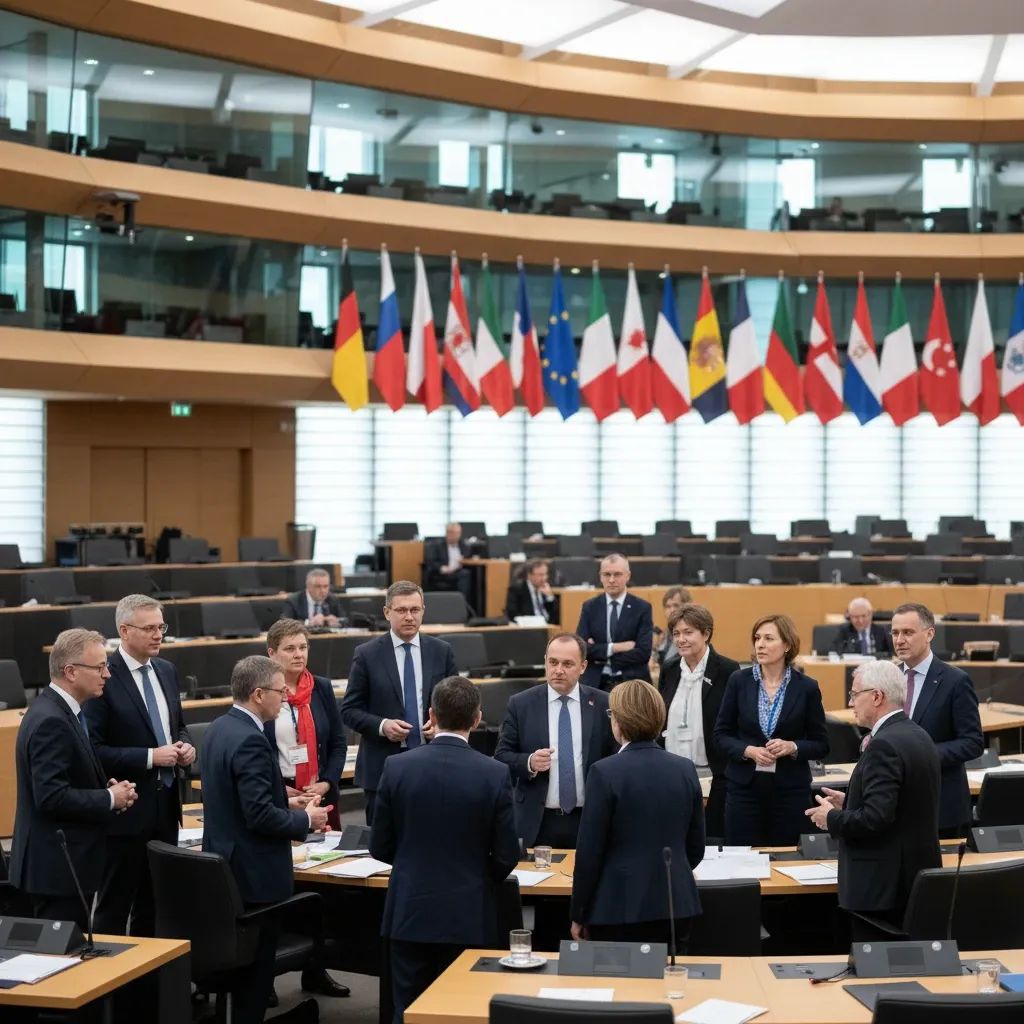
Malta could lose its power to veto EU decisions as the bloc moves toward allowing groups of member states to push ahead with deeper integration—without requiring agreement from all 27 countries. For a nation of Malta's size, this restructuring represents a fundamental shift in how the country will engage with Brussels and protect its national interests.
The European Commission President Ursula von der Leyen has signaled determination to advance the Savings and Investment Union (the rebranded Capital Markets Union) by the end of 2026, even if it means proceeding with only a subset of willing countries. This would utilize the "enhanced cooperation" provision embedded in existing EU treaties—a mechanism that allows deeper integration without requiring treaty amendments or universal participation. The sectors identified for accelerated integration include technology regulation harmonization, defense procurement and research and development pooling, and industrial co-investment in semiconductors and energy infrastructure.
Why This Matters for Malta
Under this new approach, Malta's veto power in key policy areas could effectively disappear as "coalitions of the willing" advance integration without requiring unanimous consent. The nation's constitutional neutrality faces direct challenges as defense and foreign policy integration deepens among participating states. Fiscal sovereignty is on the table, with proposals to transfer taxation powers to a European federal entity potentially moving forward without universal agreement. Small states risk policy marginalization if they don't join fast-moving integration initiatives in defense, energy, and capital markets.
Former Italian Prime Minister Mario Draghi has emerged as the intellectual architect of this transformation, arguing that the EU's traditional confederal structure—where all 27 member states must agree before action—has become a liability in an era of escalating geopolitical threats. His vision centers on allowing groups of at least nine member states to pursue irreversible integration in strategic sectors without being blocked by hesitant countries.
The Pressure on Malta's Economic Model
For instance, if nine or more countries decide to harmonize corporate tax rates, Malta might face pressure to comply even if it doesn't join the coalition—potentially affecting its competitive tax regime that has attracted international businesses. Discussions around the next Multiannual Financial Framework for 2028-2034 include proposals for a budget exceeding the historical limit of 1% of the EU's GNI, financed through new "own resources"—essentially, EU-level taxation powers. Some pragmatic federalism proposals explicitly advocate for member states to transfer portions of their taxation authority to a European federal entity. For Malta, with its economic model built partly on fiscal flexibility, this represents a fundamental sovereignty question.
The shift wouldn't happen overnight, but the direction is unmistakable: larger states frustrated by unanimity requirements in fiscal matters are exploring mechanisms to move forward without waiting for universal agreement.
Malta's Neutrality and the Coalition Model
Malta's Constitution explicitly defines the nation as a "neutral state actively pursuing peace, security and social progress among all nations by adhering to a policy of non-alignment and refusing to participate in any military alliance." This foundational principle faces direct pressure from proposals to create a European Defence System among willing member states.
Malta has previously navigated this by contributing non-combat support to EU missions, but the new coalition model may make such compromises harder to sustain. The mechanism of "constructive abstention" might allow Malta to remain on the sidelines of specific military initiatives, but repeated abstentions could diminish its voice in shaping broader EU security policy. The ongoing domestic debate about modernizing neutrality to reflect contemporary security threats now has heightened urgency. The question is no longer theoretical: Can Malta maintain its neutral status while the EU around it federalizes defense policy through opt-in frameworks?
What This Means for Malta Residents
For Malta residents, these changes could affect everything from corporate tax rates that influence job creation to whether Malta participates in joint EU defense initiatives—decisions that touch on constitutional identity and economic competitiveness. The proposed introduction of transnational lists for European Parliament elections and expanded parliamentary co-decision powers could further dilute the proportional over-representation that small states currently enjoy in EU institutions—one of the few structural advantages that Malta possesses.
Malta's Strategic Response
The Malta Government and its diplomatic corps will need to master coalition-building within coalitions—identifying like-minded smaller states and forming alliances that amplify their collective voice within enhanced cooperation frameworks. Specialization in specific policy areas where Malta can develop genuine expertise will become more critical than broad-spectrum engagement.
The nation's geopolitical relevance in the Mediterranean remains an asset, particularly as energy security and migration management rise on the EU agenda. But leveraging this strategic position will require active participation in the integration initiatives that shape these policy areas, not abstention.
Administrative capacity will need reinforcement. If "coalitions of the willing" become the primary vehicle for EU advancement, Malta's public administration must be able to quickly analyze proposals, assess national interest alignment, and secure domestic political support for participation—all within compressed timeframes set by larger states eager to move forward.
The Democratic Challenge
The proposed changes put Malta's government in a difficult position: join integration efforts that may conflict with national interests, or risk being excluded from decisions that could still affect the country. Proponents argue that enhanced cooperation requires "bottom-up" national support, creating more democratic legitimacy. But for Malta, this creates a different challenge: explaining to citizens why joining certain integration frameworks serves national interests when the alternative might be exclusion from policy formation in critical sectors.
The Timeline Ahead
Von der Leyen's commitment to advance the Savings and Investment Union by the end of 2026 sets a concrete deadline for the first major test of enhanced cooperation in financial integration. Defense integration proposals are moving on parallel tracks, driven by the changed security environment. The broader EU institutional reform discussions for 2025-2026 include extending qualified majority voting in foreign policy and defense, granting the European Parliament full legislative initiative rights, and reforming Parliament composition before enlargement. Each of these changes shifts power away from small state leverage points.
Malta won't get multiple chances to shape these frameworks—the nation's influence will be determined by its positioning during the formation phase. For a nation of Malta's size, with constitutional commitments that constrain certain forms of integration, the coming period requires clear-eyed assessment of which coalitions to join and how to maintain sovereign space on core national interests while remaining influential in a union that is fundamentally reshaping its decision-making structures.


