
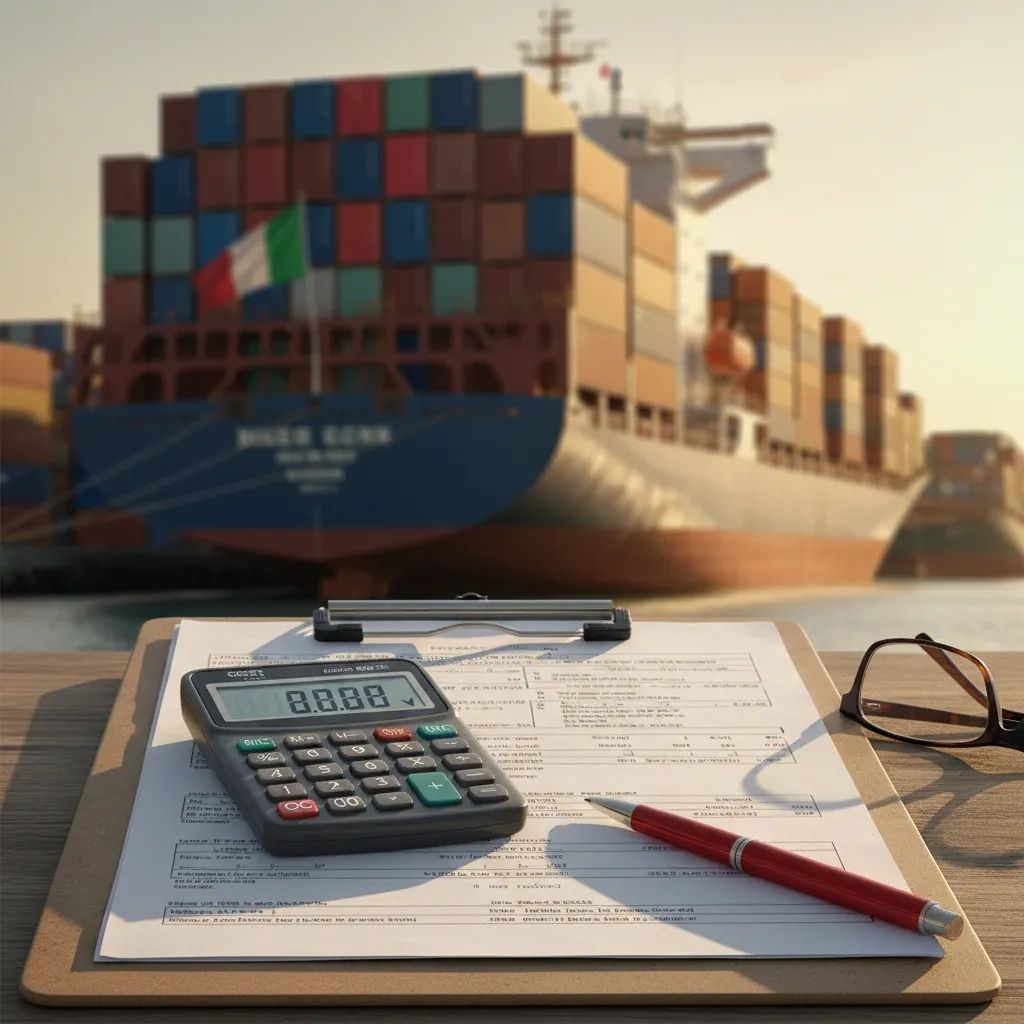
When ten European energy ministers sent their formal demand to the European Commission in March, they framed it less as complaint and more as economic survival. Austria, Bulgaria, Czechia, Croatia, Greece, Hungary, Italy, Poland, Romania, and Slovakia—a cluster of nations spanning Central and Southern Europe—jointly argued that the current Emissions Trading System has become an "existential risk" to heavy industry and ordinary people's wallets.
MEP Peter Agius Breaks Ranks
Yet Malta, uniquely positioned to feel the pinch of this carbon regime, notably stayed out of the public alliance. That absence now has a critic: MEP Peter Agius, who has publicly described Malta's silence as "surprising and strategically misguided." For a small island nation facing disproportionate carbon costs with no land-based transport alternatives, Agius argues, joining the industrial coalition letter would have amplified Malta's voice when it mattered most. The question now reverberates through government corridors: why did Malta choose quiet diplomacy over public coalition membership?
Why This Matters for Malta Residents
• Weekly freight hit: Maltese cargo operators are absorbing approximately €654,000 in added ETS costs per week in 2026 alone, according to ATTO (Malta Association of Tractor and Trailer Operators) calculations based on current carbon allowance prices. A single container reaching Malta carries an estimated €255 carbon surcharge.
• Household inflation creeping in: The Central Bank of Malta forecasts ETS will push overall consumer prices up between 0.11% and 0.25%, with imported essentials like groceries and building materials climbing fastest. While modest in percentage terms, this translates to real costs for families already managing tight budgets.
• Shipping diversion underway: Carriers are already rerouting through North African ports to sidestep EU carbon fees, threatening Malta's strategic value as a regional logistics hub. The Malta Maritime Forum warns that longer alternative routes ironically increase overall emissions while hollowing out EU maritime infrastructure.
• Decision window closing: The European Commission originally scheduled an ETS review for July, but signatory nations are demanding it move to May at the latest—with Malta still absent from the formal debate.
The Industrial Alliance Against Brussels's Carbon Ambitions
The rollout of expanded carbon pricing coincides with energy cost volatility across the continent, inadequate decarbonization technology for carbon-intensive sectors like cement and steel, and what coalition nations see as a regulatory framework divorced from economic reality. The ten signatory countries are not asking the Commission to scrap the ETS; they are asking for breathing room. Specifically, they want free carbon allowances extended beyond 2034, the phase-out of free allocations slowed from 2028 onward, mechanisms to reduce carbon price swings, and protections for industrial power users and households from electricity shocks.
This coalition has branded itself the "Friends of Industry." The label signals a geographic and ideological split. Arrayed against them is a rival bloc of eight countries—Denmark, Finland, Luxembourg, the Netherlands, Portugal, Slovenia, Spain, and Sweden—who defend the ETS as the "cornerstone of EU climate policy." These northern and Western states argue that any retreat from the system would destabilize carbon price signals needed to drive investment in clean energy and industrial decarbonization. For these nations, the ETS remains essential infrastructure for meeting EU climate targets.
Geography as Destiny: Why Malta's Situation Differs Fundamentally
Agius's frustration stems from a straightforward geographic fact: unlike continental EU members, Malta has no land borders and no alternative transport networks. The island depends entirely on maritime and air connectivity for every imported good, every ton of fuel, and every person traveling abroad. When the European Commission mandated in January 2026 that all shipping companies surrender carbon allowances for 100% of verified CO2, methane, and nitrous oxide emissions from voyages serving EU ports, Malta was hit disproportionately.
Consider the arithmetic. According to ATTO calculations based on current allowance pricing, ETS compliance now costs freight operators approximately €654,000 per week. A standard container arriving in Valletta carries roughly €255 in carbon costs layered atop the price tag. A round trip between Genoa and Malta—one of Malta's primary logistics corridors—incurs a flat €734 carbon charge before fuel surges or operational expenses are factored in.
Come 2027, the ETS2 regime will expand carbon pricing to buildings and road transport, further squeezing the island's economy. Aviation has already been under a parallel ETS framework since 2012, with the coverage continuously tightening.
The Leakage Problem: Malta Loses While Emissions Shift Elsewhere
Here lies a central tension. Instead of reducing global emissions, the ETS framework may be pushing cargo movements away from EU ports through a mechanism called carbon leakage. Shipping companies, faced with Malta's reliance on Mediterranean routes, are increasingly diverting cargo through non-EU transshipment hubs—particularly East Port Said in Egypt and Tanger Med in Morocco. These facilities fall outside the EU's regulatory perimeter, avoiding carbon compliance costs entirely.
For Malta, the consequence is structural damage. The island has built its modern economy partly on being a world-class transshipment hub. When shipping lines bypass Malta, they bypass the associated port fees, logistics contracts, and economic activity. The Malta Maritime Forum has flagged this threat explicitly, arguing that the unintended consequence of aggressive climate regulation is the hollowing out of EU maritime infrastructure.
EU officials counter that CBAM (Carbon Border Adjustment Mechanism) mechanisms are designed specifically to prevent such leakage by pricing carbon at border points, but maritime transshipment through non-EU hubs remains a gray area where the framework's effectiveness is debated among industry analysts.
The Government's Quiet Diplomacy: A Strategic Alternative
The Malta government has not remained inactive, but its approach differs markedly from joining public coalitions. Minister Miriam Dalli negotiated explicit recognition for island states within the European Climate Law for 2040, securing provisions for flexibility in how emission reductions are measured and allowing individual impact assessments tailored to island conditions. The country also submitted a revised National Energy and Climate Plan (NECP) in January 2025, allocating 69% of national recovery funds to green transition projects.
Proponents of this quiet diplomacy argue that for a small nation, high-profile coalition membership risks creating diplomatic friction with larger EU partners or signaling inflexibility that might undermine future negotiations. Behind-the-scenes engagement with Commission leadership and fellow island states—Cyprus, Sicily, Sardinia—allows Malta to shape policy without the visibility that public letters generate.
Yet Agius contends this approach is insufficient cover when the economic knife is at Malta's throat. He has advocated loudly for an "Island Clause" embedded in all future EU transport and climate legislation—a requirement that Brussels conduct rigorous island-specific impact assessments before rolling out regulatory frameworks. He has also called for ETS revenue streams to be reinvested directly into island renewable infrastructure and sustainable transport projects, rather than flowing into general EU budgets.
In March 2026, Agius convened a meeting with the Malta Maritime Forum and fellow Maltese MEPs to coordinate a national strategy on maritime transport amendments. He has escalated his lobbying to the level of European Commission Executive Vice-President Raffaele Fitto, pressing the urgency of the island question ahead of an expected EU Island Strategy due later this year. Yet none of this diplomatic effort has translated into Malta joining the formal letter signed by the Friends of Industry coalition.
What Prices Tell Us: The Household Reckoning
The inflationary impact of ETS is beginning to materialize. The Central Bank of Malta projects that carbon pricing will lift overall consumer prices by up to 0.25% across the economy—a modest but measurable increase that translates to approximately €2.50 per €1000 spent. For a family of four in Valletta or Sliema, this means incremental movement in grocery bills, fuel costs, and construction materials, precisely the sectors most dependent on imported goods.
For business owners, the math becomes urgent. Freight operators face a grim choice: absorb the additional costs and shrink margins, pass them on to customers and risk losing sales to foreign competitors, or lobby for regulatory relief. ATTO has formally demanded the suspension of ETS obligations on island-bound cargo until a geographically responsive mechanism can be designed—a demand echoed by industry bodies in Cyprus, Sicily, and Sardinia.
Airlines operating intra-European routes have absorbed much of their ETS compliance burden to date, but industry analysts expect ticket prices to drift upward as carbon costs mount. For a nation where tourism underpins the economy, incremental flight price increases are not trivial.
The Review Timeline and Malta's Window
The European Commission originally committed to reassessing the ETS framework in July 2026. The ten signatory countries are insisting it happen by May. That compressed timeline matters enormously for Malta's ability to shape the outcome. Every week of delay means more cargo rerouted, more competitive ground lost, more household budgets stretched.
Agius has made the island case directly to Vice-President Fitto, framing the dilemma in terms Brussels understands: the EU's climate ambitions are virtuous, but they risk fragmenting the bloc by imposing unequal burdens. An island nation with no land alternatives faces an entirely different economic calculus than a continental state with rail, road, and pipeline options.
Whether the Commission accelerates its review to May, holds to July, or delays further remains unclear. What is certain is that Malta's absence from the public industrial coalition has become a point of internal debate. Pressure is mounting for the government to clarify whether its quiet diplomacy strategy is yielding results or whether a more forceful public position on behalf of island economies has become necessary. The current approach—strategic engagement combined with careful ambiguity—may require recalibration if the May or July review concludes without meaningful island-specific protections.


