Malta's electricity system faces a mounting credibility crisis. The government continues to bankroll fossil fuel consumption through subsidies that now consume upward of €250 million annually—money that evaporates with every uptick in global oil prices—while the island's renewable capacity lags so far behind peer nations that Brussels has begun formal enforcement action. This is not a distant problem or a future policy debate. The consequences are already visible in household bills masked by government transfers and in the Cabinet's failure to meet a binding European deadline for building energy standards.
Why This Matters
• Subsidy dependency: The Maltese treasury will spend an estimated €250M this year shielding consumers from volatile fuel costs—a sum that could instead fund solar panels, grid storage, or building retrofits with lasting returns.
• Regulatory jeopardy: Malta missed a March 31, 2026 deadline to submit a National Building Renovation Plan to the European Commission; Brussels is now investigating non-compliance with potential penalties to follow.
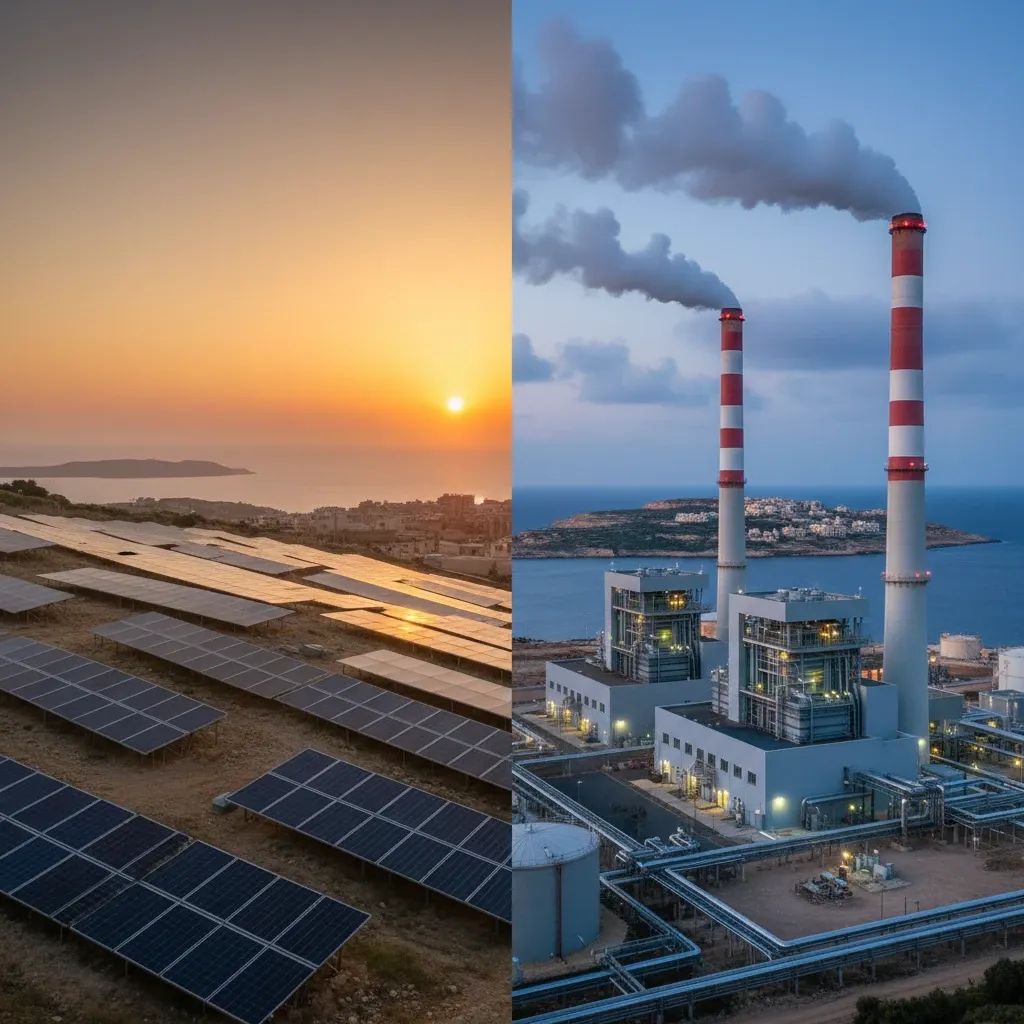
• Grid bottlenecks: Gas-fired plants supply approximately 50-55% of electricity, the Sicily cable supplies approximately 30-35%, and renewables supply approximately 11-21%—a fragmented mix dependent on volatile imports and fossil fuel generation.
The Subsidy Trap
Maltese residents pay electricity bills that appear stable month to month, but the true market cost is absorbed by government subsidies funded through general taxation—a hidden wealth transfer that has become fiscally unsustainable. When Iran's military tensions disrupted Middle Eastern oil markets in early 2026, crude jumped from €70 to €119 per barrel, and the Malta Treasury faced an immediate pressure to absorb the surge or raise user tariffs. Finance Minister Clyde Caruana suggested the government could weather up to €250 million in subsidy claims this year, but that figure assumes oil markets stabilize. If they don't, the burden on public finances grows, squeezing funding available for roads, schools, and hospitals.
The Malta Central Bank Governor has made the diagnosis plain: subsidies are not a solution; they are a painkiller masking a broken system. Every euro spent masking price volatility is a euro not invested in renewable infrastructure that would eliminate volatility altogether. Yet the Malta Government continues to renew and extend subsidy programs into 2026, treating the symptom while ignoring the cause.
Why Spain's Path Matters (and Malta's Doesn't)
Across the Mediterranean, Spain offers a living comparison. By February 2026, Spain had installed 50.2 GW of solar capacity and 33.3 GW of wind power—a combined renewable fleet that has decoupled Spanish electricity prices from global hydrocarbon volatility. Spain's consumers now enjoy some of Europe's cheapest electricity tariffs, not because Madrid subsidizes consumption, but because a diversified generation mix built over years of steady investment has made fossil fuel imports nearly redundant.
Malta's solar footprint, by contrast, stands at roughly 240 MW. Spain's population is 89 times larger and its land area is 1,600 times greater than Malta's, yet even when adjusted per capita, Malta's solar deployment lags significantly behind European peers. The island has zero operational wind capacity and remains locked into a generation model where gas-fired plants supply approximately 50-55% of domestic electricity and an undersea cable pipes in a further 30-35% from Sicily. A single geopolitical shock in the Middle East ripples directly into Maltese household budgets. A supply disruption in the Sicily cable, and the grid destabilizes. That fragility persists even with a second interconnector—a cable on order that will arrive in 2026 but does not fundamentally rebalance Malta's energy architecture.
The Brussels Enforcement Clock Starts
On March 11, 2026, the European Commission notified Malta and 18 other member states that they had failed to comply with the recast Energy Performance of Buildings Directive (EU 2024/1275). The rule is straightforward: each EU country must submit a comprehensive renovation roadmap showing how it will transform its building stock into highly efficient, decarbonized assets by 2050. The plans must specify quantified targets for 2030, 2040, and 2050, outline financing mechanisms, and identify sectoral barriers.
Malta's submission never materialized. The December 31, 2025 deadline came and went without a draft reaching Brussels. Now the island has two months to respond to the formal notice. Ignore it, and the next stage is a "reasoned opinion"—Brussels laying out its case for legal action. Fail to remedy the situation after that, and Malta faces referral to the European Court of Justice, where financial penalties become possible outcomes.
The timing is not accidental. Brussels is tightening energy regulation across the bloc as part of the broader European Green Deal. Malta, with one of the EU's poorest energy efficiency records in the construction sector, has become a test case. ADPD Chairperson Sandra Gauci has characterized the delay as symptomatic of a broader government indifference to efficiency—a choice to prioritize property speculation and rapid development over structural reform. Whether or not that diagnosis is politically fair, the regulatory consequence is clear: Malta's exemption from EU building standards is ending.
The Buildings Problem
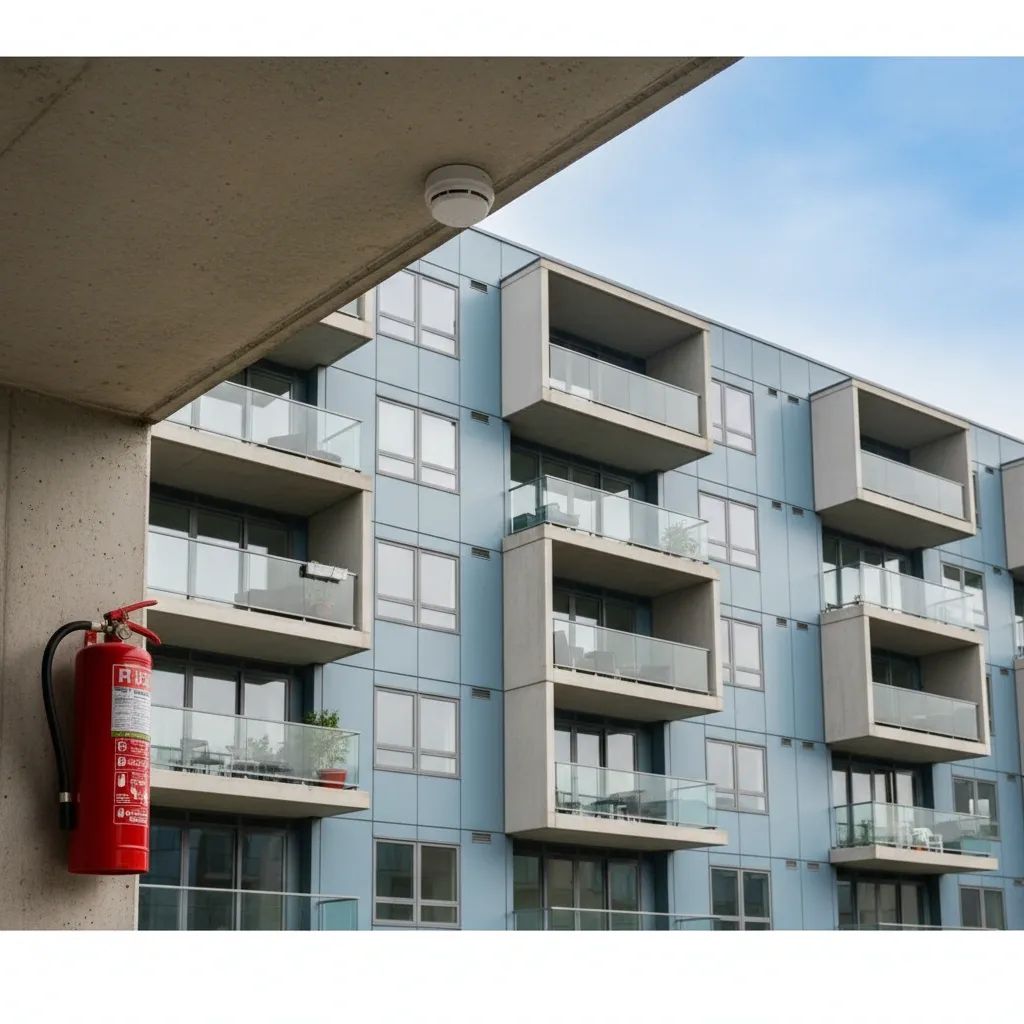
Nearly half the energy consumed in Malta goes to heating, cooling, and powering buildings. Many of the nation's residential and commercial structures are decades old, poorly insulated, and inefficient by contemporary standards. A comprehensive renovation program—improving insulation, upgrading HVAC systems, installing efficient windows, and deploying rooftop solar—could reduce electricity demand by 20-30%, according to energy analysts. That is not speculative; it is engineering fact.
Yet Malta has not articulated a national strategy for achieving such reductions. The Malta Government has allocated €25 million for solar expansion in 2026 and designated €700 million over seven years for green landscaping and park improvements—worthy initiatives, but neither directly addresses building envelope efficiency. The absence of a formal renovation blueprint sends a signal: the administration is content to import renewable electrons through the Sicily cable and subsidize consumption rather than systematically lower demand through efficiency.
The consequences extend beyond Brussels's enforcement schedule. Energy-intensive businesses—data centers, hospitality operations, logistics hubs—increasingly factor electricity cost predictability into location decisions. When a nation's grid depends on volatile imports and government subsidies, investors hesitate. When peer nations offer stable, low-cost renewable power, they shift investment elsewhere.
What's Actually Happening: The 2026 Transition
Not all movement is frozen. Malta's updated National Energy and Climate Plan, filed with Brussels in January 2025, commits the island to 24.5% renewable energy in gross final consumption by 2030. For electricity specifically, the target is higher: 44% of generation from renewables by 2030. To reach those numbers, several initiatives are underway.
The second Malta-Sicily interconnector is slated to begin operations in 2026, doubling the island's ability to import renewable power from the Italian and EU grids. This is material: when solar-rich Spanish and Italian regions generate excess capacity, Malta's second cable will draw that clean power at competitive rates, reducing reliance on domestically fired gas turbines. Battery storage projects are being deployed to smooth the intermittency of local solar generation, and a tender for Malta's first offshore wind farm—up to 320 MW floating capacity—is in motion, though contractor selection is not expected until early 2028.
The renewable energy grant scheme offers substantial incentives for developers proposing projects with minimum 40 MW capacity, including storage components. This is targeted at industrial-scale deployments, not rooftop solar. For household solar, separate subsidy tracks exist, though means-testing has tightened in recent budgets.
Gozo's entire public bus fleet is scheduled for electrification in 2026, reducing transport sector emissions and signaling a pivot toward vehicle electrification across the island. A new 60 MW diesel power plant was commissioned in 2024 as a temporary backstop for peak demand; it is intended to be decommissioned once the second Sicily interconnector stabilizes the grid.
Reality Check: The Gap Between Targets and Pace
None of this negates the core vulnerability. Renewable energy contributions reached 17.2% of total energy in 2024, up from 15.08% in 2023—progress, but not the acceleration required to hit 2030 targets. This 17.2% figure encompasses all energy consumption, including transport and heating. In net electricity generation specifically, renewables reached 21.2% in Q2 2025, driven almost entirely by solar, reflecting a higher renewable share in the power sector alone. Wind remains absent from Malta's generation mix. The offshore wind farm, if successfully tendered, will not deliver power until the latter half of the decade. Solar capacity is being expanded, but land constraints and grid capacity limits impose hard ceilings on how much additional rooftop or ground-mounted solar can realistically be deployed without expensive grid upgrades.
The interconnector and storage projects buy time and improve resilience, but they do not substitute for domestic renewable generation. A grid that draws 30-35% of power through a single cable to Sicily is less resilient than a grid that generates 50% or more domestically. Weather, maintenance, geopolitical tension, or market price movements abroad still transmit directly into Malta's supply reliability.
ADPD's Green Vision 2050: An Alternative Framework
In response to this landscape, ADPD published its "Green Vision 2050" roadmap, proposing a decentralized, renewable-based energy system. The core pillars are straightforward: double the renewable electricity target to 50% by 2030; deploy solar across rooftops at scale; electrify public transport entirely; and establish community renewable energy cooperatives to distribute ownership and reduce dependence on centralized fossil fuel infrastructure.
None of these ideas are novel. Spain, Denmark, Germany, and other EU nations have pursued similar paths. What distinguishes ADPD's framing is the insistence that this transition is not optional luxury but operational necessity—a pivot required by geopolitical reality, regulatory enforcement, and the simple economics of long-term energy security. Cheap renewables beat expensive fossil fuel subsidies when measured over a decade. Grid stability improves when domestic generation is diversified. Public health benefits from reduced air pollution in a small, densely populated island when transport and power generation shift away from hydrocarbon combustion.
The question facing Malta's electorate and policymakers is not whether renewable energy is desirable. It is whether the government will commit to the structural reforms—building renovation standards, aggressive solar deployment, grid modernization, and subsidy reallocation—required to achieve genuine energy independence and compliance with European law. The current trajectory leaves Malta exposed, expensive, and increasingly out of step with EU regulatory direction.