
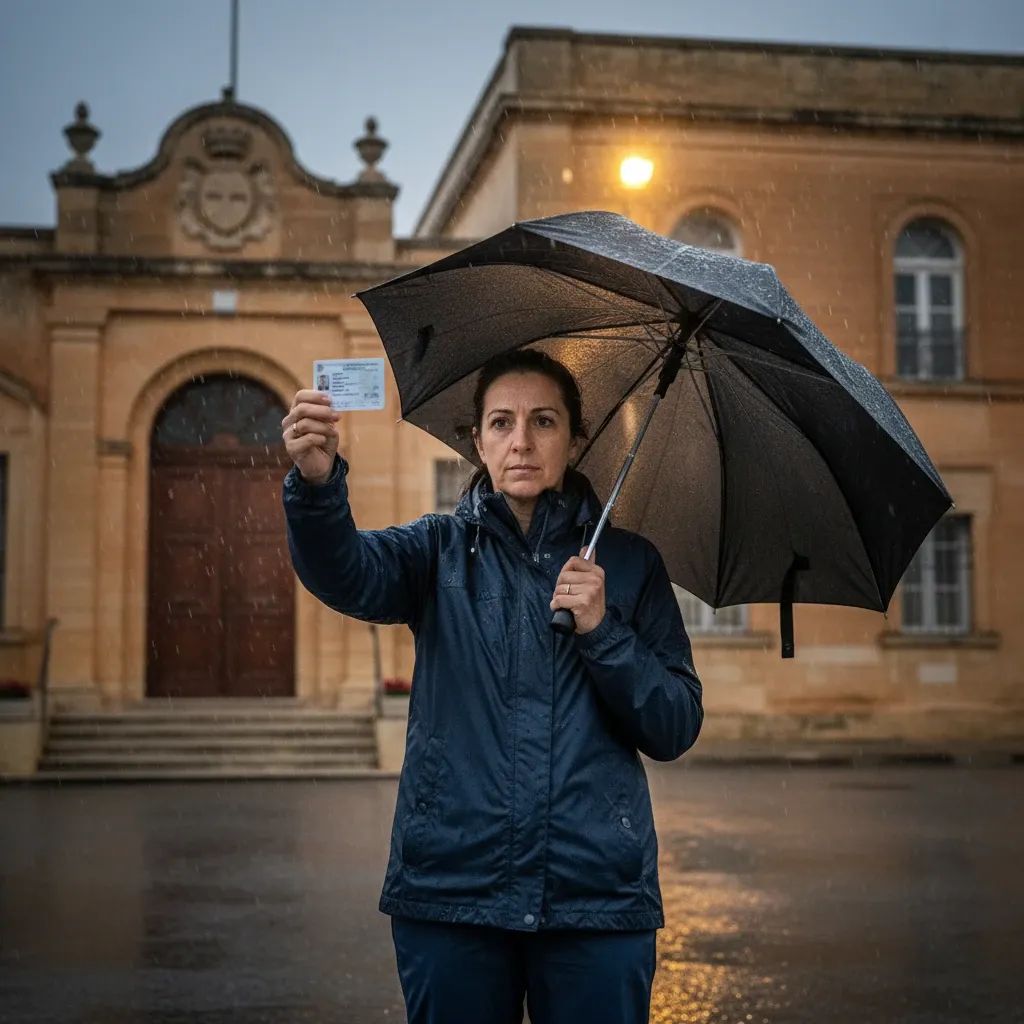
A Physical Card Nearly Kept Two Children at School During a Storm
The Foundation for Educational Services operates roughly 40 Klabb 3-16 centres across Malta designed to provide safe after-school supervision for thousands of families. Yet on December 5, 2025, one of those facilities became a flashpoint for a hard question: when a parent arrives to collect children during dangerous weather, can bureaucracy override judgment? A Malta Ombudsman investigation now says no—and the implications stretch far beyond one storm-delayed afternoon.
Why This Matters
• Verification hierarchy clarified: Proper government ID and confirmed authorization status now legally supersede inflexible card-check policies, especially during emergencies. Parents should expect release if identity can be established through official documents.
• Centres must exercise discretion: After-school programmes can no longer treat administrative procedure as absolute law. Legitimate emergencies—weather, health crises, time-sensitive situations—require proportionate judgment from staff.
• What you need to know: The Commissioner for Education ruled that a father's documented attempt to collect his children was thwarted unlawfully. That ruling reshapes expectations for roughly 3,200 families using these facilities.
The December Standoff
When storm clouds darkened over Qawra that December afternoon, a father made a practical decision: his two children should leave their after-school centre earlier than scheduled. He drove to the facility carrying two forms of identification—his Maltese Residence Permit and a screenshot of his pick-up cards stored on his phone. Both proved who he was. Neither was the laminated physical card the centre demanded.
The doorstaff member checked with a supervisor. The father's name appeared on the authorized pick-up list. They recognized him from previous collections. But without the card, the answer remained unchanged: the children stayed inside.
The father contacted Qawra Police hoping for intervention in what seemed like an emergency scenario. No help came. Inside, two young children waited. Outside, their parent stood blocked by procedure. Nearly an hour elapsed before their mother arrived carrying her copy of the card. Only then did the centre release the children to authorized custody.
What began as an inconvenience became a formal complaint filed with Malta's Office of the Ombudsman.
The Commissioner's Ruling: Substance Over Form
Vincent De Gaetano, the Commissioner for Education, completed his investigation in March 2026. His finding proved unambiguous: the centre's refusal violated law. More starkly, he concluded the children had been "illegally detained" for approximately 60 minutes.
De Gaetano's analysis exposed a fundamental misunderstanding among staff. The centre's own Standard Operating Procedures explicitly permit releasing a child without a physical card when two conditions are met: official identity verification and confirmed authorization status on the Pick-Up Form. Both existed. The centre had confused administrative preference with legal requirement. They prioritized form over substance—the cardinal error in child protection systems.
The Commissioner's reasoning carries significant weight across Malta's educational landscape. Safeguarding measures matter profoundly, but they cannot become instruments of detention when reasonable verification alternatives exist and legitimate authorization is established. Child safety and emergency responsiveness are not opposing forces; they must function together.
A Tension Between Vigilance and Flexibility
The Malta Union of Teachers publicly defended the centre's conduct, emphasizing that strict protocols exist for legitimate reasons. Their argument holds real grounding. Physical pick-up cards, introduced in August 2025, emerged specifically because genuine vulnerabilities exist in modern family dynamics: custody disputes, unauthorized collection attempts, and the complexities of diverse household arrangements create real safeguarding challenges.
The card system functions as a reliable verification layer—difficult to forge, impossible to access digitally, requiring physical presentation at collection time. From a staff perspective, checking the card provides certainty and legal cover.
Yet child protection experts distinguish between real risks and theoretical anxieties. A known, authorized parent presenting valid government identification during a deteriorating storm presents minimal threat compared to the actual harm of keeping children unnecessarily during severe weather. Malta's Child Protection Act (Chapter 602) and school safety frameworks aim to protect children—a mandate that logically includes enabling timely reunification with verified caregivers during emergencies, not merely preventing unauthorized access through rigid gatekeeping.
What Other Maltese Schools Do
The broader school ecosystem in Malta reveals varying approaches to collection authorization. State primary schools using transport services require pick-up within 20 minutes after official closing time. Secondary schools allow 30 minutes. These timeframes collapse during emergencies—they assume normal circumstances. Neither system functions during storms, accidents, or health crises.
For general school pick-ups at government institutions, parents designating someone else must provide that person's identification documents plus a signed authorization letter. Custody situations require court documentation confirming legal authority. Church and independent schools operate under looser guidelines rather than enforceable rules, though most require advance written authorization regardless of relationship.
The Klabb 3-16 system represents one of Malta's most formalized approaches. The physical card functions as both identification token and authorization proof. Roughly 3,200 families depend on these centres daily. The card's purpose is sound; its inflexible application during genuine emergencies creates exactly the gap the Commissioner has flagged.
Practical Consequences for Families Now
The Commissioner's judgment establishes clearer expectations for parents navigating Malta's after-school system, particularly when circumstances demand flexibility.
Identity verification now has a clear hierarchy. A valid government-issued identification—passport, residence permit, or Maltese ID card—combined with confirmed authorization status on official forms logically supersedes physical card dependency. The centre's own procedures already permitted this pathway; the Commissioner simply held them accountable to written standards they were ignoring.
Digital alternatives carry emerging legitimacy. While current procedures don't explicitly endorse digital proof, the Commissioner's logic suggests that verified identity plus confirmed authorization should enable release, particularly during time-sensitive scenarios. The ruling doesn't mandate immediate acceptance of screenshots, but it does signal that rigid rejection of reasonable verification alternatives contradicts both internal policy and legal obligation.
Staff should now understand situational judgment. During weather emergencies, health crises, or other urgent circumstances, verified identity plus confirmed authorization permits child release even without the physical card. Centres will likely document such exceptions clearly, protecting both children and personnel.
Parents who forget physical cards but can prove identity through government documents and demonstrate authorization status should no longer encounter bureaucratic blockades, especially during urgent circumstances. That protection now carries legal precedent.
What Comes Next
The Foundation for Educational Services has not publicly announced specific policy revisions following the Commissioner's ruling, though organizations typically implement Ombudsman recommendations. The practical question facing supervisors and staff at Klabb 3-16 centres is straightforward: how do we maintain rigorous verification while exercising proportionate judgment when emergencies arise?
Longer term, Malta's evolution toward digital governance presents opportunities. The Maltese e-ID account already secures access to government platforms. After-school programmes could eventually adopt electronic authorization systems allowing instant verification through secure databases, eliminating dependency on physical cards while maintaining identity security. This remains hypothetical for now, though the Commissioner's ruling makes modernization seem inevitable.
For present circumstances, the operational guidance is clear: carry your physical pick-up cards when possible, but understand that the Commissioner's judgment protects your right to collect your children during emergencies provided you demonstrate identity through official documents and confirm authorization through the facility's own records. A December storm forced Malta's after-school system to reckon with a simple principle: procedures exist to serve children's safety, not replace it.


