
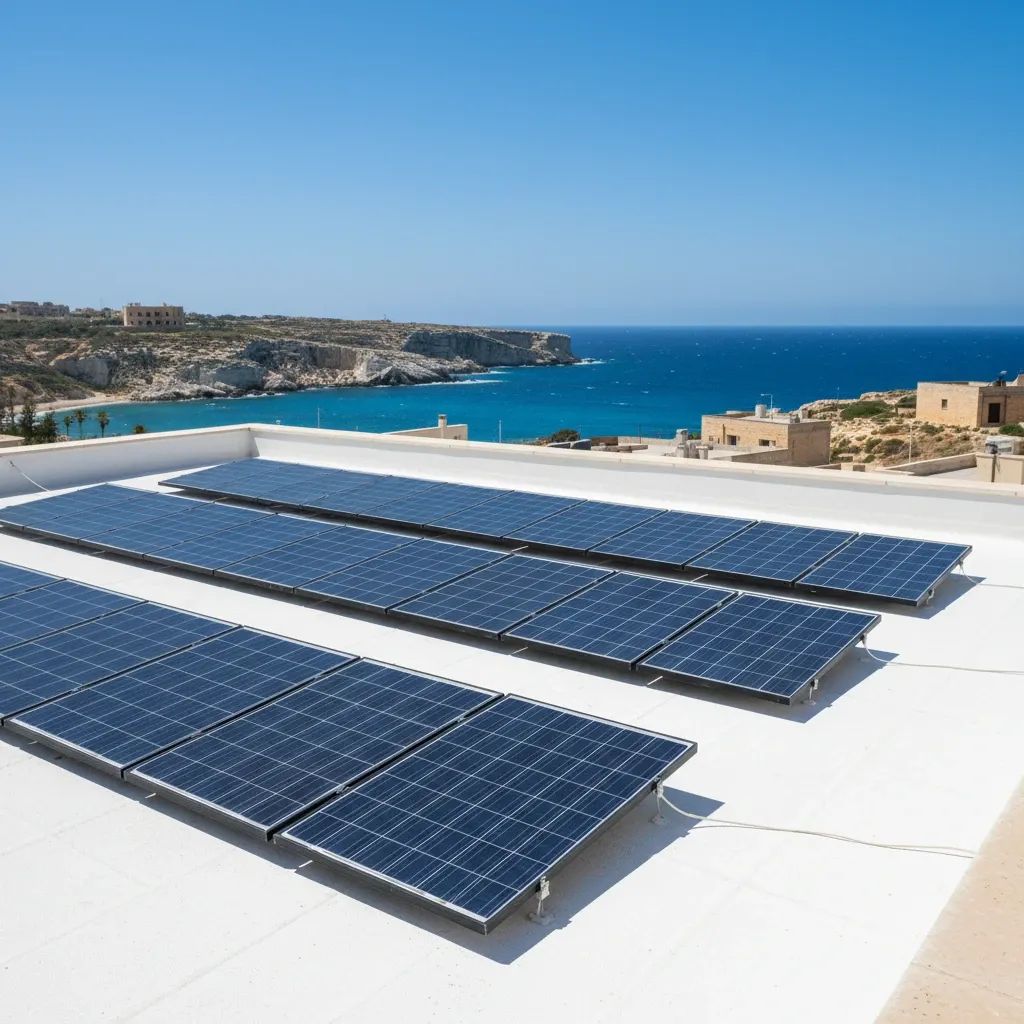
The Partit Nazzjonalista (PN) has pledged to slash electricity bills by 30% for households and businesses if elected, a bold promise that puts energy costs at the center of Malta's national election debate. As Malta approaches its national election, energy policy has emerged as a key battleground between the two major parties. Party leader Alex Borg insists a new method exists to achieve this reduction while keeping current subsidies intact, though the mechanics remain under wraps pending a detailed rollout in coming days.
Understanding Malta's Energy System
For residents living in Malta, whether local or expatriate, understanding how energy subsidies work is essential. Malta currently maintains a regulated electricity price system where the government subsidizes a portion of household bills. Average residential electricity consumption in Malta costs between €80-€120 per month depending on usage, though this varies seasonally. Importantly, Malta's electricity costs remain lower than the EU average—a direct result of government subsidies—but the question of long-term affordability and sustainability is central to this election.
Why This Matters
• Energy subsidies currently cost Maltese taxpayers between €150M and €250M annually, with international bodies pressing for reform.
• Malta ranks last in the EU for renewable energy usage at just 16%, versus a European average of 47%.
• Both major parties now agree on maintaining subsidies, marking a rare convergence after years of divergence on energy policy.
• Malta's electricity is more expensive than the EU average before subsidies are applied—the island's high reliance on imported fossil fuels and expensive desalination-linked production means costs would be significantly higher without government support.
A Promise Short on Detail
The PN's headline commitment centers on cost reduction through what shadow Finance Minister Adrian Delia describes as making energy "cheaper at its source" via alternative energy investments. The party argues that once this supply-side strategy takes hold, subsidies themselves could become obsolete. Yet the precise roadmap—whether through accelerated solar deployment, interconnector expansion, or market restructuring—has not been articulated beyond generalities about diversification and long-term planning.
This creates an immediate credibility test: the Malta Revenue Department and independent economists have long warned that energy subsidy reform cannot be postponed indefinitely without straining public finances. The International Monetary Fund (IMF) and European Commission have both advocated for a phase-out of the fixed energy price policy, citing fiscal sustainability concerns. A 30% reduction that preserves subsidies would require either dramatic efficiency gains or significant new revenue streams, neither of which the PN has clarified.
Labour's Counterpunch: Spending and Stability
The Labour Party, holding government since 2013, has responded by doubling down on its track record and rolling out a €15.3M renewable energy package in 2026. This initiative allocates 61 megawatts (MW) of new capacity across residential and industrial sectors, with €11.2M dedicated to battery storage systems and €4.1M to photovoltaic installations. Applications opened in April, and the scheme guarantees residential solar adopters a feed-in tariff of €0.15/kWh for 20 years if they forgo capital grants.
Labour's Energy Minister has emphasized the party's record of lifting renewable energy's share in the national mix from 2.8% to 17.2% since taking office, with a 25% target by 2030. The government is also advancing a third interconnector (IC3) with Sicily, a 200MW bidirectional link that could expand to 400MW and qualify for EU funding under the 2026 network development plan. Offshore, a 300MW floating wind farm remains in the planning pipeline, though skeptics note that Malta has repeatedly missed EU renewable energy transposition deadlines, most recently in May 2025, prompting a referral to the Court of Justice.
Prime Minister Robert Abela has framed Labour's approach as a balance between price stability and gradual decarbonization, arguing that subsidies remain sustainable under continued Labour governance. Yet the reality is more complex: energy price increases from providers in early 2026 drew condemnation from Labour's own climate and energy spokespeople, and industrial stakeholders report persistent high costs despite government intervention.
What This Means for Residents
For Maltese households and residents living in Malta, the divergence boils down to a choice between two paradigms. The PN offers an immediate, dramatic cost cut with promises of long-term subsidy elimination through renewable investment. Labour counters with incremental capacity expansion, infrastructure projects, and a defense of the status quo on subsidies. Neither party has yet addressed the elephant in the room: Malta's persistently low renewable energy penetration relative to EU peers, which undermines both affordability and climate commitments.
The Malta Competition and Consumer Affairs Authority has not issued guidance on how a 30% price reduction would interact with existing regulated tariffs, and energy analysts note that without clear mechanisms, such pledges risk becoming electoral theater. Meanwhile, the €150M-€250M annual subsidy burden continues to weigh on the national budget, constraining other spending priorities.
Rare Agreement on Subsidies
One unexpected outcome of this electoral cycle is the convergence on subsidy policy. Despite past PN critiques of Labour's approach, the Nationalist Party has now affirmed its support for maintaining subsidies in the short term, arguing only that they should be rendered unnecessary over time. This marks a shift from earlier positioning and narrows the policy gap between the two parties on a traditionally contentious issue.
Both camps also agree on the need for improved energy connectivity. The PN has historically backed a second interconnector in its manifestos and prioritizes strengthening distribution networks, while Labour is actively pursuing the IC3 project. The difference lies in execution timelines and the role of private versus public investment.
The EU Pressure Point
Malta's energy policy does not exist in a vacuum. The European Commission has set a binding target of 42.5% renewable energy by 2030, and Malta's failure to transpose reinforced EU rules by May 2025 has already triggered legal proceedings. The PN's criticism of Labour's "unambitious" renewable targets echoes Commission assessments, but the opposition has yet to explain how a 30% bill reduction aligns with the capital-intensive renewable buildout required to meet EU obligations.
The Malta Resources Authority will play a central role in adjudicating any new energy policy, whether through expanded permitting for solar installations, offshore wind licensing, or interconnector approvals. Both parties will need to navigate bureaucratic and regulatory constraints that have historically slowed renewable deployment, regardless of political will.
Follow the Money
The fiscal dimension remains the most opaque. The PN's promise to cut bills by 30% while retaining subsidies implies either a reduction in the wholesale cost of energy or a restructuring of the subsidy mechanism itself. If the party intends to offset lost revenue through alternative energy investment, the upfront capital requirements could rival the IC3 project's estimated cost. Labour's €15.3M package, while significant, represents a fraction of the investment needed to close the renewable energy gap with European neighbors.
The Malta Financial Services Authority has not weighed in on the macroeconomic implications of either proposal, but independent economists caution that large-scale energy policy shifts require transparent costing and multi-year budget frameworks. Voters are left to assess competing claims without the benefit of detailed financial modeling.
What Comes Next
Alex Borg has pledged that the PN's detailed plan will be released "in the coming days," a timeline that will test the credibility of the 30% reduction pledge. Labour, for its part, will need to demonstrate that its incremental approach can accelerate renewable deployment fast enough to avoid further EU sanctions and meet 2030 targets.
For Malta's residents, the stakes are immediate: electricity bills remain a significant household expense, and the long-term trajectory of energy subsidies will shape both public finances and climate outcomes. Whether through the PN's cost-reduction gambit or Labour's capacity expansion strategy, the next government will inherit a system that requires fundamental reform—and the electoral rhetoric will soon face the hard reality of implementation.


