
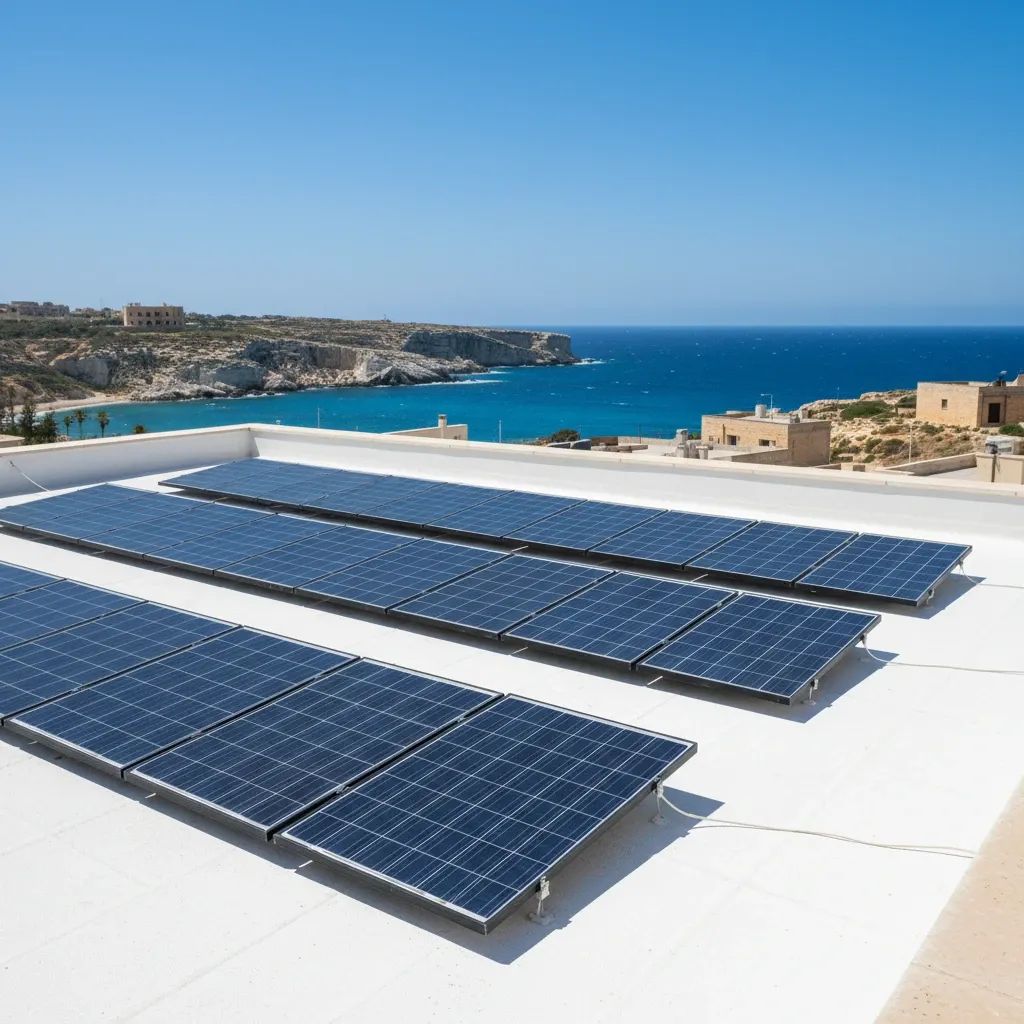
Malta's Nationalist Party has pledged to slash electricity bills by 30% if elected in the 30 May general election, a commitment that could reshape the island's energy landscape—but one that arrives without detailed implementation specifics.
Why This Matters
• Potential household savings: A 30% reduction could provide meaningful relief to Maltese households dealing with rising living costs.
• Renewable energy pivot: Opposition Leader Alex Borg plans to invest in renewable energy infrastructure, arguing Malta can better utilize its natural renewable potential.
• Election focal point: The proposal has become a central dividing line between the PN and the ruling Labour Party, which emphasizes its subsidy model as the more responsible approach.
The Promise: 30% Cut While Preserving Subsidies
Opposition Leader Alex Borg announced that a PN government would deliver the 30% reduction while maintaining the subsidies currently keeping consumer prices stable. He described the plan as a long-term infrastructure investment and promised that specifics would be unveiled "in the coming days."
The pledge is designed to address voter frustration over rising living costs. Malta's household energy burden remains a political pressure point, particularly as consumption continues to grow.
Borg has stated that subsidies would not disappear immediately, positioning the commitment carefully in the broader energy transition discussion.
What This Means for Residents
For households, a 30% bill reduction would translate to meaningful annual savings on electricity costs. Businesses, especially in hospitality and retail, could also benefit significantly.
However, the plan's feasibility depends on the scale and speed of renewable energy deployment. Malta currently generates a relatively small fraction of its electricity from renewables compared to EU averages, though the country has untapped capacity in rooftop solar and other technologies. The PN argues that ramping up renewable infrastructure would reduce dependence on imported energy sources subject to global price fluctuations.
The question remains: whether a PN government would achieve the reduction through renewable deployment, continued subsidies, or a combination of both. Major energy infrastructure projects typically require multi-year timelines, raising questions about how quickly a 30% reduction could be realized.
Labour's Counter: Subsidies as Structural Support
Prime Minister Robert Abela and the Labour Party have framed the PN's promise as politically ambitious. The PL emphasizes that Malta's subsidy model has kept utility prices stable, noting that Malta is the only EU member state that has not raised utility prices since 2022.
Labour officials argue that the PN's 30% pledge needs clearer detail and that a subsidy-based approach provides more predictable protection for households. The government maintains that subsidies function as permanent infrastructure support for consumer protection.
The Renewable Energy Reality Check
Malta's government has launched renewable energy initiatives in recent years, including support for household insulation schemes and energy efficiency upgrades. A nationwide LED street lighting upgrade has been implemented as part of broader energy efficiency efforts.
These represent meaningful steps toward energy transition, though achieving a substantial one-third reduction in consumer bills would require significant renewable capacity expansion and grid modernization within a compressed timeframe.
Options like improved interconnectivity with Sicily and expanded solar capacity have been discussed within broader energy planning, though implementation timelines and specific details remain to be determined.
The Feasibility Question
Independent analysis suggests that Malta's current low electricity prices are primarily supported by the subsidy system rather than underlying generation costs. Achieving a 30% reduction beyond subsidized baselines would require either significant cost reductions in energy inputs or rapid scaling of renewable generation capacity.
Major infrastructure projects—interconnectors, renewable installations, and grid modernization—typically require multi-year development periods, which raises questions about delivery timelines within a single electoral term.
The PN's 30% pledge is ambitious but depends on variables—project timelines, capital availability, regulatory approvals—that carry execution uncertainty. The party's commitment to provide implementation details ahead of the election will be important for voters assessing feasibility.
What Happens Next
Alex Borg has promised to release a more detailed energy plan "in the coming days," which will be scrutinized by economists, energy experts, and voters. The plan's credibility will rest on realistic assessments of capital investment needs, renewable capacity targets, and implementation timelines.
For Malta's residents, the energy choice in the 2026 campaign centers on different approaches to affordability and sustainability. The party that can credibly demonstrate how to deliver both will have a significant electoral advantage.


