
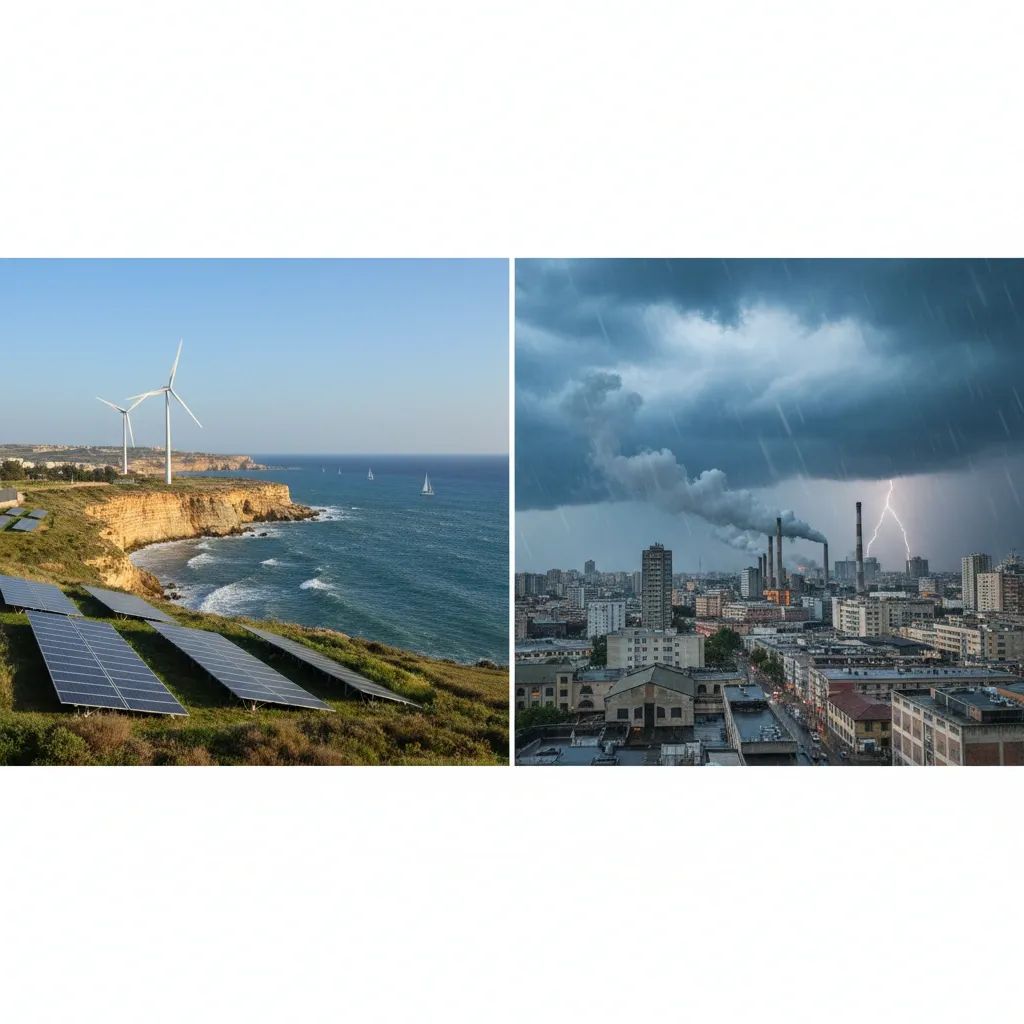
The Malta Ministry of Foreign Affairs and Tourism has unveiled a comprehensive economic security framework designed to protect the island from escalating global turbulence. This strategy directly affects how much residents pay for food and energy, which jobs remain secure, and which markets local exporters can reliably access in the months ahead.
Foreign Minister Ian Borg, who chairs the Inter-Ministerial Committee on Economic Security Strategy, presented the plan against a backdrop of persistent conflicts in Ukraine and the Middle East, volatile energy markets, and increasingly fragmented global supply chains.
Why This Matters for You
For a small island economy where imports equal 139.4% of GDP and 80% of food arrives by ship, these issues hit close to home:
• Your grocery bill: Shipping delays around conflict zones add days and cost to the food imports Malta depends on. Every increase in freight rates eventually shows up at the supermarket checkout.
• Your energy costs: Malta relies on imported oil (45% of energy) and natural gas (40%). Recent energy spikes have already pushed bills higher, and without protection, residents face ongoing exposure to sudden price jumps.
• Your job security: Tourism, financial services, and manufacturing collectively employ thousands of Maltese workers. Global disruptions directly threaten these sectors.
• Getting goods: Supply-chain disruptions at the Malta Freeport have already caused inventory shortages at retailers. Extended transit times mean fewer goods available and higher prices.
Three Main Strategies: Resilience, Diversification, Diplomacy
The strategy rests on three key approaches. First, resilience: Malta intends to strengthen the logistics infrastructure that keeps goods flowing and digital services running. This means investment in port efficiency, cargo capacity at Malta Freeport, and redundant connectivity to ensure that a single problem—whether a blocked shipping route or a cyberattack—cannot paralyze commerce.
Second, diversification of trading partners. While Malta remains anchored in the European single market, the government plans to expand trade relationships with Sub-Saharan Africa, Asia, and Oceania during 2026, following a similar Gulf strategy launched in 2025. The goal is to reduce dependence on any single region, so that if demand falters or sanctions complicate transactions, alternative markets can absorb Malta's exports of financial services, maritime support, and IT solutions.
Third, diplomacy as a shield. For a nation of fewer than 550,000 people, multilateral forums—the European Union, the United Nations, and regional platforms like the Pact of the Mediterranean—offer crucial leverage. Borg has tasked the country's diplomatic network with supporting Maltese firms competing for contracts in Africa or the Gulf, ensuring they have embassy support on the ground.
What Happens Next: Timeline and Protections
The 2026 Budget extends price-stabilization measures for energy, though these subsidies depend on public revenues and cannot shield consumers indefinitely if oil and gas prices surge further. The government is working to complete the Recovery and Resilience Plan by August 2026, which will channel EU funds into large-scale electrification of road transport and energy-efficiency improvements for buildings—both designed to reduce fossil-fuel dependence.
For residents living and working in Malta: EU membership means you have access to the same economic safeguards as other European citizens. Work permit holders benefit from the same supply-security measures as Maltese nationals, though non-EU workers should confirm their specific employment protections with employers.
Financial and Regulatory Safeguards
Beyond trade policy, the government is reinforcing domestic defenses. The 2026 Budget targets a fiscal deficit below the EU's 3% threshold, signaling to financial markets that Malta maintains fiscal discipline. Public finances have opened the year in surplus, supported by improved tax collection and strong revenues from gaming and financial services.
The Malta Financial Services Authority has declared Financial Crime Compliance—including anti-money-laundering and sanctions enforcement—as its top priority for 2026. Starting June 30, 2026, a new Sectoral Systemic Risk Buffer will apply to property-backed exposures, a precautionary measure against overheating in the real-estate market and household credit.
A new legal framework guaranteeing businesses the right to open bank accounts addresses a persistent problem for start-ups and small firms. The government is also promoting family offices and enhancing asset-management frameworks to attract investment.
Digital Resilience: Another Layer of Protection
Investments are targeting the digitalization of public administration and support for at least 360 companies—particularly small and medium-sized enterprises—to adopt cloud platforms, cybersecurity tools, and e-commerce infrastructure. In an era when cyberattacks can cripple supply chains as effectively as a naval blockade, digital resilience is increasingly essential.
Malta's Neutrality: What It Means Today
Malta's constitutional neutrality, adopted in 1974, declares the island neutral and prohibits foreign military bases—a stance that now extends to economic independence. Over-reliance on a single vendor for 5G networks, undersea cables controlled by one nation, or cloud services hosted in one jurisdiction all create strategic vulnerabilities that neutrality should guard against.
This philosophy underpins the diversification drive: by cultivating trade and diplomatic ties across the Mediterranean, the Gulf, Africa, and Asia, Malta reduces the risk that a breakdown in relations with any one partner could strand the island economically.
Real Challenges Remain
Despite projected growth of 3.8% real GDP expansion—far outpacing the EU average—domestic constraints threaten the strategy's success. Talent and labor shortages are acute: the island's small population means firms increasingly rely on foreign workers, yet housing shortages and slow permit processing complicate recruitment. Road infrastructure remains congested, raising logistics costs. Governance vulnerabilities, including slow court proceedings, continue to draw international criticism and deter the foreign investment the economy depends on.
Climate-related risks—floods, extreme heat, windstorms—pose another layer of vulnerability, particularly for agriculture, tourism infrastructure, and water resources.
The Long-Term View
Beyond crisis management, the government has anchored its approach in Malta Vision 2050, a framework setting long-term priorities around productivity, innovation, skills development, infrastructure, and quality of life. The aim is to decouple economic security from short-term political cycles and signal to investors that Malta's planning extends decades ahead.
Whether this strategy can shield Malta from the next supply-chain shock, energy spike, or geopolitical rupture will depend on policy coherence and the speed at which infrastructure bottlenecks are cleared, labor supply is expanded, and governance modernized. For now, the blueprint is clear: resilience through preparation, security through diversification, and influence through diplomacy.


