Why Malta's Water Crisis Is Far Worse Than a Single Tanker Disaster
When a severely burned Russian LNG tanker began drifting toward Malta in early March, officials initially treated it as a maritime emergency. The reality runs deeper—the Arctic Metagaz incident has exposed a structural vulnerability in how the island secures its most essential resource. For Malta, a small island nation where over half the drinking water comes from seawater conversion, a fuel spill from a damaged tanker could disrupt the nation's water supply.
Why This Matters
• Desalination dependency creates systemic fragility: Three plants convert seawater into over half of Malta's drinking water. Any contamination that forces plant shutdowns would quickly deplete emergency reserves, leaving the island vulnerable within days.
• The tanker carries hazardous cargo: The Arctic Metagaz is an LNG tanker that suffered catastrophic damage, with all 30 crew members evacuated. The disabled vessel drifted in the central Mediterranean with no navigation systems and continued risks of fuel release.
• Sanctions create a legal trap: International salvage operators hesitate to engage with sanctioned vessels without explicit immunity from EU penalties, delaying intervention and allowing drift conditions to worsen.
• Backup systems cannot replace desalination: Groundwater reserves are finite and increasingly saline; treated wastewater and rainwater harvesting supplement supply but cannot sustain the island if desalination plants shut down.
The Tanker, The Attack, and Malta's Exposure
On March 3, the Arctic Metagaz, a Russian-registered LNG tanker, suffered catastrophic damage in what maritime sources believe was a Ukrainian drone strike near Libya. The explosion consumed much of the hull. All 30 crew evacuated, but the ship remained afloat—a disabled vessel now drifting in the central Mediterranean with no navigation systems.
The Malta Maritime Authority established protective measures and deployed surveillance. What makes this crisis distinct from routine shipping incidents is not just the damaged cargo or the vessel's condition—it's where Malta gets its water.
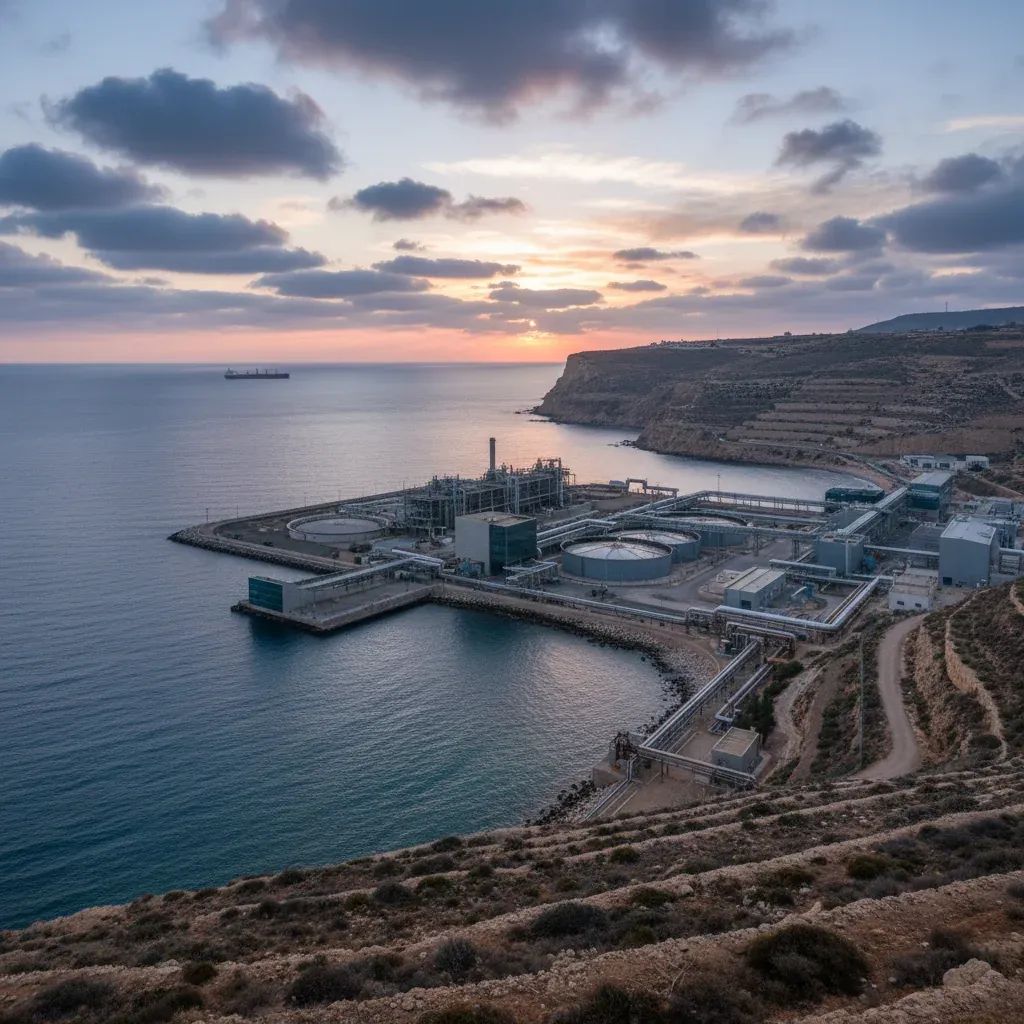
Unlike continental European nations, Malta cannot draw on rivers, reservoirs fed by rainfall, or diverse regional sources. The island receives sparse, seasonal precipitation and depends on groundwater that has been depleted from decades of agricultural extraction and climate stress. The three desalination facilities—positioned at coastal sites—are the critical infrastructure for national water security. A fuel contamination event that penetrates seawater intake wells could force simultaneous plant closures, triggering what Water Services Corporation (WSC) officials acknowledge would become a supply crisis within days.
How the Mediterranean Amplifies the Risk
The semi-enclosed nature of Mediterranean waters multiplies the hazard. Unlike open oceans where currents disperse pollutants widely over time, the Mediterranean's limited water exchange means fuel slicks linger longer and accumulate in coastal zones where most infrastructure clusters. Heavy fuel oil, unlike LNG, persists in the marine environment and can coat organisms and coastal areas for extended periods.
Environmental researchers have documented this concern for years. Malta's three desalination plants already discharge highly saline brine as a byproduct of reverse osmosis. This concentrated salt solution affects nearby waters and the marine environment. A fuel contamination incident layered on top of existing brine discharge could create environmental damage that affects fishing grounds and the coastal environment locals depend on for livelihoods.
Environmental assessments emphasize that a discharge of fuel oil and diesel fuel from a damaged tanker represents a significant threat. Such a spill could contaminate seawater for weeks, making intake wells temporarily unusable and forcing plant shutdowns.
Malta's Water Backup Plan Isn't Bulletproof
When the WSC discusses emergency reserves, the numbers involve multiple reservoirs across Malta, Gozo, and Comino. In theory, these reserves provide some buffer if desalination plants require temporary shutdowns. In practice, a prolonged shutdown triggers panic buying, industrial water demands for cooling systems and manufacturing, and bottled water imports that compete for limited shipping capacity.
Groundwater remains technically available—traditional wells still exist in rural areas—but hydrologists have repeatedly warned that over-extraction and salinization from centuries of agricultural use have degraded quality and reduced yield. National policy now treats groundwater as a finite emergency reserve, not a permanent solution.
Treated wastewater and rainwater harvesting through household cisterns contribute to Malta's overall water supply and serve agriculture and industry. These supplies supplement the water system but cannot be scaled quickly for potable use if desalination plants shut down. Combined, these alternative sources remain insufficient to sustain population and economic activity if desalination fails.
In a shutdown scenario lasting more than several days, households face reduced tap water, industries experience disruptions, and the island enters scarcity management requiring imports and operational adjustments.
The Sanctions-Versus-Rescue Dilemma
When Malta Foreign Minister Ian Borg raised the Arctic Metagaz crisis at an EU foreign ministers meeting on March 17, he identified a legal problem that complicates emergency response. International maritime law obligates coastal nations to assist vessels in distress. Yet the Arctic Metagaz falls under EU and US sanctions regimes targeting Russia's shadow fleet. Salvage operators expressed reluctance to engage without explicit immunity from potential penalties.
This creates operational friction. The European Maritime Safety Agency (EMSA) and the Union Civil Protection Mechanism (UCPM), coordinated through the Emergency Response Coordination Centre (ERCC), provide the institutional framework for marine emergency response. Italy, with jurisdiction over adjacent Mediterranean waters, has the primary mandate to intervene. Yet salvage and recovery operations require private firms, many of which operate globally and fear legal jeopardy if EU sanctions enforcement later targets their participation in rescuing a sanctioned asset.
The sanctions regime intentionally creates friction in maritime services to constrain certain activities, but when a disabled vessel drifts toward critical EU infrastructure, that deterrent mechanism becomes a barrier to emergency response.
Russia's Foreign Ministry acknowledged the situation but deflected responsibility, asserting that coastal nations bear primary legal obligation under international maritime norms. The statement avoided commitment to any recovery effort, leaving Malta and Italy to manage the situation with their own resources and EU support.
What Happens If Desalination Fails
The practical cascade plays out across days. If fuel contamination reaches seawater intake wells, WSC protocols require immediate plant shutdowns—a safety imperative. Emergency supplies serve reduced needs. By several days into any prolonged shutdown, the system becomes dependent on bottled water imports and rationing measures.
Hotels and hospitality venues, which account for significant employment and tourism revenue, face operational disruptions. Manufacturing and food processing facilities that depend on consistent water flow experience delays. Construction projects requiring water halt. Agricultural irrigation, already dependent on treated wastewater, faces further reduction.
Households manage through bottled supplies and emergency measures until imports arrive—a process requiring coordination with Mediterranean shipping networks, customs clearance, and distribution logistics. The economic disruption extends beyond water shortage into hospitality disruptions, supply chain issues, and employment effects across sectors dependent on continuous operations.
Business continuity planners were monitoring the tanker's situation closely, recognizing that any prolonged desalination outage represents a significant economic event affecting Malta's economy and essential services.
The Broader Structural Problem
The Arctic Metagaz incident is operationally addressable—salvage, towing, eventual disposal. But it exposes a deeper vulnerability that no single emergency response solves. Malta's entire water security architecture rests on three coastal plants powered by reverse osmosis and dependent on stable electricity supply, functioning seawater intake systems, and absence of marine pollution events in proximity to critical infrastructure.
Climate change is intensifying Mediterranean weather volatility. Geopolitical tensions are affecting shipping lanes. Aging vessels operate with varying safety standards in contested waters, increasing accident probability. For a small island state with concentrated infrastructure, these trends compound into asymmetric risk.
Thomas Bajjada, the Malta Labour MEP, escalated the issue to the European Commission, raising whether the EU intends to strengthen contingency planning for vulnerable island and coastal member states. That question moved beyond this single tanker—it addresses whether European institutions can invest in resilience mechanisms when small nations face systemic exposure to external threats they cannot independently manage.
Longer-term solutions might include diversified desalination sourcing, accelerated investment in renewable energy for reverse osmosis plants, expanded wastewater treatment and reuse capacity, and water demand management across sectors. But these require years of capital investment and political commitment. For now, Malta remains exposed to a risk that reveals the fragility beneath the island's modern infrastructure surface.