
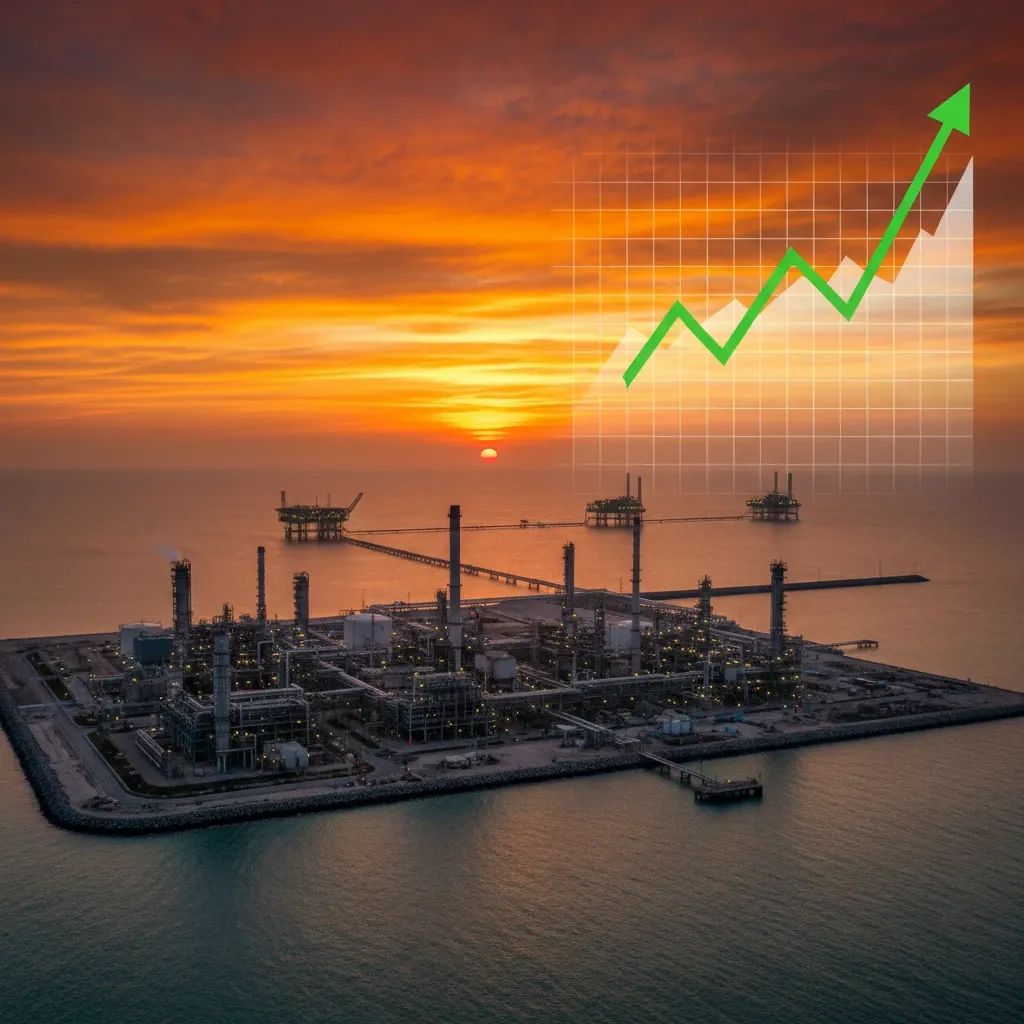
The United States government has escalated Middle East tensions dramatically, with President Donald Trump issuing a public ultimatum to destroy Iran's South Pars gas field entirely if Tehran continues targeting energy facilities in neighboring Gulf states. The warning, delivered via Truth Social, has sent global oil prices soaring past $114 per barrel and injected fresh uncertainty into an energy crisis already rattling economies worldwide.
Why This Matters for Malta
• Energy prices are spiking: Brent crude hit $114 per barrel and European gas jumped 23%, directly impacting fuel and electricity costs.
• Global supply at risk: The Strait of Hormuz remains disrupted, threatening roughly 20% of the world's oil and LNG transit.
• Immediate threat to infrastructure: South Pars provides 70-75% of Iran's gas production and is shared with Qatar, making any strike globally consequential.
• Inflation pressure mounting: Analysts warn sustained disruption could add nearly 1% to global inflation and trigger recession.
What This Means for Your Malta Electricity Bill
For Malta, an energy-importing island economy heavily reliant on stable fuel prices and maritime trade, the implications are immediate and direct. The country imports virtually all its energy, with electricity generation dependent on natural gas and petroleum products. A sustained spike in global oil and LNG prices translates directly into higher electricity tariffs and increased transport costs.
Malta's Enemalta typically adjusts tariffs quarterly based on fuel costs. If oil remains elevated through 2026, residential electricity bills could rise by 8-12%, while transport operators have already signaled potential fare increases on buses and taxis. For families budgeting already tight energy costs, this spike could add hundreds of euros annually to household expenses. Tourism-related businesses and shipping operators using Malta's transshipment hub will face similar pressures as fuel surcharges climb across the Mediterranean.
A Shared Field in the Crosshairs
To understand why this conflict matters so much: imagine a gas reservoir large enough to power the entire planet for a decade. That's South Pars/North Dome, the single largest natural gas field on Earth, straddling Iranian and Qatari waters in the Persian Gulf.
The field holds an estimated 1,800 trillion cubic feet of recoverable gas. Iran's portion accounts for roughly 36% of its proven gas reserves and supplies approximately 80% of the country's electricity generation. Any significant damage to offshore platforms or the onshore processing hub at Assaluyeh in Bushehr Province would cripple Iran's domestic power and industrial output.
Qatar extracts nearly 18.5 billion cubic feet per day from its side of the field and ships much of that as LNG to Europe and Asia. This makes South Pars a linchpin for both regional energy stability and global markets navigating the post-2022 supply crunch.
Escalation Timeline and Retaliation Cycle
The current crisis began on March 18, when Israeli forces struck offshore installations at South Pars, reportedly with tacit approval from Washington. Within hours, Iran retaliated with missile barrages against Qatar's Ras Laffan LNG hub, causing what Qatari state energy authorities described as "extensive damage" and "sizeable fires."
Simultaneously, Iranian forces targeted the Habshan gas facility and Bab oil field in the UAE, prompting Abu Dhabi to denounce the attacks as a "direct threat to global energy security." Saudi Arabia reported intercepting drones aimed at its own gas infrastructure.
Trump's March 19 warning raised the stakes further. He stated explicitly that any further Iranian attacks on Qatari LNG facilities would trigger a U.S. military operation to obliterate South Pars entirely, with or without Israeli participation.
What This Means for Global Markets
The conflict has already propelled Brent crude from roughly $70 per barrel in late February to $114 by mid-March—a jump exceeding 40% in less than three weeks. European natural gas benchmarks have climbed in tandem, reflecting fears that both Iranian and Qatari supply could be permanently impaired.
Analysts warn that sustained closure of the Strait of Hormuz, combined with damage to South Pars and Qatari export capacity, could keep oil prices elevated well into 2027. Transport costs, petrochemical inputs, and electricity tariffs are all rising. Energy-importing economies in Asia and Europe face the steepest pressure, with some forecasts predicting a 0.8% addition to global inflation if disruptions persist through the second quarter.
The risk has shifted from temporary supply interruptions to lasting capacity destruction. Offshore platforms, liquefaction trains, and subsea pipelines can take years to repair once damaged. If Trump follows through on his threat, the loss of South Pars production would remove a critical pillar of Iranian domestic energy and significantly reduce global LNG availability.
Regional and Diplomatic Fallout
Qatar has condemned both the Israeli strike and Iran's retaliation, expelling Iranian diplomatic staff and calling the attacks "dangerous and irresponsible." The UAE echoed this language, highlighting the environmental and economic repercussions of targeting energy installations. Saudi Arabia has indicated that trust with Iran has evaporated and hinted at readiness for coordinated military action.
France's President Emmanuel Macron called for a moratorium on strikes against civilian and energy infrastructure, emphasizing the need to safeguard essential supplies. NATO's Secretary General confirmed that alliance members are coordinating efforts to reopen the Strait of Hormuz, though no timeline has been disclosed.
Long-Term Risk and Uncertainty
Experts caution that the current trajectory resembles the 1970s oil shocks, when geopolitical disruption drove crude prices to unprecedented highs and triggered global stagflation. The difference now is the scale of the infrastructure at risk: South Pars alone holds reserves equivalent to 5.6% of the world's total proven gas.
If Trump's threat materializes, the destruction of South Pars would not only cripple Iran's domestic energy system but also remove a substantial share of potential global supply just as demand remains elevated. The resulting price environment could persist for years, reshaping trade flows, accelerating energy transitions, and imposing lasting fiscal strain on importing nations like Malta.
For now, markets are pricing in uncertainty. Coordinated releases from strategic petroleum reserves have done little to calm fears, and traders are bracing for further escalation. Whether diplomatic pressure can de-escalate the crisis before irreversible damage occurs remains the defining question for global energy security in the months ahead.


