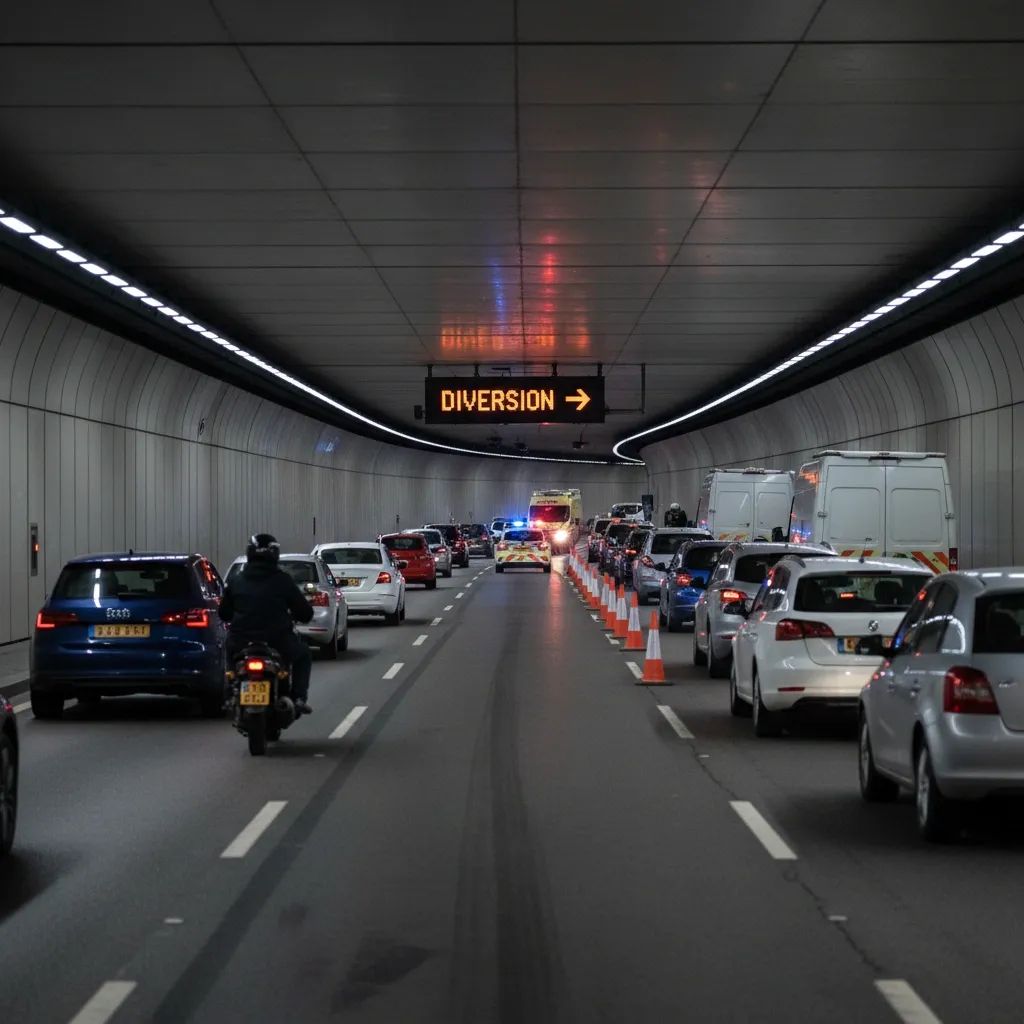
Wednesday's rush-hour gridlock through the Sta Venera tunnels began with a predictable cascade: one vehicle braked, three others couldn't. By 8:45 AM, emergency responders were extracting a woman from the wreckage while Transport Malta traffic officers set cones around a blocked lane, and the ripple effect of that single four-vehicle collision had already stalled thousands of commuters across the island's central corridor.
Why This Matters
• Immediate route collapse: When one lane closes during morning peak, there's no functional bypass—the tunnel is the only practical link between the southern districts and Msida. The incident created significant delays for commuters relying on this vital route.
• Safety concerns in confined spaces: Multi-vehicle collisions in tunnels highlight the particular risks of high-density traffic in confined environments where drivers have limited reaction time and visibility.
• Critical infrastructure dependency: The tunnel's continued operation is essential for the island's transportation network, making maintenance and safe driving practices increasingly important.
How the Accident Unfolded
The collision occurred in the northbound bore—the tunnel section channeling traffic from Bormla, Marsa, and the harbor district toward Msida and beyond. A four-vehicle bumper-to-bumper collision developed in the confined space, with one vehicle likely braking suddenly and the three behind unable to react in time within the tunnel environment.
Malta Police and Transport Malta arrived within minutes. An ambulance transported one woman to Mater Dei Hospital with slight injuries. By 9:00 AM, the backup stretched significantly, with drivers sitting through extended delays well into mid-morning as the lane remained closed for emergency response and debris clearance.
The Tunnel's Safety Profile
The Sta Venera tunnels carry significant daily traffic and have been the site of multi-vehicle collisions, including a three-car collision in June 2025 and another incident in October 2025. These incidents underscore the risks present in tunnel environments where vehicles travel with minimal following distance and limited visibility.
The tunnels feature CCTV coverage, emergency call stations, and fire safety systems to support incident response. However, the confined nature of tunnel driving means that driver behavior and spacing are critical factors in preventing collisions. Road surface conditions can also influence braking performance and vehicle control.
Traffic Flow and Diversions
The Sta Venera tunnels form a critical link for north-south connectivity on the island. When a lane closes during rush hour, traffic is significantly impacted. Transport Malta worked to manage traffic flow, with commuters forced to seek alternate routes or experience extended delays.
Real-time traffic information was limited, with most commuters relying on radio bulletins and social media to navigate the situation. The incident highlighted the strain on the island's central transportation corridor when capacity is reduced.
Practical Guidance for Safe Tunnel Driving
For those regularly passing through these tunnels, defensive driving principles are essential:
• Extend your following distance to three or four seconds—well beyond the standard guideline—to register brake lights and react appropriately in the confined space.
• Watch for brake lights ahead and anticipate reasons for sudden braking, especially with large vehicles blocking your line of sight.
• Minimize distractions; phone use erodes reaction time in environments where split-second decisions prevent collisions.
• Consider timing flexibility during peak hours; leaving earlier often reduces exposure to congested periods.
The tunnels carry extensive CCTV coverage, and reckless driving—tailgating, speeding, lane-cutting—can be documented and addressed.
Infrastructure Dependency and Looking Forward
The Sta Venera tunnels were engineered for traffic volumes lower than current demands. One incident removes significant capacity; there is no overflow alternative or functional bypass. The island's road network compresses, and delays propagate widely.
Incidents like Wednesday's collision demonstrate the importance of safe driving practices and the vulnerability of routes with limited redundancy. Drivers should anticipate occasional closures and plan with buffer time, navigating defensively through these critical tunnels. For residents depending on this route daily, maintaining awareness of road conditions and practicing defensive driving remain essential strategies.