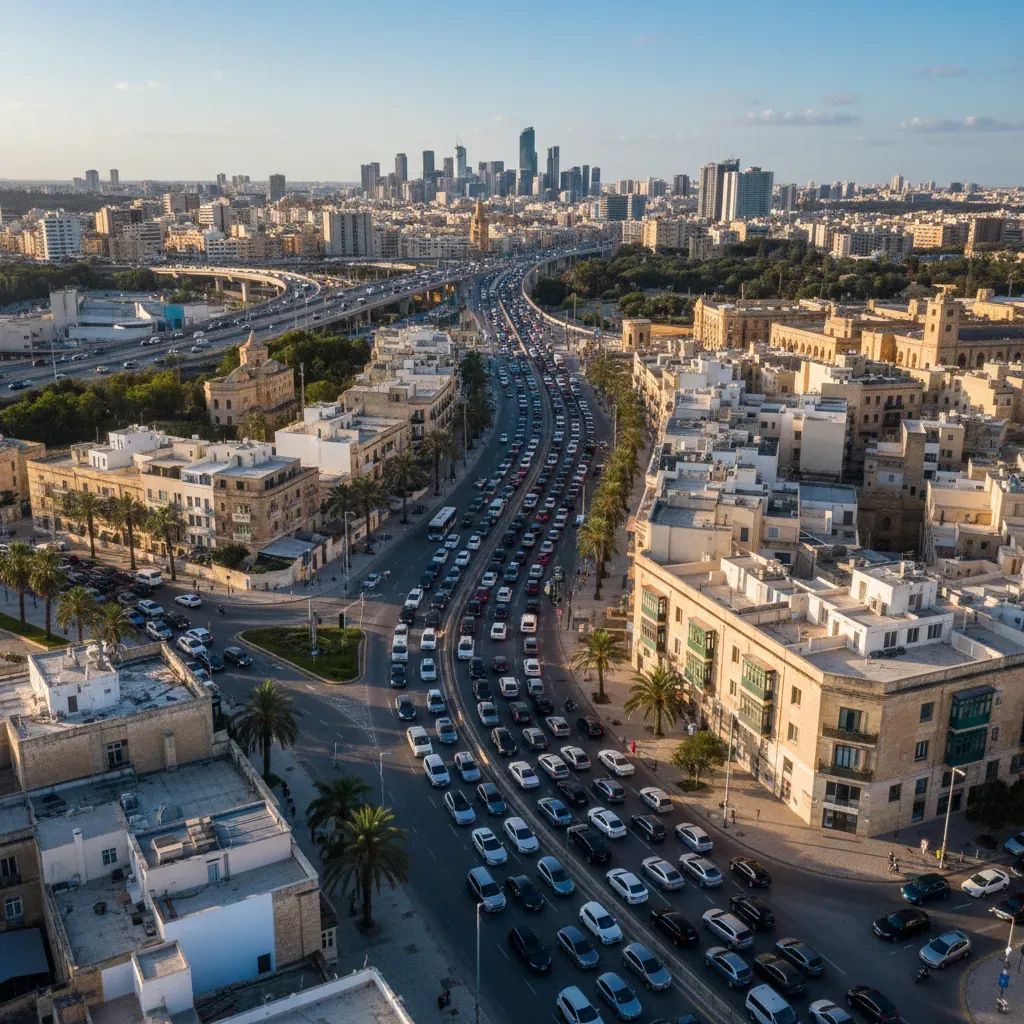
Malta's traffic gridlock could cost the national economy €917 million annually by 2030 unless action begins immediately, according to the National Transport Master Plan 2030. The Nationalist Party intends to address this crisis through a comprehensive mobility overhaul, with party leader Alex Borg committing to design phase initiation within 100 days of taking office and operational service within five years.
Why This Matters
The €917 million annual cost represents a significant drain on Malta's economy. To put this in perspective, Borg reframed the congestion bill as an opportunity cost during his address to party delegates, suggesting that resources could be redirected toward schools, healthcare, and renewable energy initiatives instead.
Beyond fiscal measures, traffic congestion extracts invisible tolls on residents. Medical researchers increasingly document stress-related illnesses clustering among urban commuters facing unpredictable travel times. Parental productivity suffers when school runs extend into work hours. Delivery businesses absorb inflated labor costs as vehicles spend hours moving through congested routes.
What the PN Proposes
Borg deliberately withheld specific technical details during his Convention remarks—a political move that buys design flexibility while signaling commitment to evidence-based planning rather than ideological preference. However, he indicated that the party is exploring various viable pathways to address Malta's mobility crisis.
The PN's approach will involve balancing infrastructure solutions across the island, though specific technologies and configurations remain under review. The party has indicated openness to multiple transport solutions that have proven effective in comparable jurisdictions.
Short-Term Wins Before Major Works Begin
Rather than delay relief until full infrastructure materializes, Borg outlined a three-pronged package of immediate interventions designed to provide relief within months, not years.
Smart parking systems represent the first element. Dynamic pricing and real-time space availability can reduce circling traffic in congested areas, providing quicker relief than waiting for major infrastructure projects.
Logistics hubs at urban peripheries constitute the second lever. Consolidating last-mile deliveries into smaller vehicles reduces commercial traffic in residential neighborhoods, particularly benefiting areas like Valletta, Sliema, and Birkirkara.
Enhanced maritime connectivity forms the third component. The existing Gozo fast ferry demonstrates that Maltese residents embrace reliable alternative transport options. The PN proposes exploring additional maritime routes to reduce traffic pressure on road networks.
These measures are deliverable within a government's first term and would provide psychological momentum as longer-term projects advance.
Implementation Timeline
If the PN delivers on this pledge, Malta's mobility landscape could transform significantly. The five-year timeline is ambitious by international benchmarks, with success depending on procurement efficiency, land acquisition processes, and sustained cross-party commitment to the project.
The PN has emphasized the importance of building cross-party consensus before design finalization, recognizing that political continuity across election cycles remains critical to long-term infrastructure success.
The Broader Context
Borg framed transport transformation as part of a wider effort toward what he termed a "culture of standards." Malta's rapid development has strained infrastructure while pressuring the livelihood that residents value. His remedy centers on restoring powers to local councils and rebuilding community structures.
Regarding Gozo, Borg pledged both immediate employment and business-innovation funding alongside long-term infrastructure planning that prevents the island from becoming overdeveloped.
The Electoral Choice
For Maltese voters, the transport debate fundamentally pits incremental improvements under current stewardship against the PN's commitment to transformative infrastructure that could reshape daily mobility within a single legislature. The €917 million annual congestion cost ensures transport remains central to campaign discussions as elections approach.