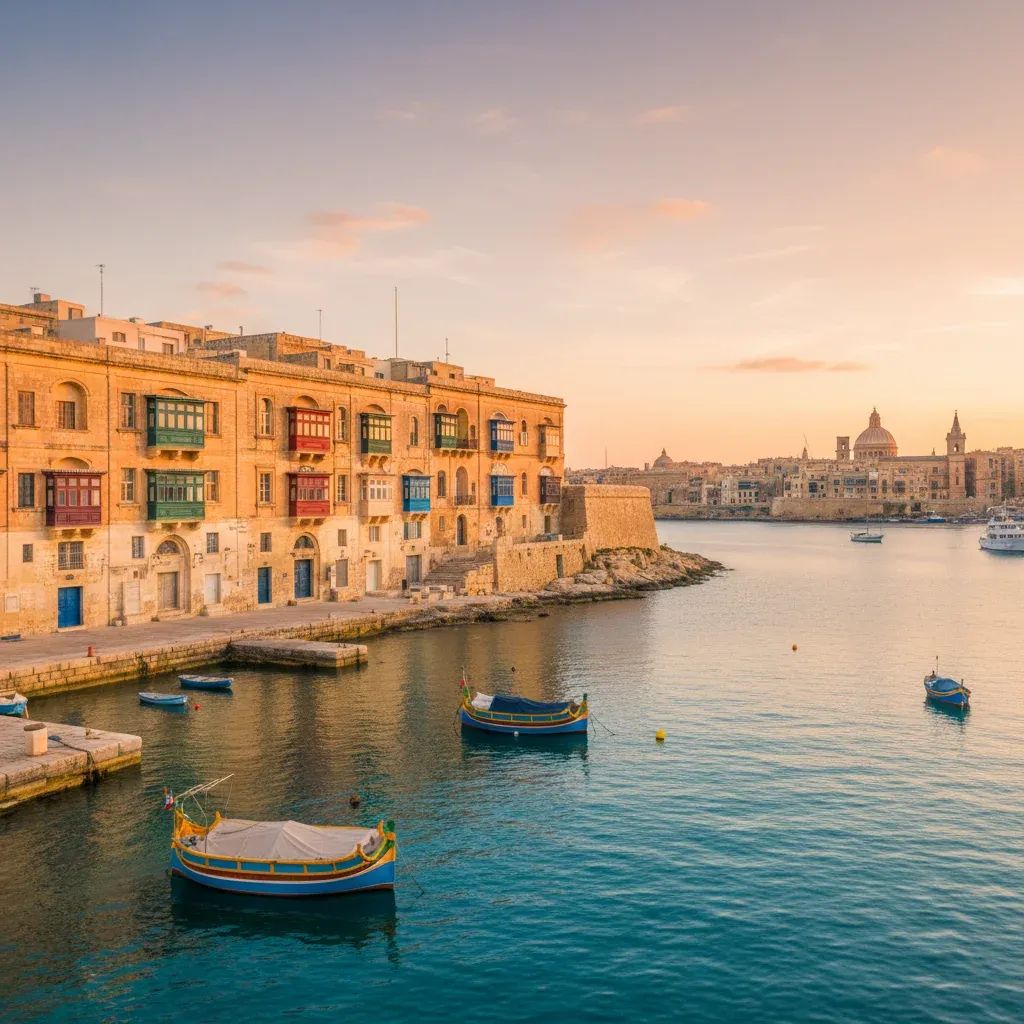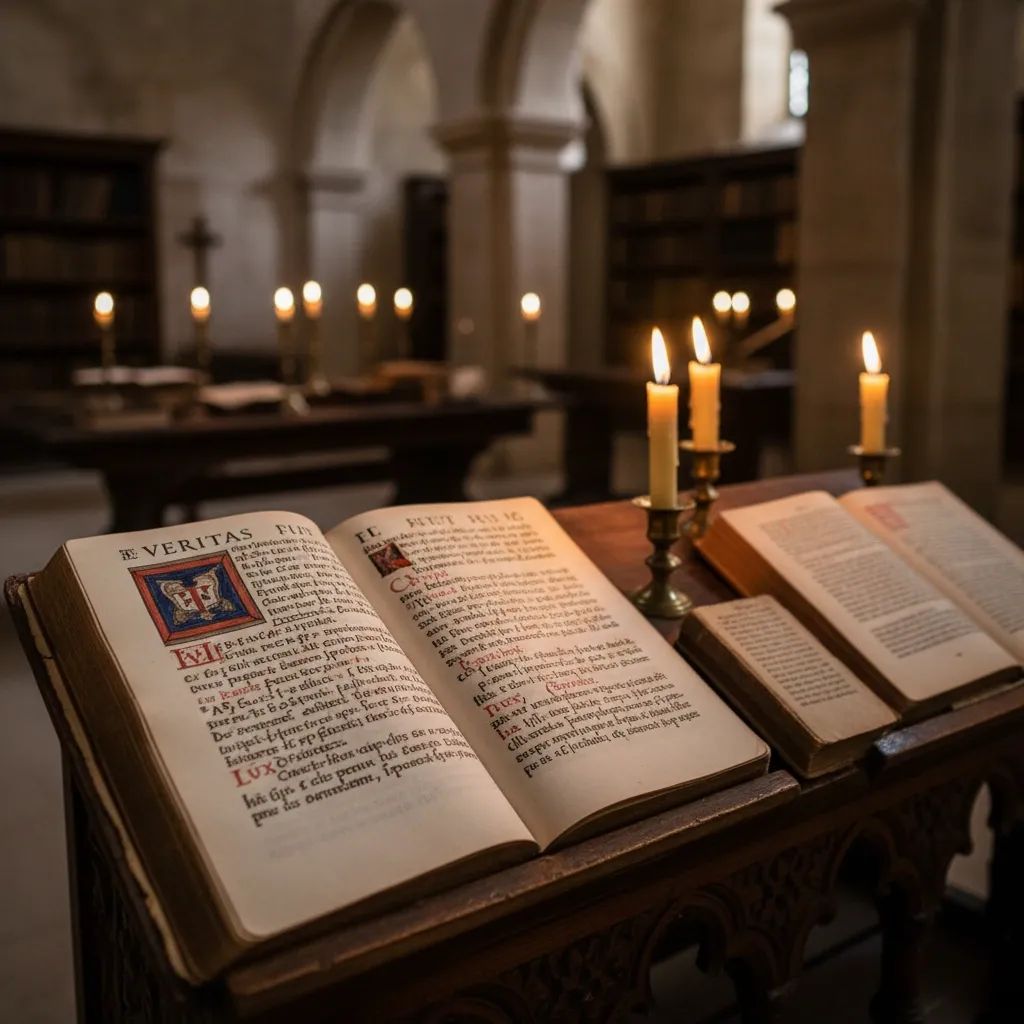
Klabb Kotba Maltin has released a Maltese translation of Umberto Eco's literary masterpiece—a decade-long endeavor that marks a significant milestone for Malta's officially bilingual linguistic landscape. The achievement positions Maltese, one of the EU's smallest official languages, alongside 45 others in rendering one of the 20th century's most intellectually demanding novels accessible to local Maltese-language readers.
While English dominates professional and expat circles in Malta, the language remains a cornerstone of the island's cultural identity. This translation represents a statement about Malta's commitment to preserving and modernizing Maltese as a living literary language capable of engaging with complex international works.
Why This Matters:
• "Isem il-Warda" marks the first time this 50-million-copy bestseller is available in Maltese, demonstrating Malta's linguistic infrastructure and cultural investment despite being a small nation in a predominantly English-speaking professional environment.
• The project took nearly 10 years to complete, reflecting the extraordinary complexity of Eco's 14th-century monastic murder mystery and the specialized work required to translate into minority languages.
• This translation demonstrates Maltese's capacity to handle dense philosophical discourse, medieval scholarship, and multilayered semiotics—affirming the language's role as more than everyday communication in Malta's bilingual society.
A Translator's Marathon
Adrian Stivala, a university academic and translator, undertook what proved to be one of the most formidable challenges in contemporary Maltese literary translation. The original Il Nome della Rosa, published in 1980, weaves together historical mystery, biblical analysis, medieval studies, and literary theory into a narrative dense with arcane references and Church politics from the 1300s.
Stivala's decade-long effort involved navigating prose that is notoriously demanding even for translators working into major European languages. The density and length of Eco's Italian original, combined with its frequent Latin passages and references to monastic rituals unfamiliar to modern readers, required constant scholarly judgment. Each decision—whether to preserve Latin sections intact or translate them into Maltese, how to render specialized theological terminology, how to maintain the novel's distinctive "voices and levels of meaning"—carried weight for the final reading experience.
The translator faced the additional burden of working into a language with fewer established conventions for certain philosophical and medieval terminology, demanding both linguistic creativity and rigorous scholarship. Where English, German, or French translators could draw on centuries of academic discourse in their languages, Stivala often had to forge new ground in Maltese.
Beyond Translation: Cultural Validation
The publication of "Isem il-Warda" carries implications beyond literary enrichment. For minority languages like Maltese—spoken by roughly half a million people worldwide—successful translation of canonical works serves as cultural affirmation, demonstrating that the language possesses the sophistication to express complex ideas and sustain demanding narratives.
This achievement is particularly significant for Malta, a small island nation officially committed to maintaining Maltese as a living language despite the pervasive influence of English in business, education, and digital spaces. For residents living in Malta—whether native speakers or long-term expats invested in understanding local culture—this translation represents a visible commitment to the island's bilingual heritage.
The translation is not merely about making a popular novel available. Eco's work integrates semiotics within fiction, requiring a language capable of handling abstract philosophical concepts alongside gripping storytelling. By proving Maltese equal to this task, the translation challenges any perception of the language as functionally limited or suited only to informal communication.
High-profile translations also introduce new vocabulary, registers, and stylistic possibilities into the target language. Medieval terminology, theological discourse, and Latin-influenced phrasing now have Maltese equivalents, expanding the linguistic toolkit available to future writers and translators. This process of language development is particularly valuable for smaller linguistic communities seeking to preserve and modernize their literary heritage in an increasingly globalized world.
What This Means for Malta's Literary Culture
Maltese-language readers now have direct access to a work that has shaped contemporary literature and popular culture across the globe. The novel's influence extends beyond the page—it inspired a 1986 film starring Sean Connery and continues to be studied in university courses on semiotics, medieval history, and narrative theory.
For students, scholars, and general readers in Malta who prefer consuming complex literature in their native language, "Isem il-Warda" offers an intellectually stimulating alternative to the steady diet of translated commercial fiction that dominates many minority-language markets. It also provides educators with a resource for discussing translation theory, medieval history, and literary analysis within a Maltese-language context.
The choice by Klabb Kotba Maltin—a publisher known for championing Maltese-language literature—to invest in this ambitious project signals confidence in Malta's capacity to sustain challenging translated works. The success or failure of this release may influence future decisions about translating other intellectually demanding classics into Maltese, shaping how the language evolves in the digital age.
Global Context
Eco's novel has achieved rare status as both a popular bestseller and an academic subject, selling more than 50 million copies worldwide. The author himself was known to work closely with translators, providing detailed dossiers to ensure cultural and linguistic equivalence across languages as varied as Japanese, Arabic, Turkish, Hindi, and Chinese.
Each translation confronts unique challenges based on the target language's structure and cultural context. English translators grappled with how to convey medieval Italian atmospherics; Japanese translators faced the challenge of rendering Western monastic culture for readers with no historical reference point; Arabic translators navigated theological discussions that touch on sensitive interfaith issues.
The Maltese version joins this international family of translations, each representing not just a linguistic conversion but a cultural negotiation—a process of making Eco's intricate medieval world comprehensible and engaging for readers who bring their own historical experiences and linguistic expectations to the text.
The Broader Translation Effort
This release contributes to a growing movement to make world literature accessible in smaller European languages. Similar efforts have brought canonical works into Icelandic, Luxembourgish, and Basque—languages with limited speaker populations but strong cultural institutions committed to linguistic preservation.
For Malta, where English dominates higher education and professional life, maintaining a robust Maltese-language literary culture requires continuous and deliberate effort. Translation projects like "Isem il-Warda" serve dual purposes: they provide culturally significant content in Maltese while demonstrating to younger generations—and to the international residents living in Malta—that their island's native language can handle any intellectual or creative challenge.
The decade Stivala spent on this project—longer than it took Eco to write the original—reflects both the technical difficulty of the task and the painstaking care required when working into a minority language with limited precedent for certain specialized vocabularies. His achievement sets a benchmark for future ambitious translation projects in Maltese, proving that even the most demanding works of world literature can find a home in the language and enriching Malta's multilingual cultural landscape.