A Sunday in May: Mtarfa Steps Into Its Wartime Past
The Mtarfa Local Council is reopening its military history calendar on May 17 with a full-day immersion that invites residents and visitors to walk through the town's role during World War II. The event runs from 9:30am to 5pm, free of charge. For anyone curious about Malta's World War II experience—or simply looking for a Sunday outing with substance—this is an opportunity to experience how the conflict reshaped ordinary towns.
Why This Matters
• Rare access to historical sites including the Commonwealth War Graves cemetery and historic military buildings
• Hands-on learning with primary sources: walk through displays, handle deactivated weapons, examine period radios and uniforms with volunteer historians present
• Local heritage engagement: the event draws substantial public turnout, creating interest in Mtarfa's wartime role
The Town's Wartime Role
Mtarfa was home to a significant British military hospital during World War II and sits close to the Ta' Qali airstrip, positioning it as part of Malta's strategic defensive infrastructure during the conflict. The cemetery and hospital buildings remain as tangible reminders of this period, making the town a meaningful destination for understanding Malta's wartime experience.
Morning Ceremony Sets the Tone
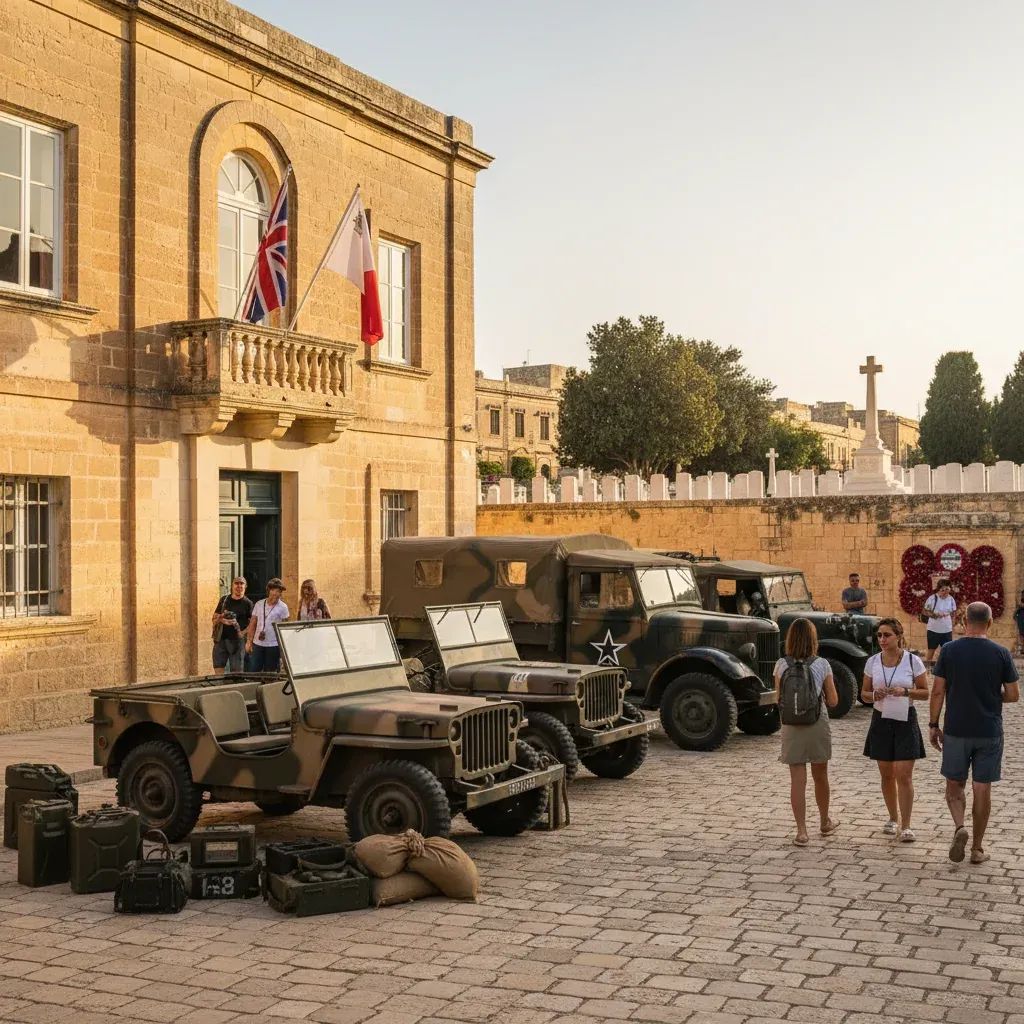
Programming begins at the Imtarfa Military Cemetery on Triq Buqana, a site containing 238 Commonwealth burials from World War II. This cemetery is a physical record of the conflict and offers visitors a solemn space for reflection on those who served.
Organizers will lay a wreath in remembrance, followed by a ceremonial salute from the Mtarfa Scout Group. From there, a convoy of restored military vehicles—lorries, jeeps, and support trucks authentic to the 1940s—will parade to the main event venue, offering bystanders a rolling tableau of the transport that sustained wartime operations.
Inside the Re-enactment Zones
The main venue transforms into multiple thematic stations. A soldiers' field camp and field kitchen demonstrate how troops cooked, slept, and maintained equipment under canvas—practical details that bring history to life. Re-enactors in period dress perform parade-ground drills and weapon-handling routines while audience members ask questions and, under supervision, handle deactivated rifles and functional period radios.
A Victory Kitchen tableau recreates the rationed-meal preparation familiar to Maltese civilians during the war—a hands-on way to understand the civilian experience. A mock wartime bar illustrates off-duty life for servicemen billeted in the town. Both zones employ costumed interpreters trained to explain historical context.
Displays of authentic WWI and WWII memorabilia—wireless sets, uniforms, personal letters, entrenching tools, gas masks—are arranged for close inspection. Volunteer historians stand nearby to explain provenance and the human story behind each object. Traditional Maltese folk games and a food court serving contemporary Maltese cuisine ensure that families with young children can spend several hours on-site.
Who Shows Up and Why They Come
Past editions have drawn substantial public turnout, reflecting both sustained local interest and draw from outside the immediate area. School groups from across Malta arrive as field-trip cohorts, finding the event offers practical, on-site learning about Malta's World War II history.
British visitors form a consistent subset of the attendance, many arriving with old photographs or service records seeking to understand the hospital and military sites where relatives may have been stationed. The event provides an opportunity to walk the town and engage with its wartime heritage, accompanied by costumed guides who can contextualize the historical significance of the location.
Practical Information and Access
Entry is free, though donations are welcomed at the cemetery gate. The main event venue is wheelchair-accessible, though the cemetery visit involves uneven gravel paths and requires sturdy footwear. Organizers recommend comfortable walking shoes and sun protection, as much of the programming takes place outdoors.
Parking in central Mtarfa may fill during the event. Public transport is a reliable option, with routes servicing the Ta' Qali area from Valletta connecting to local stops within walking distance of the main venue. Real-time updates and participant information are posted on the event's dedicated Facebook page.