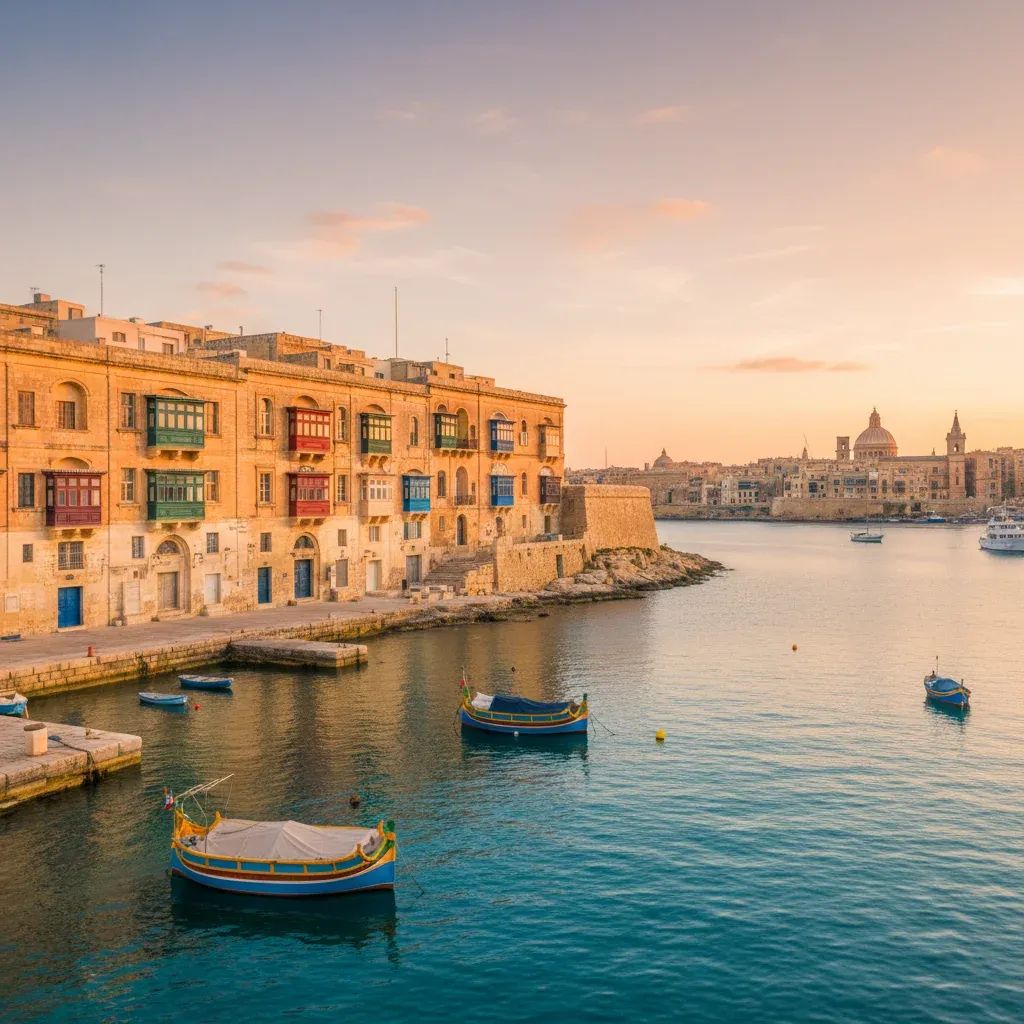
The Malta-born centenarian who watched from a church bell tower as bombers destroyed Valletta's Royal Opera House has turned 100, carrying with him a firsthand account of Malta's wartime devastation.
Cecil Bartoli, who marked his centenary on February 8, was 16 when he climbed into the belfry of the Floriana parish church with his brother to witness the air raid that obliterated the neoclassical theatre. From that vantage point high above Floriana, he saw the moment the building was struck. "It was coming from Hamrun," Bartoli recalled decades later, describing the aircraft's approach with the precision of someone who has replayed the memory countless times.
Why This Matters
Bartoli is among the last living witnesses to Malta's wartime experience. His personal memories provide invaluable perspective on civilian life during the bombing campaigns and the island's struggle for survival during World War II.
A Teenager's View from the Bell Tower
Born in Floriana in 1926, Bartoli came of age during a period when Maltese civilians had to take shelter frequently as air raid sirens wailed. The Floriana community, positioned between the Grand Harbour and Valletta's fortifications, experienced heavy bombardment during the war.
Bartoli and his brother sought out vantage points from which to observe the raids. The belfry beneath the Floriana church bells became their perch for observing the aerial warfare unfolding over their island. "It was quite adventurous," Bartoli admitted in recent interviews, expressing regret that he lacked a camera to document what he saw. By the time of these raids, Maltese civilians had become accustomed to the bombardment, learning to identify aircraft by sound alone.
The Night the Opera House Fell
The Royal Opera House had stood as one of Valletta's most iconic structures for decades. During the sustained bombing campaign, the historic building sustained a direct hit. Bartoli watched from his position in the bell tower as the bomb struck, and the landmark was effectively destroyed, leaving only fragments of its former grandeur standing.
Life Underground and Survival
Bartoli's family experienced the war's hardships firsthand. His family was evacuated multiple times to inland towns as bombing intensified. As a boarder at a school in Cottonera—heavily bombed during the war—Bartoli was evacuated with approximately 100 schoolmates to Mdina, where they sheltered in underground chambers.
He vividly recalled the strain of living through constant air raids and the desperate conditions faced by civilians. He remembered submarines arriving in Malta's harbours and the arrival of vital supply convoys that brought food and fuel to the island when supplies had reached critical levels. "That was our salvation," Bartoli said of the relief these supplies brought to a population facing severe hardship.
What This Means for Malta's Living Memory
Bartoli's testimony is part of a rapidly closing window. As fewer centenarians remain who witnessed Malta's wartime experience firsthand, their personal accounts become increasingly precious historical records. Museums dedicated to preserving Malta's wartime history have prioritized recording survivor testimonies, recognizing that these voices document an irreplaceable chapter of the island's past.
For residents and visitors to the sites connected to wartime Malta, Bartoli's account adds a human dimension to the historical events. His memories of watching from the bell tower, of sheltering underground, and of the island's gradual recovery provide personal context to the broader wartime experience shared by Malta's population.
A Centenarian's Wish
Now 100, Bartoli expressed a single regret about his wartime adolescence: the absence of a camera. "I wish I had one to capture what I saw," he said. His descriptions—of planes descending, of the opera house being struck, of submarines and convoys—remain personal testaments to Malta's wartime ordeal.
As the island's population of wartime survivors dwindles, testimonies like Bartoli's underscore the importance of preserving oral history. Heritage organizations have launched efforts to archive survivor interviews, ensuring that future generations of residents can access these personal narratives.
For now, Bartoli's centenary serves as a reminder that Malta's wartime heritage is not merely architectural remnants. It is witnessed and remembered by people like Bartoli himself—individuals who lived through a defining chapter in the island's history when survival itself was uncertain, and who watched historic moments unfold from places like a bell tower in Floriana.