
Gozo's Environmental Enforcement Crisis: Only 39 Fines Against Malta's 1,385 in 2025
Gozo has a critical enforcement gap that residents are beginning to recognize as a governance problem. Between 2024 and late 2025, the sister island received only 41 environmental enforcement notices while Malta proper recorded 2,459—a disparity that becomes striking when population proportions are factored in. In 2025 alone, the Environment and Resources Authority (ERA) issued 1,385 fines across Malta, yet only 39 in Gozo. The reason is straightforward: Gozo operates with no dedicated environmental police unit, leaving violations from illegal construction to wildlife trafficking largely unaccountable.
Environmental groups and the Malta Ranger Unit (a government environmental monitoring organization) have been documenting this enforcement vacuum for years. The March farm incident—when masked individuals fled a Gozo farm as officers arrived to investigate animal welfare concerns—highlighted how enforcement gaps can lead to incomplete police action and delayed justice. But individual incidents mask a deeper structural problem affecting all residents on the island.
The Enforcement Gap in Numbers
Administrative fines tell a revealing story about how environmental protection plays out across the archipelago. Between 2024 and November 2025, official records show 34 enforcement notices in Gozo during 2024, with just 7 issued by November 2025. Victoria, Gozo's administrative center, saw a marginal improvement—fines increased from 3 to 20 year-over-year—but this modest uptick masks the fundamental issue: there is no dedicated environmental police capacity on the island.
When ERA officials explain the gap, they suggest that "Gozitan communities are more self-correcting" and that local councils resolve environmental matters before formal enforcement becomes necessary. Environmental advocates working on the ground offer a different interpretation: the absence of visible enforcement creates conditions where violations accumulate undetected and unpunished. Without dedicated resources and specialized training, violations go unreported and unaddressed.
How Animal Welfare Cases Reveal Systemic Breakdown
Recent animal welfare incidents illustrate the enforcement challenges residents witness. Between 2020 and 2022, the Animal Welfare Directorate conducted 107 inspections across Gozo but secured charges against only 8 individuals for abuse or abandonment—approximately a 7% conversion rate from investigation to prosecution.
The Xewkija cattle farm case in October 2025 demonstrated typical enforcement delays. Despite complaints and intervention by welfare officers, police faced obstacles in executing enforcement action. Only one of two mistreated dogs was ultimately removed, leaving the case unresolved. In June 2023, Raymond Bajada from Sannat was arraigned after two fox terriers were shot on his farm—a case highlighting how reactive rather than preventive Gozo's approach has become.
Why District Police Cannot Fill the Enforcement Void
Gozo relies on general district officers to handle environmental crimes—a model that fails for both practical and legal reasons. These officers juggle traffic accidents, domestic disputes, theft investigations, and emergencies alongside environmental compliance, and most lack specialized training in biodiversity law, protected species protection, or ecological impact assessment.
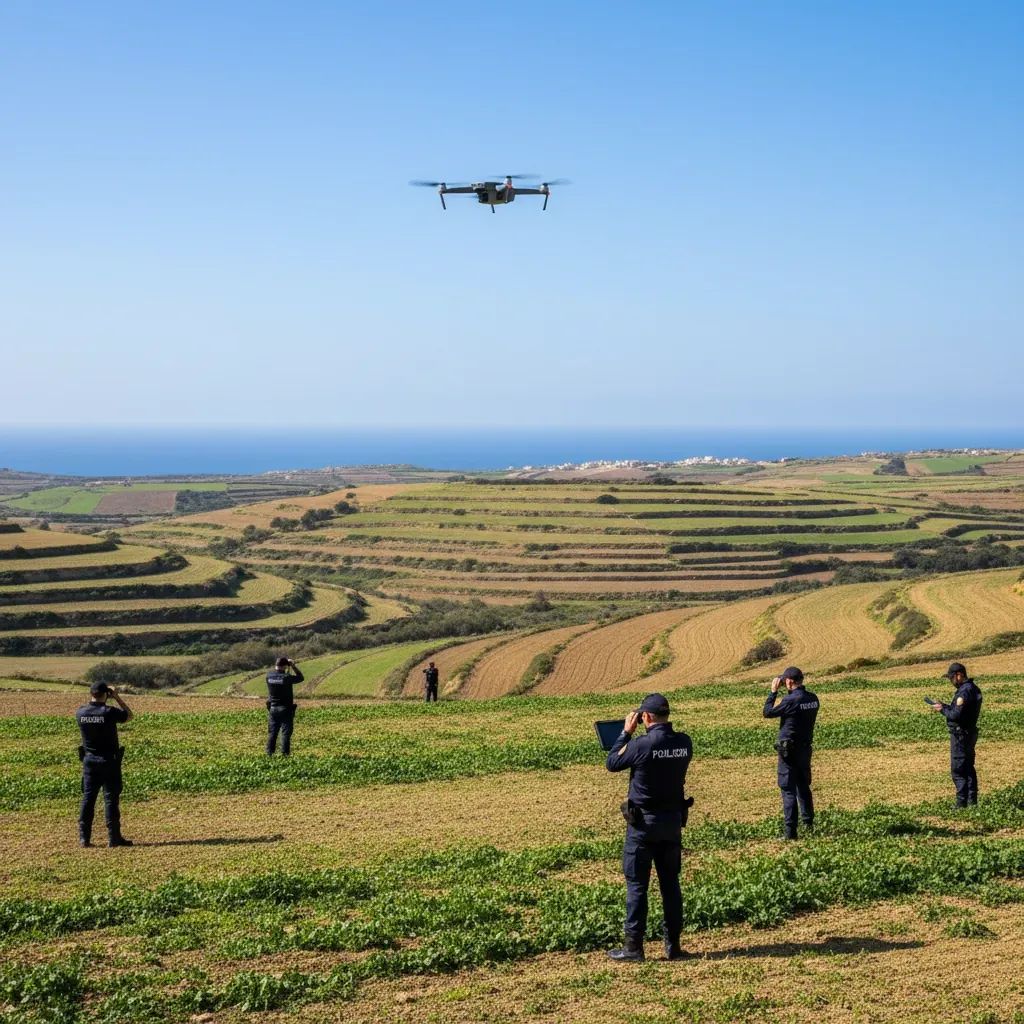
The absence of dedicated resources compounds the problem. There are no drones for aerial surveillance of rural violations, no night-vision cameras for after-hours monitoring, and virtually no organized evening patrols. This creates what environmental advocates describe as a "window of impunity"—the hours after sunset when countryside enforcement essentially ceases. Without specialized units conducting rural patrols, violations remain unmeasured and unaddressed.
The BirdLife Malta organization (an environmental conservation group) has flagged this gap as particularly acute during spring and autumn migratory seasons, when protected species remain vulnerable to enforcement gaps that rely primarily on reactive reporting rather than active deterrence.
What This Means for Gozo Residents
For those living in Gozo, the enforcement vacuum translates into tangible consequences. Illegal construction outside development zones continues unchecked, degrading the island's rural character and suppressing property values in nearby legitimate developments. Unregulated agricultural practices—particularly unauthorized boreholes that drain groundwater—threaten an already precarious water supply that residents depend on.
Residents operating legitimate businesses face unfair competition from those skirting environmental regulations with minimal consequences. Ecotourism operators marketing Gozo as a nature destination cannot fully capitalize on that positioning when habitat degradation persists unchecked. Law-abiding property owners and entrepreneurs effectively subsidize the competitive advantage of environmental violators, creating market distortions that legitimate operators absorb as a cost.
What Environmental Groups Are Demanding
Both the Malta Ranger Unit (a government environmental monitoring organization) and Momentum (an opposition political party) have articulated specific reform requirements: establishing a dedicated Environmental Protection Unit Police in Gozo with specialized environmental training for officers; deploying surveillance technology including drones and thermal imaging; authorizing extended enforcement hours, particularly during evening periods; and providing legal backing for on-the-spot fines to increase certainty of consequences.
The proposals emphasize strengthening penalties for repeat violations and securing adequate funding for complex investigations involving protected species, illegal structures, and agricultural crimes. Without these structural changes, environmental legislation remains theoretical rather than operational.
The Immediate Path Forward
The March farm incident should function as a catalyst rather than a temporary crisis. Environmental groups have presented evidence-based proposals for establishing Gozo's Environmental Protection Unit Police, complete with specific equipment needs, staffing recommendations, and legislative backing. The Malta Government has the administrative capacity to implement these reforms through existing budget structures and institutional frameworks.
Without action, Gozo's environmental laws will effectively remain optional—enforced sporadically when public pressure reaches critical levels and ignored routinely during quieter periods. For residents committed to both environmental stewardship and fair economic competition, that status quo represents a significant governance failure on an island where natural character is simultaneously cultural identity and economic asset.


