
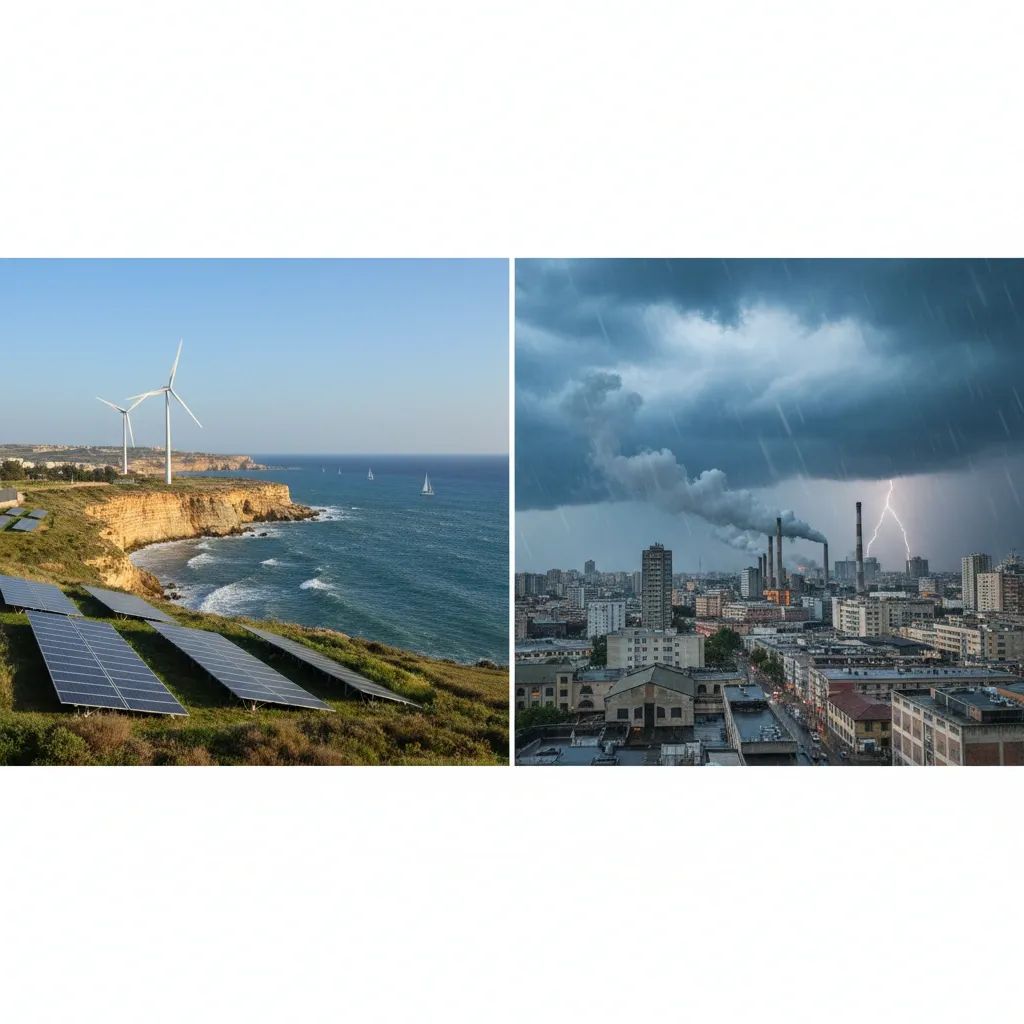
Malta's energy vulnerability sits at the intersection of geography and geopolitics, and Prime Minister Robert Abela is not content to absorb the cost quietly. On March 20, he stood before fellow European leaders in Brussels and made a straightforward case: when global oil prices spike because Russian missiles are flying across the Middle East, island economies feel the tremor differently than continent-anchored states. The question is whether the European Union will structure its policies to acknowledge that reality—or whether peripheral member states will continue to subsidize their way through crises not of their making.
Why This Matters
• Energy inflation cascades through island economies with multiplier force: A 10% crude oil rise hits mainland Germany once; it hits Malta twice—first at the import terminal, then again through compounding transport and logistics fees.
• The second Sicily-Malta interconnector (due mid-2026) will cut electricity costs materially and reduce the government's subsidy burden once it becomes operational.
• A Russian shadow tanker adrift in the Mediterranean underscores that energy security now includes managing environmental time bombs—the Arctic Metagaz incident demonstrates a collective EU vulnerability that no single state can solve alone.
The Geography Tax That Nobody Discusses
When oil traders in Rotterdam see crude rise 10%, they are watching one price point. When the Maltese government sees the same trend, it faces a different calculus entirely. Fuel arrives by ship, so transport margins get added. Electricity is generated from imported fuel, so generation costs climb. Food and goods come by container, so import prices rise. The compounding effect means Malta's inflation from a global energy shock is structurally steeper than economies with domestic production, pipeline networks, or diversified supply sources.
Abela framed this at the Brussels summit as a Single Market problem rather than a Malta problem—strategically important distinction. The EU's energy consolidation framework, he argued, assumes a mainland geography where interconnected pipelines and grid infrastructure allow energy to flow freely. It works for France, Germany, and Central Europe. For countries not physically connected to the continental network, consolidation often means absorbing shocks individually while waiting for infrastructure projects that remain years away.
The arithmetic of government response adds another layer. Since 2022, when the Ukraine crisis sent energy prices careening upward, Malta's government has absorbed the gap between international wholesale energy costs and what households and businesses actually pay at the pump and meter. Retail electricity and fuel prices remain stable—a deliberate policy choice that shields the population from price swings but diverts government spending from hospitals, schools, and infrastructure. Officials are projecting 2.1% overall inflation in 2026, well below EU average, primarily because energy subsidies are working.
The silent question hanging over this strategy: how long can it persist? A prolonged Middle East conflict, fresh supply disruptions, or simply deteriorating global conditions could force uncomfortable fiscal choices. The government cannot indefinitely shield the Maltese population from world markets. At some point, the bill becomes incompatible with other priorities.
Peripheral Economies Face Asymmetric Risk
The war in the Middle East matters more to island economies than to larger, better-buffered states. A 10% crude spike creates manageable adjustments in Berlin or Paris through reserve drawdowns, pipeline rerouting, and domestic energy sources. In Malta, where nearly all energy arrives by ship and the entire economy depends on imports, the same shock cascades across generation, transport, food, logistics—essentially every aspect of economic life.
The regional picture reveals the common predicament. Cyprus recorded just 0.9% overall inflation in February despite an 88% energy import dependency, a feat achieved through similar subsidy strategies. Cypriot authorities openly acknowledge that a sustained Middle East conflict could trigger fuel increases of 5–10%, with electricity generation climbing another 5%. Worse-case scenarios could tip the economy toward recession.
Greece chose a different tool. Rather than absorb costs through the state budget, Athens imposed temporary profit margin caps across the fuel supply chain through June 2026, with special relief for island regions accounting for higher logistics. It is a blunter instrument—suppliers face margin compression, which dampens competition and discourages investment—but it signals that Mediterranean economies are improvising defensive strategies, all imperfect, all designed to buy time until infrastructure catches up.
Infrastructure as the Real Long-Term Answer
The most concrete relief lies in a cable beneath the sea. Malta's second electricity interconnector with Sicily—a 122-kilometer high-voltage line carrying 225 megawatts—is scheduled for operation in the second quarter of 2026. Once live, it will effectively double Malta's grid interconnection capacity. The island moves from isolated energy pricing to direct access to the European continental wholesale market.
What this means functionally: when solar and wind are abundant in Sicily and southern Italy, particularly during summer peaks, Malta taps cheaper power directly from the grid. When global prices spike, Malta is no longer hostage to expensive local generation burning imported fuel. The interconnector transforms Malta from a dead-end energy node into a network participant. Electricity costs will moderate. The political space for retail price increases without triggering public anger shrinks.
Malta's Recovery and Resilience Plan, updated with REPowerEU components, builds the technical scaffolding around this infrastructure. Mandated by August 2026: grid expansion, centralized battery storage, electrification of road transport. These upgrades create the foundation for absorbing renewable energy and integrating floating offshore wind projects that eventually feed into the system.
The interconnector is not a panacea. It will not solve energy independence or eliminate transport and logistics premiums. But it moves the needle materially and signals that infrastructure investment, not subsidy alone, is the path forward.
The Tanker: When Energy Security Becomes Environmental Risk
While Abela pressed Brussels on price stability, another urgency surfaced. The Arctic Metagaz, an abandoned Russian tanker, is adrift in Mediterranean waters—part of Moscow's "shadow fleet" designed to evade sanctions. Damaged in what Italian and EU analysts believe was a drone strike in early March, the vessel caught fire and now drifts as a floating hazard carrying liquefied natural gas.
Nine EU member states, including Malta, Italy, Spain, Greece, and Cyprus, sent a joint letter to EU Commission President Ursula von der Leyen demanding coordinated action. Italian authorities described the situation bluntly: the tanker is an environmental bomb. It initially moved between Malta and Italian waters before entering Libyan territorial waters, complicating response protocols.
The episode reveals a dimension of energy security that price controls do not address: the risks of sub-standard vessels operating outside international maritime standards. Malta, as a major shipping registry and bunkering hub, has direct exposure. A catastrophic spill or explosion would devastate Mediterranean fisheries, tourism, and coastal ecosystems—entire economic sectors that subsidies cannot protect. The incident also illustrates that energy vulnerability now includes managing not just market volatility but geopolitical hazards: aging Russian tankers, sanctions evasion, drone warfare, and environmental time bombs in shared maritime space.
What Households and Businesses Face in Practice
For most Maltese families, government energy subsidies translate into predictable monthly bills decoupled from crude oil swings. This is tangible relief: no sudden 30% spikes on heating or fuel costs when geopolitical crises flare. The trade-off, rarely discussed openly, is that someone pays the difference—specifically, all taxpayers as the government reallocates budget priorities.
For businesses, the picture is less rosy. Retail price caps do not fully offset input costs. A food importer paying capped fuel prices still faces elevated shipping fees, customs expenses, and supply chain friction that official caps do not touch. The extension of the Emissions Trading Scheme to maritime shipping in 2026 adds another layer of expense, particularly burdensome for an island where nearly all goods and fuel arrive by sea.
Malta's negotiating position at the EU level focuses on securing special provisions and derogations that account for this unique cost structure. The argument is straightforward: uniform carbon pricing imposes disproportionate costs on states lacking domestic alternatives and facing mandatory maritime transport.
Regional Coordination and EU Response
Across the Mediterranean, the EU is rolling out targeted initiatives. Cyprus holds the EU Council presidency in the first half of 2026 and is explicitly linking energy security with climate policy and competitiveness. Greece's "Islands Decarbonization Fund," backed by European Investment Bank financing, is channeling resources into grid interconnections and renewable projects with battery storage, aiming to retire expensive diesel generators powering isolated communities.
The European Commission's "Citizens' Energy Package" aims to lower bills and empower households in the clean energy transition, with specific emphasis on islands facing structural cost disadvantages. The "New Pact for the Mediterranean" and the "Trans-Mediterranean Energy and Clean Tech Cooperation Initiative" (expected early 2026) are designed to position the region as a renewable energy hub while addressing the financing and grid connectivity barriers that have historically hindered island development.
These initiatives suggest EU acknowledgment that peripheral island economies cannot rely on market forces alone. Targeted policy architecture, not just subsidies or price caps, is necessary.
What Abela Is Actually Asking For
When the Maltese Prime Minister urged the EU to "consolidate the Single Market" in ways benefiting peripheral states, he was not seeking charity. He was asking for policy design that recognizes how uniform rules often impose asymmetric costs on island economies. The second interconnector helps. Battery storage investments help. But structural vulnerabilities rooted in geography require structural EU solutions: tiered ETS provisions that account for mandatory maritime transport, trade agreements reducing input costs, coordinated energy diplomacy stabilizing global markets, and Mediterranean infrastructure investment benefiting the region collectively.
Abela's intervention also carried an implicit message about burden distribution. Europe collectively gains from Single Market integration, but the costs of shocks are not evenly distributed. Peripheral states absorb disproportionate damage precisely because they lack buffer zones—domestic production, pipeline networks, strategic reserves, economic diversification—that protect larger economies. If the EU expects peripheral members to remain integrated and stable, EU policy must reflect that reality rather than assume away the structural disadvantages of island geography.
The Practical Timeline
Malta's immediate priority: ensure the second interconnector becomes operational on schedule in mid-2026. This will accelerate the shift from isolation-dependent energy pricing to wholesale grid access. The interconnector will not solve all structural vulnerabilities, but it will materially reduce marginal electricity costs and prove the viability of renewable energy imports from Sicily and southern Italy.
Longer term, Malta's strategy is pragmatic: extract maximum energy security, price stability, and infrastructure investment from Single Market membership for a small import-dependent economy. Recovery and Resilience Plan investments represent concrete infrastructure gains. Diplomatic pressure on energy pricing and peripheral state exemptions reflects realistic acknowledgment that geopolitical volatility will persist and small economies cannot weather it alone.
What remains unresolved is the fiscal sustainability of Malta's current subsidy model and whether EU-level policy will evolve fast enough to address the asymmetric vulnerabilities of island economies. For now, Abela has staked out Malta's position clearly: peripheral states deserve a share of Single Market benefits proportionate to their integration costs, and energy policy must be calibrated to reflect geographic and economic realities rather than mainland assumptions. The Brussels summit was less about seeking emergency rescue and more about placing a marker: recognize the structural problem or watch peripheral economies face harder choices ahead.


