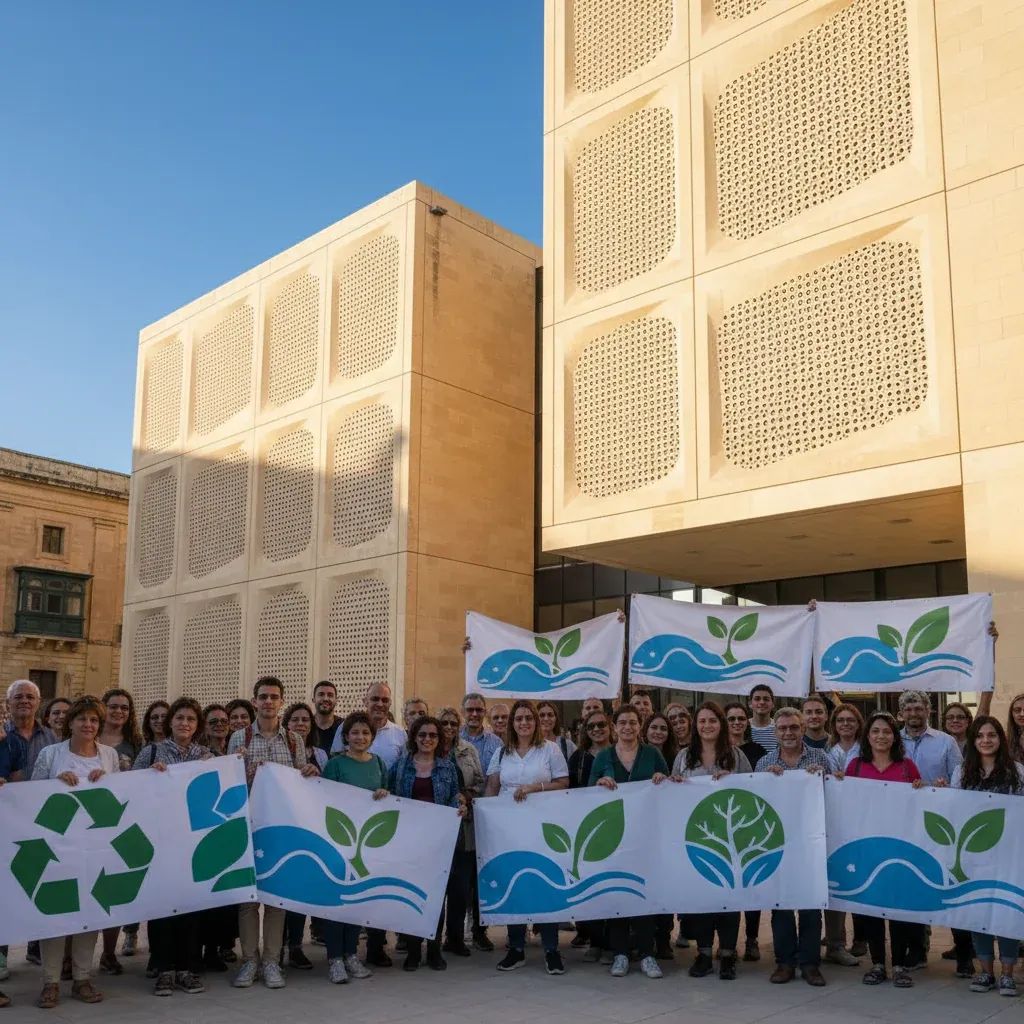
Third parties are staging a coordinated challenge to Malta's political establishment with less than two months before the May 30 election. The ADPD Green Party and Momentum have formally aligned their campaigns, fielding a combined slate of candidates across all 13 electoral districts while maintaining separate organizational identities. Malta has been governed exclusively by either the Labour Party (PL) or Nationalist Party (PN) since independence, with no third party ever securing parliamentary representation. The two-party strategy hinges on persuading voters to exploit Malta's single transferable vote mechanism—ranking candidates from both parties to accumulate transfer votes that could breach the typical 8-12% district threshold neither party commands alone.
Why This Matters
• Two-party cartel confronted: ADPD and Momentum are explicitly targeting the Labour and Nationalist stronghold that has controlled parliament since 1971. Current polling by MaltaToday shows their combined support at 5.8%, still a gap, but both parties believe coordinated preferences can compensate.
• Concrete policy alternatives ready: From transport reform to mandatory government transparency to construction hour restrictions, the alliance has outlined positions that diverge sharply from both major parties' offerings.
• Strategic voting required: The alliance won't win unless voters rank candidates systematically across both parties—an uncommon behavior in Maltese elections, where family and personal connections typically drive ballot ordering.
The Alliance Framework
The ADPD and Momentum partnership reflects pragmatism rather than full merger. The two organizations retain separate branding and party structures while agreeing to divide electoral territory strategically. ADPD fields 8 candidates across 13 districts; Momentum contests all 13. This division avoids internal competition in shared constituencies—a critical detail in a proportional system where every preference transfer matters.
Malta's Single Transferable Vote system allows voters to rank candidates numerically (1, 2, 3, etc.) in order of preference. When a voter's top choice is eliminated or elected with surplus votes, their ballot transfers to their next-ranked candidate—making strategic ranking crucial for smaller parties.
The arithmetic appears deliberate. ADPD leader Sandra Gauci anchors both the western districts (Qormi, Siġġiewi, Ħal Farruġ, and Luqa) and the northern belt (Mġarr, Mellieħa, St Paul's Bay, and Burmarrad). Carmel Cacopardo, ADPD's former chairperson, appears in Districts 7 and 11. Supporting candidates—Mario Mallia, Mark Zerafa, Brian Decelis, Melissa Bagley, and Marcus Lauri—complete the roster, typically contesting single or paired districts. Districts span from Valletta and the harbor areas (Districts 1-2) to the northern resort towns (Districts 9-10) and southern industrial zones (Districts 3-4), ensuring geographic representation across the island.
Momentum, in contrast, mobilizes a full 13-candidate team, offering voters a complete alternative ballot option across every geographic area. The two parties are now jointly instructing supporters: rank your preferred party's candidate first, then continue down the ballot with allied candidates. In transfer rounds, when initial preference counts don't yield seats, this coordinated ranking could theoretically aggregate enough votes to push alliance candidates across district quotas.
The Policy Rebellion
The alliance positions itself as a fundamental challenge to how Malta has organized itself politically and administratively. On governance transparency, Momentum proposes structural reforms that would essentially reverse the presumption currently embedded in Freedom of Information law. Rather than citizens requesting information and government deciding what to release, Momentum's framework would obligate automatic publication of all government contracts, magisterial inquiries (absent compelling exceptions), and departmental memoranda. Ministers would lose discretionary veto power, and officials who unlawfully delay or refuse disclosure would face daily penalties—creating real consequence rather than procedural delay.
The Nationalist Party has countered with annual asset declarations for ministers and MPs, including spouses. The Labour government has offered no comparable transparency package. Both major parties, ADPD and Momentum contend, have benefited from opacity. Patronage networks, politically motivated procurement, and questionable permit-granting thrive when documentation is fragmented and difficult to access. The alliance's position: radical disclosure is the price of restoring public trust.
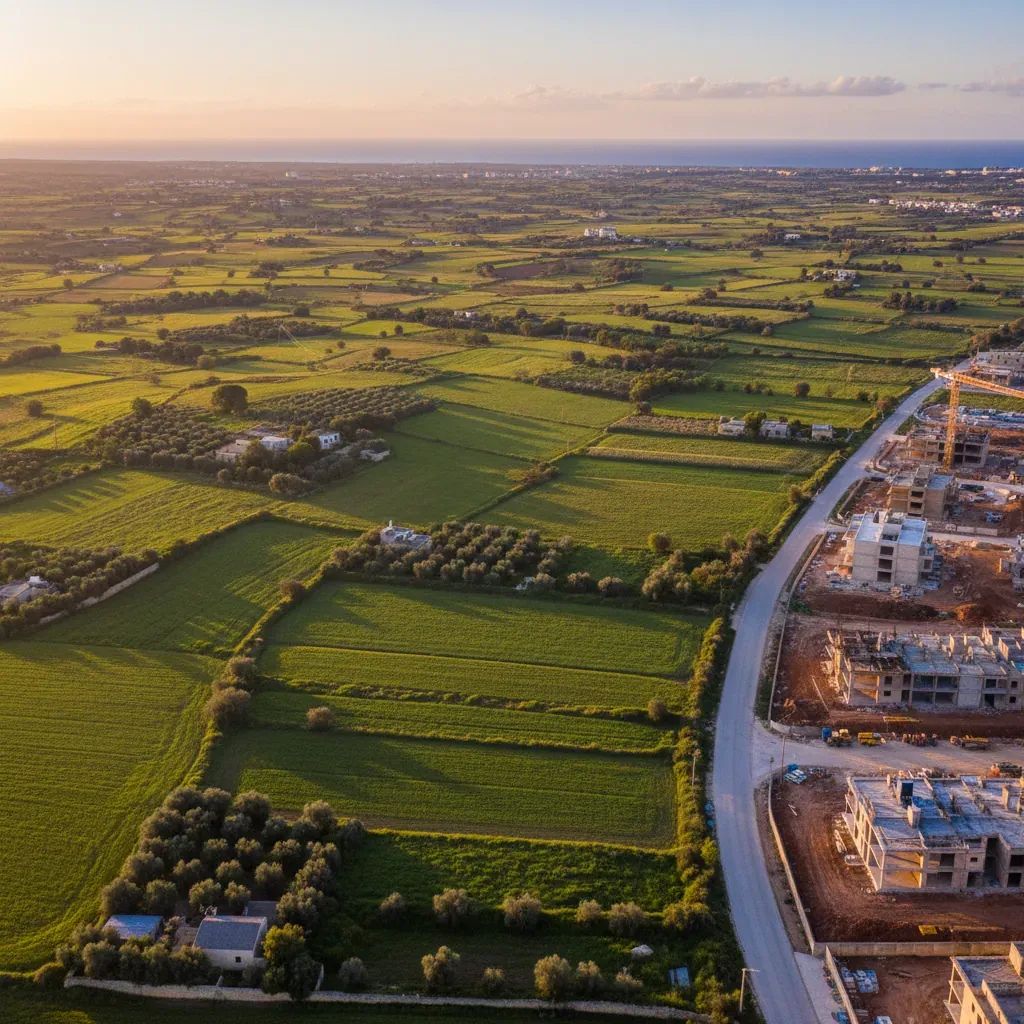
On the ground-level issue animating many voters—constant construction, noise pollution, and the visible transformation of residential neighborhoods—the alliance proposes immediate restrictions. Malta has one of Europe's highest construction densities, with development permits approved at a rate that has transformed neighborhoods—particularly in Sliema, St. Julian's, and Gzira—from low-rise residential areas to high-rise corridors over the past decade. A two-year moratorium on high-rise buildings, strict enforcement of Sunday/holiday bans on construction work, reduced daily construction hours, and protection of agricultural land form a bundled response. ADPD frames this as prioritizing "community well-being over unbridled profit."
The Nationalist Party has also signaled environmental concern, proposing a two-thirds parliamentary supermajority requirement for any development on Outside Development Zone land and annual expansions of protected agricultural areas. The Labour Party has historically accommodated developer interests, though it has introduced environmental safeguards incrementally. Neither major party offers the immediate moratoriums ADPD and Momentum are proposing.
This resonates because overdevelopment has become synonymous with loss of livability in Malta. Streets are choked with construction cranes. Property values have escalated beyond young professionals' earning capacity. Jackhammer noise has become a normalcy residents endure rather than an exceptional problem. The alliance is explicitly naming this as a policy failure of the existing system and offering tangible restrictions rather than vague commitments.
Housing, Social Equity, and Economic Structure
The alliance also targets structural inequities in housing access and pension systems. Young people cannot afford property in desirable areas—a crisis visible in Valletta, Sliema, and other urban centers where first-time buyers compete with investors seeking portfolio assets. ADPD frames housing access as a basic right. Momentum supplements this with a 15% flat tax rate for recent graduates during their first five years of employment, explicitly designed to retain talent and help young workers build savings.
Pension system reform represents another structural intervention Momentum is advancing. Current schemes disadvantage workers born before 1952 or 1962 and exclude contributions between ages 16 and 18. Momentum proposes modernizing this framework to ensure contribution periods align with actual work histories, not arbitrary birth dates. The alliance argues that temporary relief—the Labour government's €5,000 per-child payments or the Nationalist Party's €5,000 child trust funds—treat symptoms rather than root causes. True affordability requires confronting property speculation, restructuring labor taxation, and eliminating pension inequities that cascade through entire working lives.
The Electoral Arithmetic Problem
The alliance faces significant electoral obstacles. ADPD and Momentum together poll at 5.8%, according to March 2026 surveys by MaltaToday. Most electoral districts require 8-12% of votes cast to secure a seat. The gap is real and substantial. Breaking through requires voters to behave unusually—coordinating preference rankings across two parties rather than following family ties, personal relationships, or tribal affiliation to the Labour and Nationalist parties.
ADPD's recent history demonstrates how resistant this threshold is. In 2022, ADPD garnered approximately 1.5-1.7% nationally—a notable increase from 2017 (when its predecessor, Alternattiva Demokratika, achieved 0.83%)—but this translated to zero parliamentary seats. The party's former leader, Carmel Cacopardo, subsequently challenged the election results in court, arguing that electoral mechanics discriminated against smaller parties. That legal challenge went nowhere.
The question for 2026: Has voter appetite for political alternatives shifted materially? Are there sufficient residents in at least one or two districts willing to coordinate ballots systematically? Momentum's campaigning around "Bidla ta' Vera" (True Change) and ADPD's "Ilkoll" (All of Us/Together) slogan suggest an optimistic read. But polling-to-seat conversion requires discipline from voters and a genuine surge in third-party preference that current numbers don't yet demonstrate.
What This Means for Residents
For voters frustrated by continuous construction, skeptical of government transparency, or concerned about housing affordability, the May 30 ballot now presents an explicit option beyond Labour and Nationalist. The question is not whether ADPD and Momentum have coherent policies—they do—but whether Maltese voters will actually coordinate their ballots as the alliance instructs.
This requires breaking a decades-old voting pattern. Malta's electoral history shows persistent two-party dominance. Small parties have periodically emerged with credible platforms but failed to mobilize voter coordination. The alliance's gamble: that construction noise, housing anxiety, and frustration with opacity have reached a tipping point. If they're right, 2026 could mark a genuine fracture in Malta's political structure. If they're wrong, ADPD and Momentum will remain voices in the conversation rather than voices in parliament—still valuable for shifting what Labour and Nationalist consider politically viable, but absent from actual legislative power.
The mechanics favor the major parties, but the coalition is betting that enough residents have become sufficiently frustrated to overcome both structural and behavioral obstacles. That calculation will be tested in six weeks.