The Benna Dairy Facility Transition: What Residents Need to Know Right Now
The Malta Government has formally committed to a two-site strategy for local milk production: keep Benna running from Ħamrun while a new, purpose-built facility takes shape in Ħal Farruġ. The practical outcome is straightforward—dairy shelves stay stocked, Ħamrun eventually gets its promised park, and the sector gains modern infrastructure. But the clock on delivery remains frustratingly uncertain, and the real complications lie in execution rather than policy.
Why This Matters
• No supply gaps: The government has legally guaranteed lease extensions at the Ħamrun site, meaning your yogurt and milk brands won't vanish mid-transition.
• Ħamrun green space delayed further: The park conversion depends entirely on the dairy relocation, which has no fixed timeline announced.
• Industrial operations relocate: Ħal Farruġ residents will see what Ħamrun residents are losing—industrial milk processing operations with associated traffic and infrastructure.
The Current Limbo
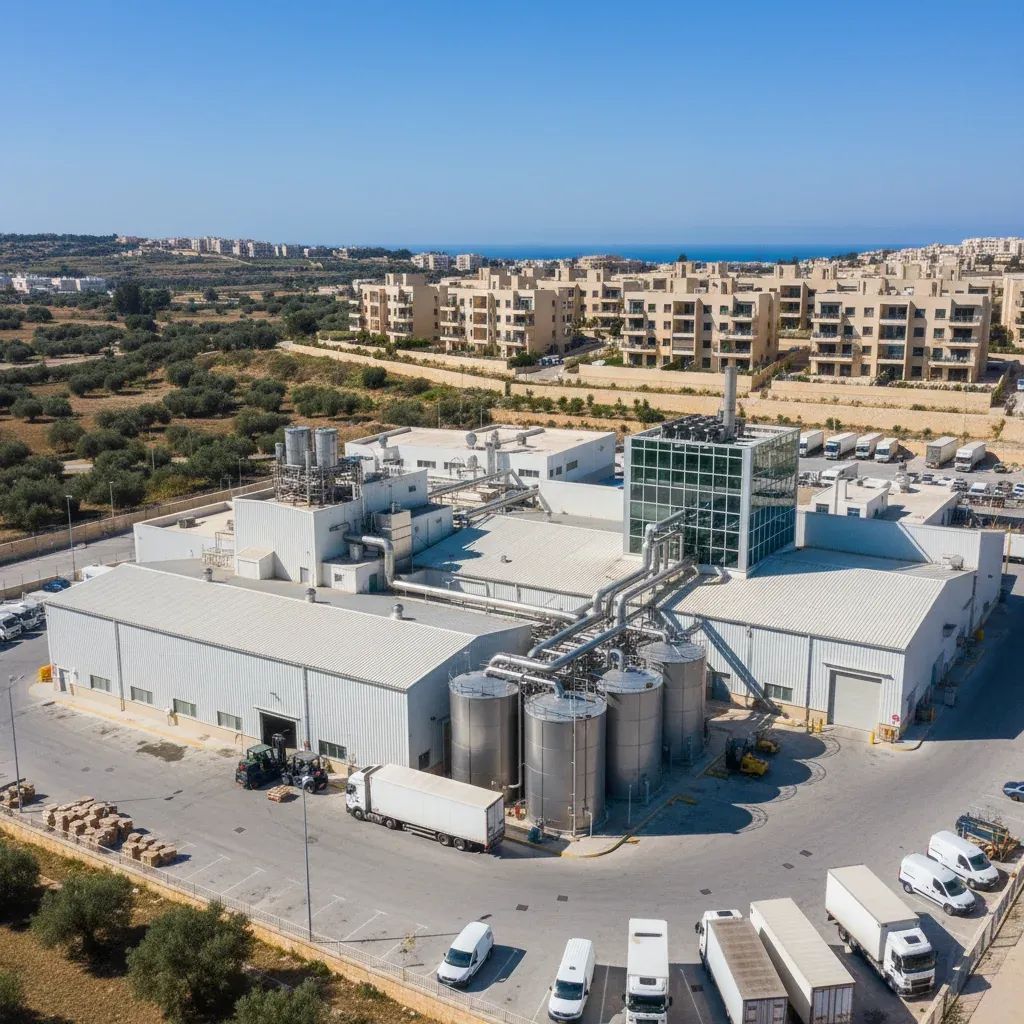
Malta Dairy Products Ltd. remains operational in the residential heart of Ħamrun, where the facility predates many surrounding homes by decades. The plant runs continuously—refrigeration cycles never pause, delivery vehicles arrive throughout the day and night, and the site's footprint leaves little room for expansion or modernization within its existing boundaries.
The Agriculture Ministry allocated land in Ħal Farruġ to address precisely this constraint: the inability to upgrade without relocating. However, allocation and construction are entirely different propositions. Feasibility studies are underway. No shovels have broken ground. No timeline has been publicly disclosed. The government has extended the lease at Ħamrun indefinitely—a protective measure that ensures uninterrupted production but simultaneously eliminates the urgency that might accelerate the new facility's opening.
For Malta's dairy producers, the limbo is both comforting and unsettling. The lease extension protects current revenue streams, but detailed plans for the Ħal Farruġ investment remain limited. The company has not publicly detailed the scale or cost of the relocation, nor has it signaled when construction might commence.
What Ħamrun Was Promised—And Is Still Waiting For
When the Labour Party entered the 2022 election campaign, the closure of the dairy plant topped a slate of five urban green space projects designed to reclaim industrial land for community use. The promise resonated with Ħamrun residents accustomed to the ambient disruption of heavy industry wedged into a neighborhood: the hum of refrigeration compressors, the rumble of refrigerated trucks at odd hours, occasional odor complaints, and the simple fact that a sprawling factory occupies ground that could serve a different purpose.
Nigel Vella, the local PL representative, has made the factory's closure a political priority for several years. His public welcome of the Ħal Farruġ allocation carries implicit conditions—the green space cannot materialize until the plant actually departs. The Environment Ministry acknowledged that conversion plans exist "in the works" but remain entirely dependent on relocation timing. That dependency has not shifted. The Ħamrun site remains operational, and the park exists only on planning documents.
For residents, the calculus is straightforward: no factory departure means no public space reclamation. The lease extension, while necessary for supply continuity, also extends the timeline for neighborhood transformation indefinitely.
Ħal Farruġ: Another Industrial Layer on an Already Crowded Locality
The Benna facility will not land in a vacant corner of the island. Ħal Farruġ is already absorbing substantial development pressure. The locality hosts the island's largest social housing initiative—a €40 million project delivering 267 apartments and 300 garages. Additionally, the Ħal Farruġ Industrial Zone, completed in 2022 by Projects Plus Limited, installed physical barriers between manufacturing and residential zones—a recognition that industrial and domestic coexistence requires active separation.
That coexistence has proven contested. In September 2025, the Polidano Group faced scrutiny after reports suggested the developer had expanded a site and encroached on public land despite the Planning Authority invalidating the relevant permit. The incident underscores how development in Ħal Farruġ can outpace regulatory oversight, a pattern that environmental organizations have flagged repeatedly.
When the Benna plant arrives, it will introduce permanent industrial operations into an area already managing multiple competing uses. Residents in nearby housing blocks and other parts of the locality will experience changes to their neighborhood's character.
Environmental Impact: The Missing Baseline
The Malta Ministry of Agriculture has not released a comprehensive environmental impact assessment for the new dairy facility. Environmental organizations have raised concerns about industrial developments proposed for Ħal Farruġ's Outside Development Zone, citing impacts on land use and landscape character.
The question of how the new Benna facility will operate—whether it will incorporate renewable energy, advanced waste management systems, water recycling infrastructure, or enhanced air quality controls—remains unanswered. Public statements have emphasized modernization and sustainability in abstract terms but provided no specific environmental commitments.
The Dairy Sector's Modernization Gamble
For Malta's milk producers, the Ħal Farruġ investment represents a rare government backing of sectoral infrastructure. EU regulations governing sustainability, animal welfare, and food safety tighten continuously. Local operators have struggled to maintain compliance while sustaining profitability in a small market with limited pricing flexibility. A modern facility purpose-built to contemporary standards addresses that structural challenge—provided the investment actually materializes.
Malta Dairy Products Ltd. has not disclosed capital requirements, operational timelines, production capacity targets, or construction phases for the new facility. Public discussion remains limited on these critical details.
For dairy producers supplying milk to the facility, the extended operational timeline at Ħamrun provides continuity and predictability. What remains unclear is the genuine timeline and specifications for the Ħal Farruġ investment.
Unanswered Timelines and Incomplete Planning
The allocation of land in Ħal Farruġ resolved a symbolic question—commitment has been made—but deferred almost every practical one. When does construction begin? What is the projected build duration? Will the facility include waste-to-energy systems, photovoltaic panels, or modern water recycling? What will final production capacity be? What environmental monitoring framework will govern operations? None of those details have emerged publicly.
For Ħamrun residents, the commitment to a future park remains contingent on events outside their influence. For Ħal Farruġ residents, a significant industrial operation now forms part of their neighborhood's permanent landscape. For Malta's consumers, the transition promises eventual supply stability and sector modernization, though at an unspecified point in the future.
The government has honored its commitment to allocate land and extend the lease. Whether the actual modernization of local dairy production materializes—when, how, and under what environmental conditions—depends on decisions that have not yet been made or publicly disclosed. The waiting continues.