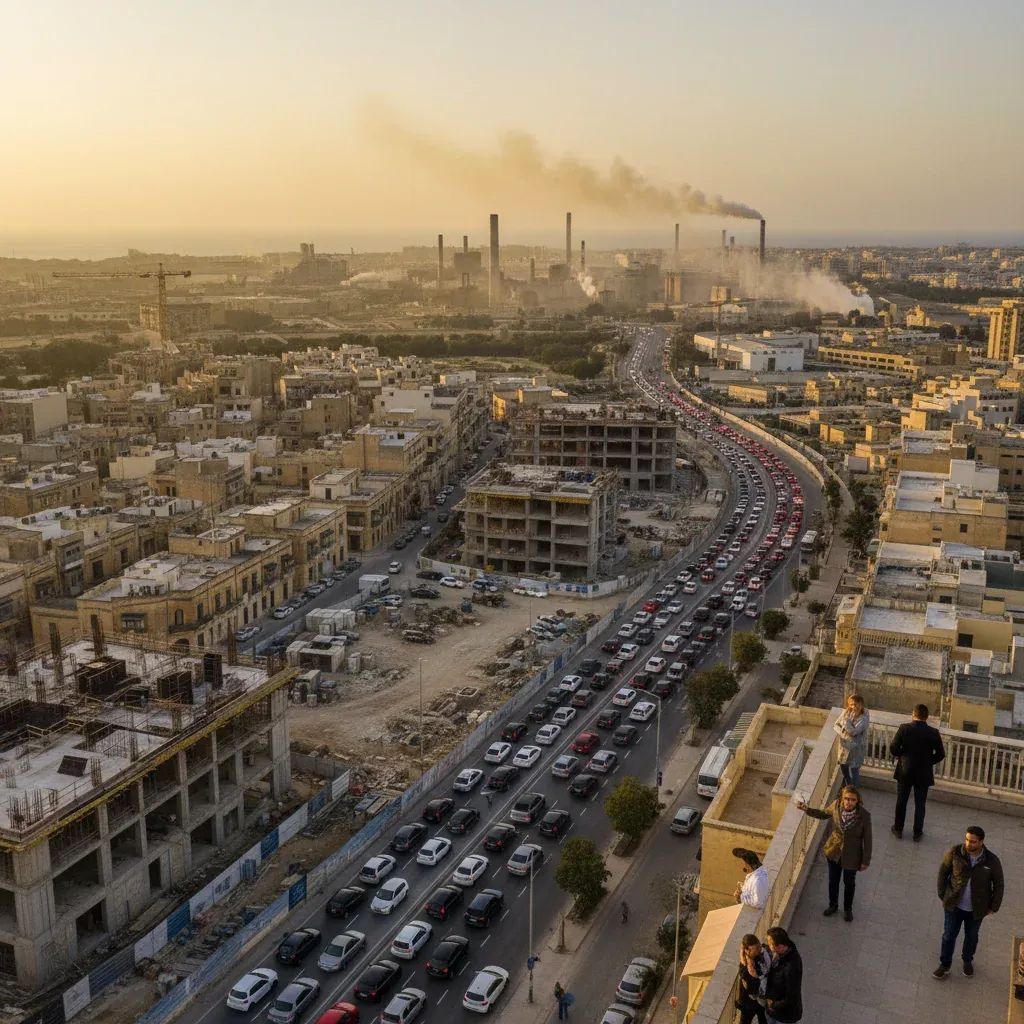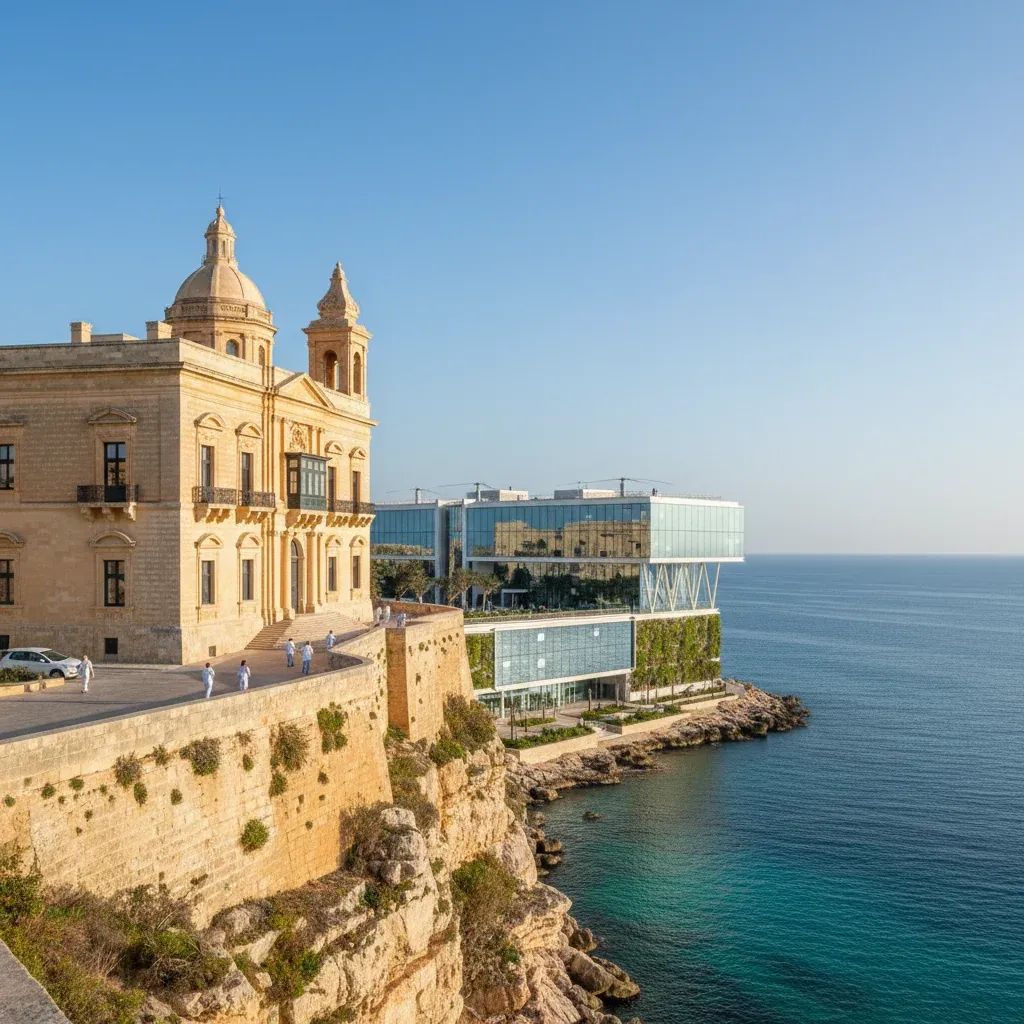
Malta's northern coastline may soon host a transformative—or controversial—addition to its healthcare landscape. If the Partit Nazzjonalista (PN) wins the May 30 general election, Selmun Palace in Mellieħa will be repurposed from an abandoned ruin into what party leader Alex Borg calls a "National Health Village." The facility would combine rehabilitation beds with workforce wellness screenings, positioning it as a flagship shift toward preventive medicine. Yet the proposal masks deeper questions about whether Malta's healthcare bottleneck is capacity or integration, monuments or staffing.
Why This Matters
• 60 rehabilitation beds for post-acute recovery (fractures, joint surgery) would target under-60s, potentially easing pressure on Mater Dei's overcrowded wards.
• Occupational health screenings—physical and mental—would extend to all workers; currently fragmented between private providers and employer schemes.
• Grade 1 heritage constraints and a tender for restoration issued in late 2023 raise delivery credibility questions; completion target is end of 2031.
• Labour's counter-strategy emphasizes strengthening 10 existing health centres and 30 community clinics rather than new flagship projects.
The Infrastructure Debate: Why Location and Environment Matter—and Don't
Borg's rationale for choosing Mellieħa rests on a specific wellness philosophy: the Baroque palace's clifftop setting, surrounded by natural beauty, becomes part of the therapeutic experience. He explicitly stated during the press conference that urban sites cannot replicate what Selmun offers. Internationally, this logic has merit. Scandinavian psychiatric facilities do emphasize gardens, natural light, and nature access. Yet Malta's geography complicates the picture. Roughly 40% of the island's population lives in the south—Birzebuġġa, Żabbar, Mqabba, and the Three Cities agglomeration. An hour's drive from Mellieħa to reach post-operative physiotherapy creates logistical friction for working families, staff rotations, and daily visitor access. The PN's acknowledgment that urban primary care cannot replicate natural settings does not solve the fact that distance remains a barrier to rehabilitation continuity.
The Grade 1 heritage designation, awarded in 2012, further constrains flexibility. Stone facades, vaulted ceilings, and period masonry cannot be casually modified. A tender for restoration of the building was lodged in late 2023. Heritage authorities will scrutinize every intervention. If structural damage has worsened during the 15-year abandonment, costs could exceed initial estimates substantially. The PN inherits this friction if it wins.
What a "National Health Village" Would Realistically Deliver
The dual-purpose design targets specific needs. The 60-bed inpatient wing would accommodate sub-acute patients: post-fracture mobilization, orthopedic recovery, and joint rehabilitation. PN candidate Ray Gatt was explicit that these are not acute beds; they do not replace Mater Dei's emergency department or trauma units. Instead, they function as a valve, moving stable patients out of tertiary wards within a few weeks, freeing beds for urgent admissions and elective surgery queues. This is a legitimate operational advantage if staffing and discharge planning are coordinated effectively.
The outpatient component offers occupational health screenings to the workforce. Workers would access structured physical and mental health assessments on-site. Currently, occupational wellness services are fragmented. Some employees benefit from corporate contracts with private clinics; others rely on employer insurance; portions of the self-employed and gig-economy workers receive minimal preventive testing. Standardizing this access—bringing it under one facility—theoretically catches cardiovascular risk, metabolic disorders, and stress-related mental health issues earlier. Candidate Norma Cutajar framed prevention as "the first line of defence."
Malta's disease burden supports the angle. The Health Promotion and Disease Prevention Directorate reports Type 2 diabetes prevalence at approximately 10% of the adult population, climbing alongside obesity and physical inactivity. Non-communicable diseases—diabetes, heart disease, stroke, cancer—account for 87% of deaths island-wide. Early detection and lifestyle intervention before hospitalization is theoretically cost-effective and reduces acute demand.
Yet this logic contains an unspoken assumption: that a scenic rehabilitation facility addresses upstream prevention. It does not. Prevention happens in family doctors' offices, in community clinics offering lifestyle counseling, and in public campaigns. A 60-bed rehab centre on a clifftop is a downstream treatment intervention, not preventive medicine. It catches the tail end of disease progression, not the beginning.
Malta's Existing Prevention and Rehabilitation Network: More Robust Than the Rhetoric Suggests
The PN's framing implies Malta lacks preventive infrastructure. The reality is more textured. The island operates 10 strategically distributed health centres and 30 community clinics providing primary care, chronic disease management, early intervention, and national screening programs. The National Screening Centre systematically administers programmes for breast, colorectal, cervical, and abdominal aortic aneurysm conditions. This infrastructure exists and functions. Its weakness is not absence but fragmentation and staffing constraints, not rehabilitation bed count.
For mental health specifically, Malta runs five Community Mental Health Rehabilitation Centres—in Floriana, Qormi, Paola, Cospicua, and Żejtun—providing ongoing support and reintegration for adults and young people managing psychiatric conditions. Mount Carmel Hospital operates 520 beds, a per-capita capacity exceeding the EU average. A new 120-bed acute psychiatric hospital is planned for the Mater Dei campus, with a 25-patient day hospital component, designed to replace Mount Carmel's aging infrastructure and shift toward community-based delivery under the Mental Health Strategy 2020–2030. This pipeline of modernization is already underway.
Physical rehabilitation capacity exists at Karin Grech Hospital, providing geriatric and post-acute services. The facility operates near capacity during peak periods; a 60-bed sub-acute centre would add volume. But volume alone does not fix what clinicians and administrators identify as the real bottleneck: the fragmentation of occupational health screening, insufficient integration between community clinics and specialist services, and workforce shortages in physiotherapy, occupational therapy, and mental health nursing.
The PN's proposal addresses one piece—a dedicated facility for worker wellness—but sidesteps the harder operational work: weaving existing services into coherent pathways and staffing them adequately.
Labour's Counter-Narrative: Primary Care First, Monuments Second
Former health minister Chris Fearne, now a Labour MP, has attacked the PN proposal as a distraction from foundational needs. He argues Malta's bottleneck is not rehabilitation capacity or scenic locations; it is the adequacy of family doctors and community clinics. Fearne contends that "care navigator" services—which the PN touts as innovation—have existed within Malta's hospital system for years, undercutting claims of novelty.
Labour's counter-strategy centres on consolidation and expansion of existing infrastructure. The party pledges €40 million for a regional health hub in Paola, upgraded or new health centres in Kirkop, Gżira, and Birkirkara, and extended hours for urgent care at primary level. Prime Minister Robert Abela has proposed a "wellbeing index"—25 measurable targets spanning housing, transport, and healthcare—to guide policy decisions beyond a single election cycle. Labour frames this as systemic continuity and evidence-based modernization, not monument-building.
Fearne's feasibility argument carries weight. The PN's broader health spend—estimated at €600 million for three new hospitals (north, Paola, Gozo), a 400-bed general hospital in Gozo, free cancer medicines, and Selmun Palace—requires not just capital but sustained human resources. Malta already faces chronic shortages of physiotherapists, occupational therapists, and mental health nurses. The PN acknowledges this and pledges to renegotiate public sector pay within 100 days, offer €1,000 monthly stipends for health-related studies, and waive work permits for foreign healthcare workers. Labour contends these incentives risk creating inequality between Maltese and EU-national staff and may not materialize at promised scale.
Labour's emphasis on primary care as the system's foundation aligns with international best practice and reflects Malta's current operational constraints.
For Whom Does Selmun Palace Actually Solve Problems?
For northern residents, the facility offers proximity to rehabilitation services. For workers nationwide, standardized occupational health screenings represent incremental expansion of preventive assessment. For rehabilitation specialists, additional beds ease waiting lists temporarily. For Maltese healthcare professionals overseas, the PN's tax holidays and visa waivers offer tangible carrots, though whether they attract and retain talent remains untested.
For families in the south—encompassing nearly half the population—the geographic distance to Mellieħa creates friction for weekend visits, staff commuting, and follow-up appointments. For secondary care clinicians, real relief comes not from a new facility but from shorter waits and better coordination between Mater Dei, the planned Paola hospital, and primary care—operational improvements invisible to voters but essential to system function. For taxpayers, the question is whether €600 million deployed toward new showcase infrastructure represents prudent resource allocation, or whether capital should prioritize staffing existing clinics and modernizing aging hospital wings.
The PN's environment-heals framing appeals to wellness culture and echoes international best practices. But environment alone does not cure diabetes, reduce cardiovascular mortality, or resolve occupational burnout. Evidence-based screening, medication, behavioral coaching, and care continuity depend on human resources, planning, and coordination—factors that determine whether healthcare improvements translate into better outcomes for residents.
The Restoration Challenge: 15 Years Abandoned, Implementation Uncertainties
Selmun Palace has sat vacant since 2011. A tender for restoration was lodged in late 2023. No committed budget or confirmed timeline currently exists. If the PN wins on May 30, it inherits a Grade 1 heritage site with deteriorating fabric, construction estimates that may require updating, and a completion target of 2031—five years away. Heritage authorities will scrutinize every intervention. Construction timelines frequently slip. Staffing the facility once built—attracting physiotherapists, occupational therapists, mental health nurses to a northern clifftop facility—represents another logistical challenge.
Labour's approach sidesteps this risk by investing in incremental upgrades to existing infrastructure within Valletta, Paola, and other established health hubs. The strategy is less photogenic than a restored Baroque palace but more immediately deliverable, operationally clearer, and carries lower implementation risk.
What Voters Are Actually Choosing
The May 30 election partly hinges on healthcare philosophy. The PN bets that voters want transformative new infrastructure and a clear pivot toward prevention and rehabilitation capacity. Labour wagers that voters prioritize immediate service improvements and distrust grand infrastructural promises without detailed implementation plans.
Neither party has published fully costed timelines or staffing projections. Voters assess competing political instincts rather than concrete operational schedules. For residents concerned with wait times, access, and affordability, both proposals contain genuine elements of merit alongside legitimate risks.
The PN's emphasis on prevention and rehabilitation capacity addresses real gaps in occupational health screening and post-acute services. Labour's insistence that primary care is the system's foundation reflects evidence-based health policy and acknowledges Malta's current staffing constraints. Healthcare experts and policy analysts across different perspectives agree that both approaches target legitimate needs—and that the broader question for voters is which delivery model they trust most for executing their vision.