
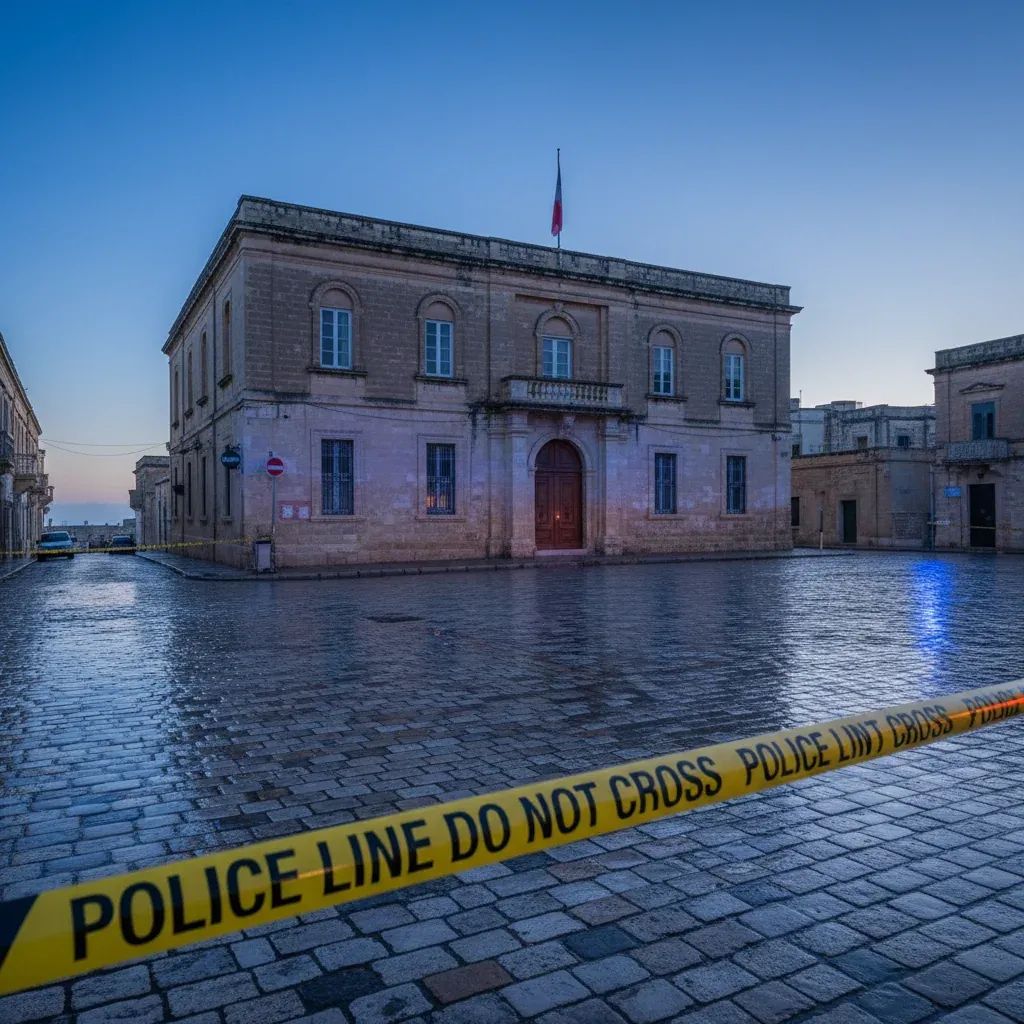
A formal application to convert the Birkirkara police station into a guest house with a rooftop pool has prompted questions from residents and opposition politicians over the future of law enforcement services in one of Malta's most populous areas. The Malta Police Force has declined to comment, citing ongoing constitutional court proceedings over the property, while no alternative location has been disclosed.
Why This Matters
• Essential service uncertainty: Birkirkara's station serves not only the town itself but also Lija, Balzan, and Iklin, leaving thousands without clarity on continued police access.
• Legal limbo: Constitutional litigation over the property prevents official comment from authorities, stalling public transparency.
• Development timeline unclear: Planning application PA/03685/26 awaits a recommendation, but progress hinges on resolving legal and relocation questions first.
The Proposal in Detail
The application seeks to transform the existing police building—situated between Triq il-Kbira and Triq San Ġużepp—into a Class 3A guest house, complete with alterations, extensions, restoration works, and a rooftop swimming pool. On paper, it's a straightforward commercial redevelopment. In practice, it has raised questions about public communication regarding core municipal infrastructure.
Birkirkara ranks among Malta's largest localities by population, and its police station functions as the primary law enforcement hub for neighboring towns as well. Residents and local officials argue that losing this facility without a confirmed replacement would affect public safety and access to justice services, from filing reports to emergency response coordination.
What This Means for Residents
The Birkirkara Residents Association, along with Nationalist Party MPs Adrian Delia and Julie Zahra, has called for immediate clarification from the government on where the station would relocate. Mayor Desirée Grech emphasized the right of residents to "adequate police service" and stressed that any plans to shutter the current premises must come with transparent alternatives.
The silence from authorities has been attributed to the ongoing constitutional case, which appears to involve ownership or control of the station building itself. Until that litigation concludes, the Malta Police Force maintains it cannot discuss relocation, even hypothetically. This legal posture has frustrated community leaders, who note that long-standing rumors of a move have circulated for months without official acknowledgment or consultation.
For everyday residents, the uncertainty translates into real-world concerns. Will response times increase if the station moves to a less central location? Will smaller neighboring localities lose walk-in access to police services? These questions remain unanswered as the planning application advances through bureaucratic channels.
Legal and Administrative Obstacles
The constitutional court proceedings have effectively prevented meaningful dialogue between the police, the developer, and the community. Legal experts note that property disputes involving state assets can extend over years, especially when constitutional questions—potentially involving public interest or state land allocation—are in play.
Meanwhile, the Planning Authority must weigh the merits of application PA/03685/26 against broader urban policy goals. Birkirkara sits within a designated urban conservation area, and any major alteration to a civic building invites scrutiny over heritage impact, streetscape integration, and the precedent it sets for other public-to-private conversions.
The Planning Authority has yet to issue a recommendation, suggesting that internal review is still underway. Approvals typically require input from multiple departments, including heritage watchdogs and municipal councils, adding further layers to the review process.
Political Pressure Mounts
Opposition MPs have framed the issue not merely as a planning dispute but as a governance concern. In public statements, they argue that the government should have proactively communicated relocation plans before any developer filed an application to repurpose the building. The lack of advance notice, they contend, reflects a pattern of limited transparency on matters affecting daily life.
Delia and Zahra have demanded that the Home Affairs Ministry and the Malta Police Force provide immediate clarification, including a concrete timeline for identifying and equipping a replacement site. They warn that the current uncertainty invites speculation and may affect public confidence in the state's commitment to maintaining local policing infrastructure.
The government has not issued a formal response, deferring instead to the police's legal constraints. This has left the Birkirkara Local Council in an awkward position: unable to oppose the guest house application outright without knowing whether an alternative station is already in consideration, but equally unable to endorse it without assurances.
Broader Implications for Malta's Urban Planning
The controversy highlights a recurring question in Malta's development landscape—how to balance commercial opportunity with the protection of essential public services. As property values rise and tourism infrastructure expands, pressure to repurpose civic buildings into revenue-generating assets increases. Yet each conversion must be weighed against the practical needs of a dense, growing population.
Residents and advocacy groups note the importance of ensuring that public-service infrastructure is not compromised by market-driven redevelopment decisions, and question whether Malta's planning framework adequately protects civic priorities.
What Happens Next
• Constitutional court resolution needed: The property dispute must be resolved to clarify ownership or control and allow the Malta Police Force to comment publicly.
• Planning Authority decision pending: Application PA/03685/26 awaits final recommendation once legal matters are clarified.
• Stakeholder dialogue called for: Local councils are requesting urgent meetings involving the police, the developer, and municipal representatives to establish a transparent timeline.
For Birkirkara and its neighbors, the stakes are significant. A police station is more than a building—it is a community asset that indicates state presence and responsiveness. Removing it without a clear alternative affects not just convenience, but the public safety infrastructure available to one of Malta's busiest towns.


