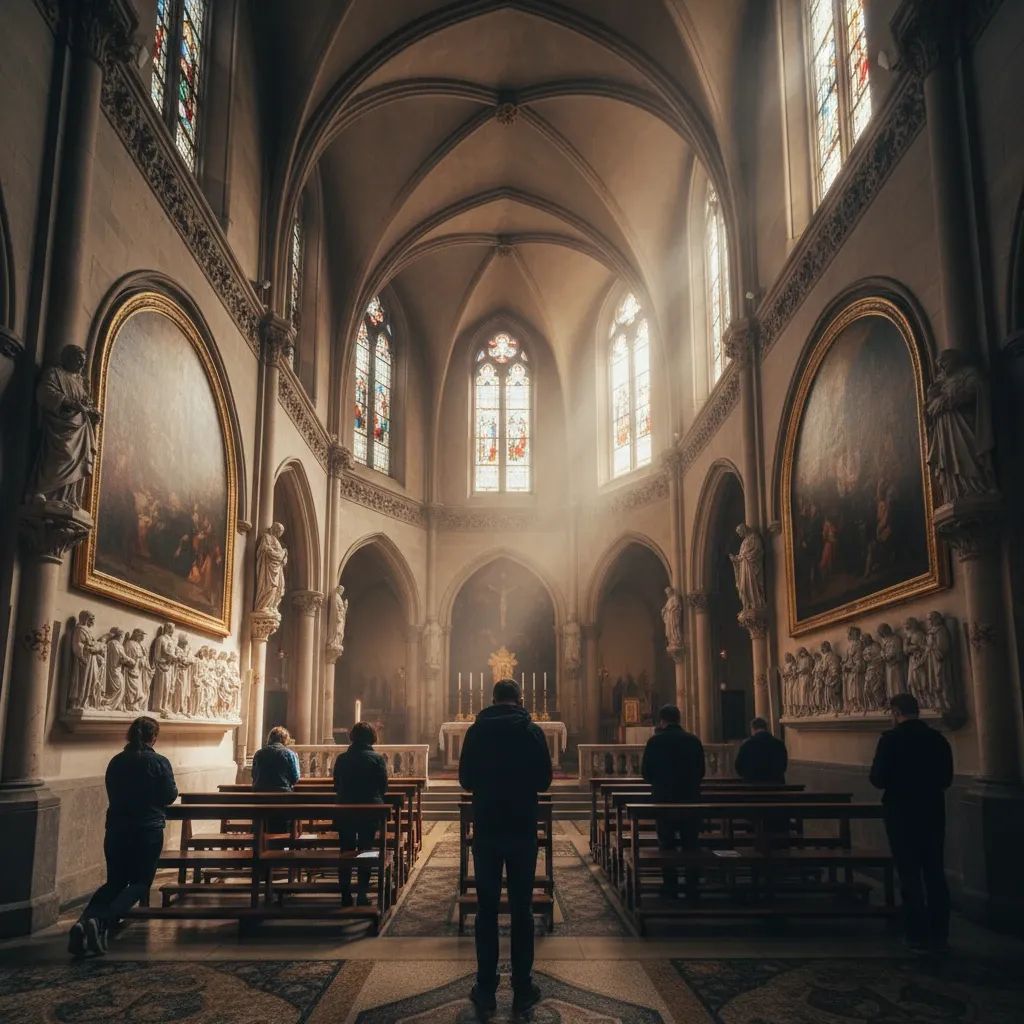
A naturally mummified Italian painter whose remains now rest in Sicily has just upended 260 years of accepted historical narrative. Advanced medical imaging conducted by an international research consortium — including a specialist from the Queen Mary University of London Medical School Malta campus — reveals that Olivio Sozzi almost certainly did not die from a fall, contrary to the scaffolding accident story repeated for generations.
Why This Matters:
• Forensic techniques are rewriting art history: CT scans show no skeletal trauma, debunking a widely circulated tale of accidental death during a 1765 fresco commission
• Medical evidence supports alternative diagnosis: Sozzi likely succumbed to "dropsy of the chest" — an 18th-century term for congestive heart failure — as described by his own pupil
• Malta connection: The Queen Mary University Malta campus contributed expertise to this paleopathology breakthrough, showcasing the island's growing role in international forensic research
The Traditional Story Unravels
For more than two and a half centuries, art historians and local tradition in Ispica, Sicily held that Olivio Sozzi — a prominent Rococo-era painter — met his end on October 31, 1765, plummeting from scaffolding while decorating the Chapel of the Assumption in the Basilica of Santa Maria Maggiore. A dark brushstroke on the fresco, supposedly his final mark, became the poignant visual evidence cementing this romantic yet tragic narrative.
Yet when radiologists Guido Romeo and Alessandro Causarano at Modica Hospital subjected Sozzi's naturally preserved remains to CT scans and digital X-ray analysis, the scaffolding theory collapsed under scrutiny. The imaging revealed zero acute skeletal trauma — no fractures, no compression injuries, none of the telltale damage that invariably follows fatal falls from height.
What the Scans Actually Showed
Sozzi's mummified body tells a different story. The remains belong to a robust, well-nourished man aged 70 to 75 at death, with no evidence of the repetitive strain injuries common to manual laborers who spent careers climbing scaffolding. His fine clothing and physical condition align with an established artist of considerable reputation, not someone who died violently on a worksite.
The project, coordinated by paleopathologist Luca Ventura and archaeologist Valentina Pensiero, instead points toward the account given by Sozzi's own student, Fr. Fedele da San Biagio, in his 1788 treatise Dialoghi sulla pittura. That contemporary source describes the painter suffering from chronic "dropsy of the chest" — likely congestive heart failure or severe pulmonary edema — with repeated episodes of collapse. According to Fr. Fedele, Sozzi died a few days after completing his commission, not during it.
The Malta University Link
The Queen Mary University of London Medical School Malta campus provided specialized expertise to the international team, reflecting Malta's expanding footprint in paleoradiology and forensic archaeology. The island has increasingly become a hub for Mediterranean research collaborations, with its medical institutions contributing to projects that bridge historical scholarship and cutting-edge diagnostic science.
Malta's involvement in this particular case underscores how regional academic centers can play pivotal roles in challenging and refining European cultural narratives, even when the primary subject matter lies beyond the island's borders.
Ethical Debate Over Moving the Mummy
The transport of Sozzi's remains from the Basilica of Santa Maria Maggiore to Modica Hospital for imaging sparked controversy among some conservators and bioarchaeologists. Critics argue that such examinations should be conducted in situ using portable scanning equipment, avoiding the risks associated with moving fragile mummified tissue.
Defenders of the hospital-based approach counter that modern CT technology in a controlled clinical environment yields far superior diagnostic resolution, making the temporary relocation justifiable. The debate mirrors broader tensions in the field about balancing scientific inquiry with preservation ethics.
What Happens Next
The research team plans an expanded series of laboratory tests on the mummy, including:
• Microscopical tissue examination to identify pathological changes at the cellular level
• Nutritional isotope analysis to reconstruct Sozzi's diet and health status in his final years
• DNA sequencing to confirm identity and explore genetic predispositions
• Toxicology screening for 18th-century pigments such as lead white, mercury-based vermilion, and arsenic-laced orpiment, all of which were occupational hazards for Baroque-era painters
The pigment exposure investigation holds particular interest. Chronic heavy metal poisoning from daily handling of toxic paints could explain both the "dropsy" symptoms described by Fr. Fedele and the absence of traumatic injury — a scenario in which the artist effectively died from the cumulative occupational cost of his craft.
Why Historical Death Narratives Keep Changing
Sozzi's case joins a growing list of prominent historical figures whose causes of death have been radically revised by modern forensic imaging. CT scans of Ramesses III revealed a severed big toe and complex throat wounds indicating coordinated assassination, not the simple throat-cutting previously assumed. Seqenenre-Taa-II's mummy showed execution-style head trauma inconsistent with death in open battle. A mummy long believed to be Thutmose I contained an arrowhead in the chest, suggesting either misidentification or undocumented combat death.
Even Tutankhamun's supposed murder-by-blunt-force was debunked when 2005 CT analysis proved the skull bone chip detached post-mortem during Howard Carter's 1925 autopsy. The real culprits: a broken leg and malaria.
These revisions share a common thread: non-invasive digital imaging can now detect injuries, diseases, and physical conditions invisible to traditional archaeological methods or naked-eye examination. As technology improves and more mummified remains undergo systematic reanalysis, expect the rewriting of art history, dynastic chronicles, and biographical records to accelerate.
Impact on Art Historical Scholarship
The Sozzi findings carry implications beyond one painter's biography. If the scaffolding fall never happened, the entire romantic narrative of the artist dying in service to his final masterpiece collapses, taking with it generations of interpretive scholarship built on that foundation. Art historians will need to reassess Sozzi's career trajectory, his health challenges, and the circumstances under which he completed his last commissions.
The discovery also raises questions about how many other art-world legends rest on similarly shaky foundations — oral traditions crystallized into accepted fact without forensic corroboration. In an era when multidisciplinary collaboration between medical schools, archaeology departments, and cultural heritage institutions is increasingly feasible, the burden of proof for historical death narratives has fundamentally shifted.
For now, the mummy resting in Ispica's basilica offers a quiet rebuke to two and a half centuries of mistaken certainty — and a reminder that even the most entrenched historical accounts remain provisional until the evidence speaks for itself.